
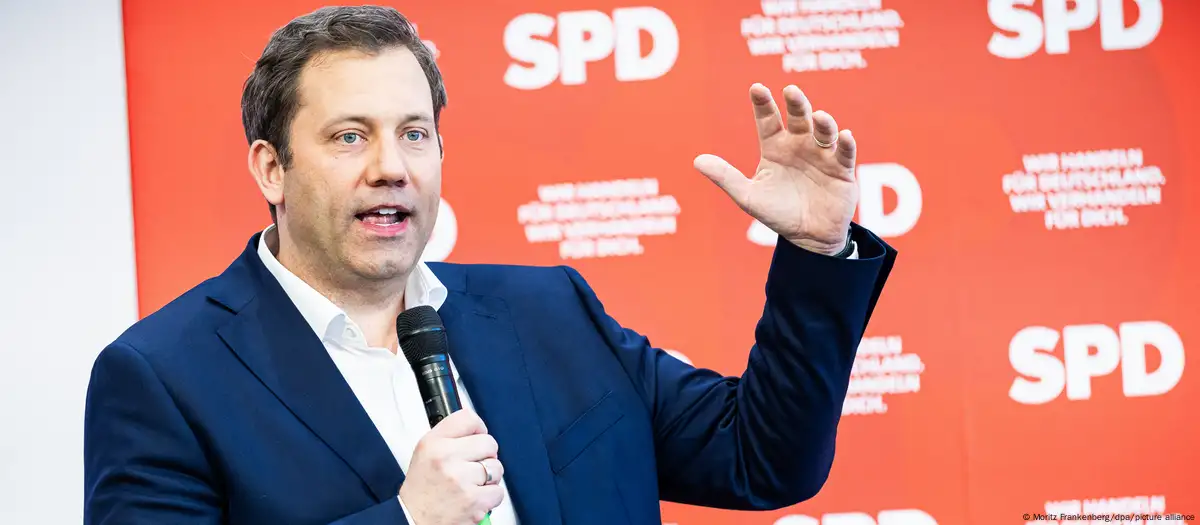

Lars Klingbeil has stepped into the spotlight as one of Germany’s most powerful politicians. As of May 5, 2025, the co-leader of the center-left Social Democratic Party (SPD) officially became Vice Chancellor and Finance Minister in the new German coalition government. This moment marks a major rise for a politician who has long been seen as a bridge-builder within his party and across party lines.
But who is Lars Klingbeil, and what does his leadership mean for Germany?
A New Era of Leadership in Berlin
On a crisp spring morning in Berlin, Lars Klingbeil stood before journalists and political leaders as the coalition agreement between the SPD, the conservative Christian Democratic Union (CDU), and its Bavarian sister party, the Christian Social Union (CSU), was formally signed.
In a confident and composed speech, Klingbeil laid out a clear message for the new government:
“This government must succeed. It must do so with team play, with the courage to make decisions, and with more trust in the citizens.”
He emphasized that public trust isn’t earned through words, but through concrete actions.
His speech reflected a core theme of his political style: pragmatism, collaboration, and strategic clarity.
Klingbeil’s Political Journey
Lars Klingbeil, born in 1978 in Lower Saxony, has been involved in politics for most of his adult life. He’s a long-serving member of the Bundestag (Germany’s federal parliament) and has worked his way through the ranks of the SPD with a focus on digital policy, defense, and modernization.
Klingbeil became co-leader of the SPD in 2021 alongside Saskia Esken. Unlike many in his party’s left-leaning base, Klingbeil has always advocated for a centrist, coalition-friendly approach—something that paved the way for the 2025 alliance with the conservative CDU/CSU bloc.
Vice Chancellor and Finance Minister: A Powerful Role
As Vice Chancellor, Klingbeil becomes the second-in-command to Chancellor Friedrich Merz, the CDU leader. But perhaps even more significantly, he now holds the Finance Ministry, one of the most influential positions in the German cabinet.
This means Klingbeil will oversee:
- Federal budget planning
- Tax policy
- EU financial negotiations
- Climate and infrastructure investments
Given the economic challenges facing Germany in 2025—ranging from energy policy shifts to defense spending and inflation—Klingbeil’s role will be central in shaping the country’s future direction.
Coalition Politics: Balancing Opposites
The new coalition between the SPD and CDU/CSU is unusual by recent German standards. These parties have traditionally been rivals, but growing pressure from the far-right Alternative for Germany (AfD) and the need for stable governance pushed them together.
Klingbeil has been widely credited as a key architect of this coalition. His ability to work across party lines and focus on results rather than rhetoric helped convince both camps to commit to a common program.
What Does Klingbeil Stand For?
Klingbeil is often described as a modernizer and a strategic thinker within the SPD. He believes in:
- Strong digital infrastructure
- National security and defense readiness
- Balancing social justice with economic responsibility
- Restoring public trust in politics
While his co-leader Saskia Esken leans further to the left, Klingbeil has successfully positioned himself as a centrist anchor in the party—a role that may be crucial in holding the new coalition together.
Challenges Ahead
As Vice Chancellor and Finance Minister, Klingbeil faces an uphill battle. Among the key issues on his plate:
- Tightening federal finances while maintaining social programs
- Navigating EU fiscal rules during uncertain economic times
- Managing Germany’s role in global conflicts and defense
- Addressing the climate crisis with pragmatic but bold investments
Perhaps most importantly, he must help deliver a government that feels credible, united, and effective—a task that has eluded many previous coalitions.
Final Thoughts: A Leader to Watch
Lars Klingbeil’s rise to Vice Chancellor is more than a personal achievement—it signals a new chapter in German politics. With a pragmatic approach, centrist instincts, and a clear communication style, he may be exactly the kind of leader Germany needs right now: one who listens, builds bridges, and gets things done.
Whether he can maintain unity in a politically diverse coalition—and deliver results that earn public trust—will determine not only his future, but that of the coalition itself.