Germany’s Habeck Warns of Possible Trade War with Trump: How the EU Can Prepare

Introduction: A New Trade Battle on the Horizon?
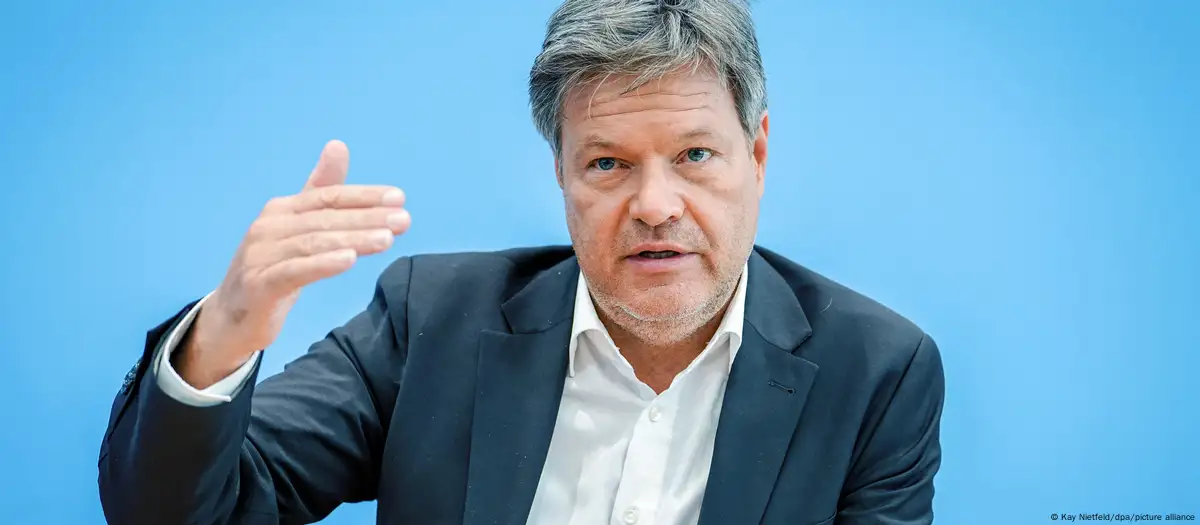
As the United States looks set to potentially ramp up its trade policies under Donald Trump, Germany’s Vice Chancellor Robert Habeck has made it clear: the EU needs to be ready. In an exclusive interview with DW, Habeck discussed the potential for a fresh wave of US tariffs targeting European products and emphasized the importance of Europe becoming more self-reliant when it comes to innovation, infrastructure, and technology.
Habeck’s comments come at a critical time, as trade relations between the US and the EU are increasingly strained. He warned that a trade conflict with the US would hurt both sides, but he also laid out a strategy for Europe to navigate this tricky situation.
Let’s break down what Habeck said and what it means for the future of EU-US trade relations.
The Threat of US Tariffs: What’s at Stake for Europe?
Habeck’s remarks center around the possibility of Donald Trump’s return to power in the United States, and with it, the potential for renewed tariffs on European goods. Trump has been known for his protectionist policies and in the past, he imposed tariffs on a variety of imports, from steel and aluminum to automobiles.
Habeck, who is also Germany’s Economy Minister and the Green Party’s top candidate for the upcoming federal elections, expressed concern over the prospect of another trade war, but he also pointed out that Europe could stand its ground. He stated that the EU is prepared for the possibility of tariffs, but he also emphasized that Europe should do everything it can to avoid escalating the conflict.
Europe’s Response to Trump: Countermeasures or Cooperation?
If the US does decide to impose tariffs on European products, Habeck said Europe could retaliate with countermeasures that would directly impact the American economy, potentially even affecting the consumer sector. However, Habeck made it clear that this isn’t the path he wants to take.
According to Habeck, a trade war would not benefit either side. “Europe could join forces and ‘arm wrestle’ with the US, but that wouldn’t solve anything,” he said. Instead, Habeck believes that the better approach is to focus on building up Europe’s own strengths, like encouraging innovation and revitalizing infrastructure.
He stressed that Europe needs to focus on long-term goals, including making sure the next big technology company – perhaps the next Google – comes from Europe rather than the US. For Habeck, this is not just about competing with America but about ensuring that Europe becomes a global leader in technology and innovation.
The Key to Europe’s Future: Innovation, Infrastructure, and Self-Reliance
Habeck’s vision for Europe’s future is one of greater self-reliance and sustainability. He advocates for more tax incentives and investments aimed at modernizing Europe’s infrastructure and fostering the next generation of technological advancements.
But how can Europe do this?
- Focusing on Innovation:
Habeck emphasized that Europe should create a more entrepreneur-friendly environment that allows for startups and tech giants to grow. He believes Europe should be able to produce companies that can compete globally with the likes of Google, Amazon, or Tesla. - Modernizing Infrastructure:
Europe’s infrastructure, according to Habeck, is outdated and needs a significant upgrade to keep up with the demands of the 21st century. By investing in transportation, communication networks, and digital technologies, Europe can create a stronger, more competitive economy. - Building a Sustainable Economy:
Habeck also pointed out the importance of transitioning to a green economy. Investing in renewable energy and sustainable industries would not only help the environment but also create jobs and growth opportunities in Europe.
By investing in these areas, Habeck believes Europe will be better positioned to navigate any trade conflict that might arise, and ultimately, it will be less dependent on the whims of global powers like the US.
The Bigger Picture: Global Trade and the EU’s Role
The potential for trade tensions between the EU and US under a possible Trump administration highlights a broader issue: the global trade system is shifting. As the world’s economic powerhouses jockey for dominance in new industries like technology, renewable energy, and AI, Europe will need to position itself as a serious competitor.
Habeck’s call for more self-sufficiency is aimed at making Europe less vulnerable to the trade policies of other nations. While China and the US have long been the dominant players in the global economy, Europe’s political stability and commitment to sustainability give it a unique edge in the coming decades.
What’s Next for the EU? Unity is Key
In the face of potential US tariffs and trade conflicts, Habeck’s message is clear: unity within the EU will be essential. He warned that Europe cannot afford to become fragmented in the face of external pressures. Instead, the EU must present a unified front that can defend its economic interests while continuing to promote global cooperation.
But this won’t be easy. Europe has its own internal challenges, including varying economic conditions between member states, rising populism, and different approaches to economic policy. However, Habeck’s vision suggests that by working together, Europe can emerge stronger and more independent.
Conclusion: The Path Forward for Europe’s Economy
Germany’s Vice Chancellor Robert Habeck has issued a clear warning: Europe must be ready for the potential return of US tariffs, especially under Donald Trump. But instead of escalating trade wars, Habeck advocates for Europe to focus on self-reliance, innovation, and modernizing infrastructure.
Europe’s future economic success will depend on its ability to foster a more entrepreneurial environment and build stronger, more sustainable industries. If Europe can navigate the challenges ahead and become more self-sufficient, it will not only avoid the pitfalls of a trade war but also lay the groundwork for a prosperous future.
The question is: will the EU leaders listen to Habeck’s call for unity, or will they be divided as they face growing global competition?