
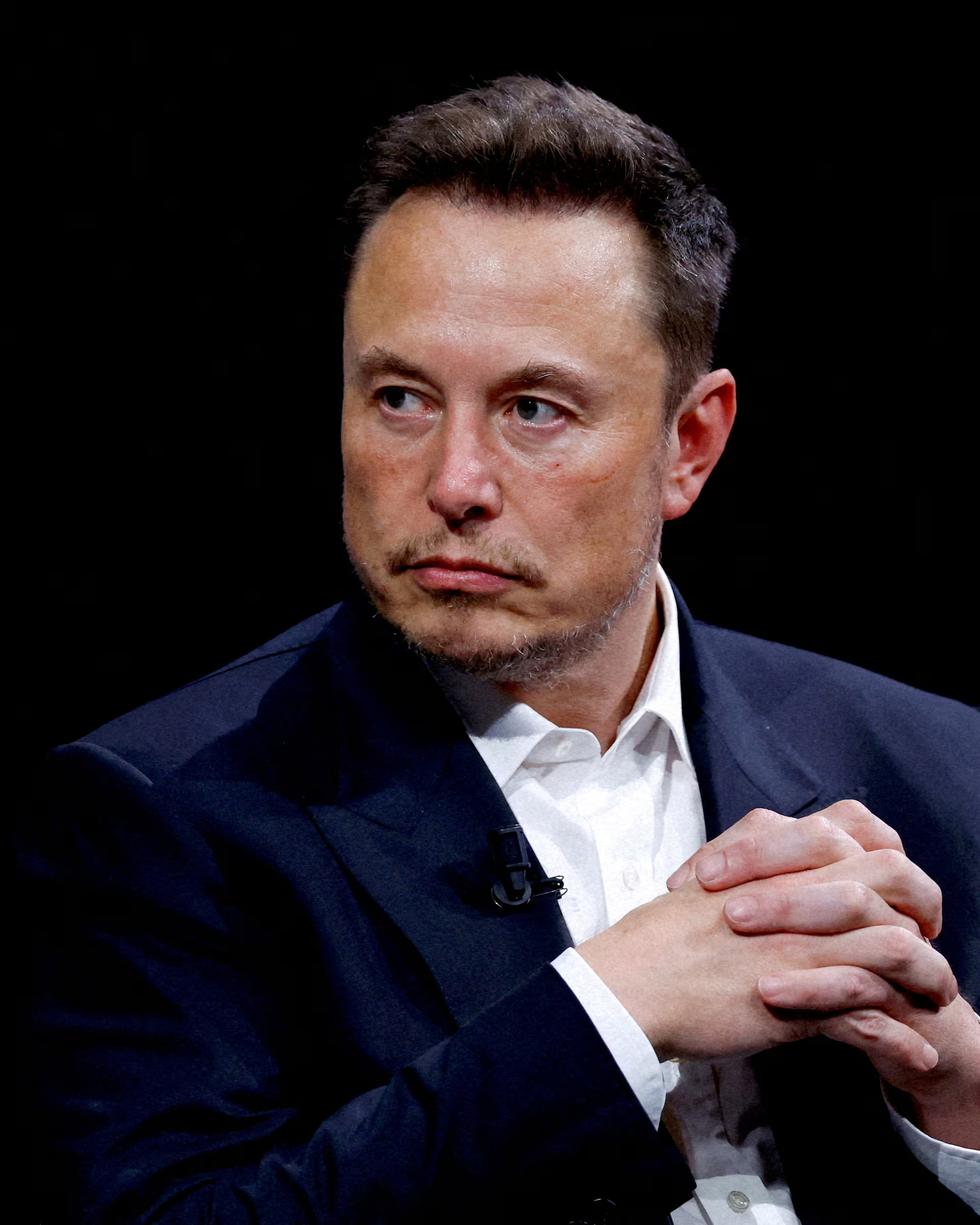

Elon Musk, the billionaire tech mogul behind companies like Tesla, SpaceX, and now X (formerly Twitter), is a polarizing figure. Depending on who you ask, Musk is either a visionary who’s reshaping the future or a dangerous disruptor. His actions over the past few years, particularly around free speech, social media, and political influence, have placed him at the center of global debates. Now, with growing support for far-right movements in Europe, Musk is coming under scrutiny for his influence on the continent.
In his view, he’s doing something noble. “I’m going to give a voice to the voiceless,” Musk said in a 2022 interview. He presents himself as a champion of free speech who is determined to dismantle the existing media and social media monopolies that he believes censor free expression. But his critics argue that Musk’s actions are pushing dangerous ideologies, particularly as he increasingly supports far-right groups in Europe at a time of rising political tension.
Let’s break down the issues and examine whether Europe can contain Musk’s influence.
Musk and the Rise of Far-Right Groups in Europe
Musk’s rise in European politics has not been without controversy. The recent backlash against his growing influence in Europe has primarily stemmed from his public support for far-right political movements, which critics argue could undermine democratic values.
Musk has repeatedly clashed with European leaders, particularly in France and Germany, over his policies on moderating content and his apparent affinity for far-right voices. Critics are particularly concerned about Musk’s support for groups like the Alternative for Germany (AfD) and other nationalist factions that have been gaining traction in European politics.
In a critical election year, Musk’s backing of these groups could exacerbate existing political divides, especially as far-right ideologies increasingly clash with Europe’s more liberal values. Musk’s comments have ranged from expressing admiration for right-wing figures to more controversially reinstating banned accounts of known extremists. While Musk maintains that he’s merely supporting free speech, the timing and scale of his support are leading some to wonder if he’s intentionally stoking political unrest in Europe.
A Champion of Free Speech or an Election Interference Risk?
Musk’s impact on politics is undeniable, especially after he played a key role in shaping the 2020 US presidential election. In an interview with Axios, Musk claimed that he helped elect Donald Trump by amplifying voices and ideas that were previously silenced by the mainstream media. But while Musk might be proud of his role in the US, can his influence be as disruptive in Europe?
Europe is historically sensitive to any form of election interference, especially when it comes from external parties. Musk’s control of X (formerly Twitter), a platform with over 300 million users, gives him an immense degree of power over information flow and public discourse. This brings us to a critical question: Can Musk’s actions be considered election interference under European law?
Europe has some of the world’s strictest laws regarding political advertising and online content regulation. The European Union has made clear that it intends to hold tech companies accountable for the impact they have on political integrity. Laws like the Digital Services Act (DSA) and the Digital Markets Act (DMA) seek to curb the power of big tech companies and regulate harmful content online.
But while these regulations are designed to reduce the influence of external actors, Musk’s influence still looms large. His actions have already led to debates within the EU about how best to regulate his activities, especially if his actions could destabilize the political landscape in countries like France, Germany, and Italy, where far-right groups are growing.
Europe’s Response: Can the EU Stop Musk’s Influence?
The European Union is no stranger to holding tech giants accountable. In the past, Europe has been quick to regulate US-based companies like Google, Apple, and Facebook over privacy concerns, monopolistic behavior, and fake news. But regulating Musk and his influence on European politics presents a unique challenge.
Under European election laws, countries are required to ensure that political campaigns are free from external interference—a principle that could be threatened by Musk’s activities. The EU’s Digital Services Act (DSA) and Digital Markets Act (DMA) aim to address issues like misinformation, hate speech, and election manipulation, but they’re still in the process of implementation.
The big question is: Can Europe’s regulatory framework be robust enough to deal with someone as influential as Elon Musk? Given Musk’s track record of defying conventional norms and his ability to shape public opinion, the EU will likely face pressure to create stronger, more direct mechanisms for regulating online platforms, especially when it comes to election interference.
The Bigger Picture: Musk’s Influence on Global Politics
While Musk’s involvement in Europe is significant, it’s part of a larger global conversation about the influence of tech moguls on politics. His stance on free speech has led many to label him a “disruptor” or a “hero”—particularly those in the far-right who feel that their voices are being silenced by the so-called “liberal elite”. His critics, however, see his influence as potentially dangerous—especially when it’s linked to efforts that can undermine democratic institutions.
Musk’s growing political influence in both the US and Europe is part of a larger trend of privatized power, where individuals with vast fortunes and media control can sway elections, shape public opinion, and dictate policies on a global scale. His actions have ignited debates about the power of billionaires and tech companies to influence the political sphere.
As a result, the question that needs answering is whether Europe will be able to handle the power of tech giants like Musk. Will the EU take the necessary steps to protect democratic values and ensure that the political playing field remains level?
Conclusion: Musk’s Future in Europe
Elon Musk’s growing influence on European politics has sparked both admiration and criticism. While he presents himself as a defender of free speech, his support for far-right groups in Europe raises important questions about the potential impact of his actions on democratic values and elections.
Europe’s regulatory frameworks, such as the Digital Services Act, are starting to catch up with tech giants like Musk. However, the question remains: will the EU be able to rein in Musk’s influence before it becomes too disruptive?
As Musk continues to wield his power through X and beyond, Europe will face tough challenges in determining how to navigate the growing intersection of tech, politics, and freedom of expression.

