Germany’s Defense Minister Pistorius: Europe Must Take on Bigger Security Role, Regardless of U.S. Leadership

Introduction: Europe’s Growing Responsibility in Defense
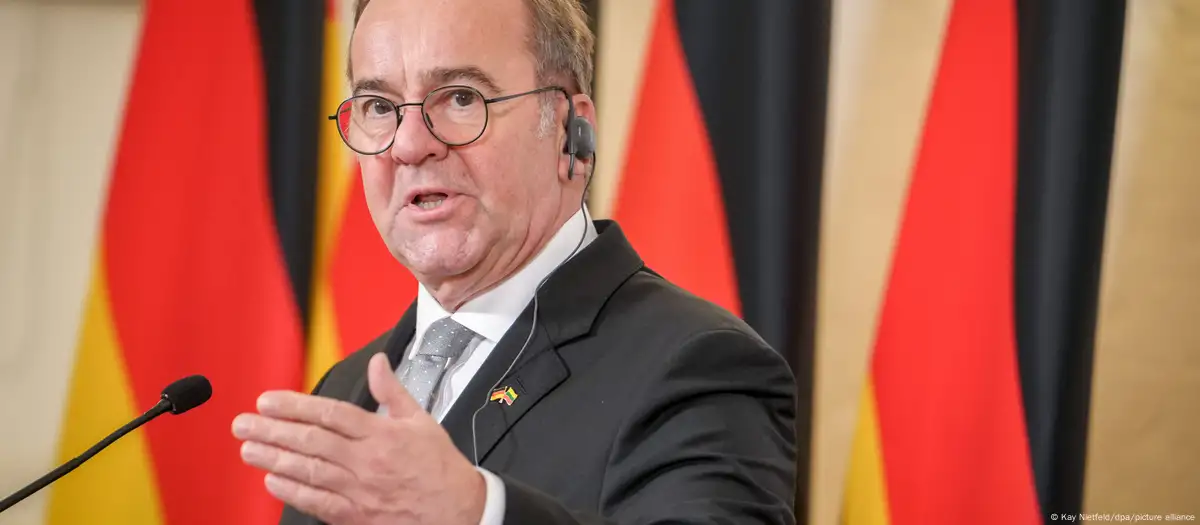
German Defense Minister Boris Pistorius has urged Europe to take on a larger share of its own security, irrespective of who holds office in the White House. Speaking in an interview with DW during a visit to Lithuania, Pistorius stressed that Europeans now face a critical moment in history, where their responsibility for the continent’s security is more significant than ever. Despite past concerns about the future of NATO under U.S. leadership, Pistorius remains confident that the alliance remains essential for European defense.
Pistorius: A European Security Strategy Beyond the U.S.
Pistorius made it clear that the need for Europe to bolster its own defense capabilities is not a new development, but a central focus of Germany’s strategic direction. Referring to his role since taking office in January 2023, he emphasized that Europe cannot rely solely on the United States for defense. “We should not only look to the White House,” he said. “We have to do our own homework.”
The German defense chief’s words underscore the shifting dynamics of global defense priorities. With the U.S. increasingly focused on the Indo-Pacific region, Pistorius believes Europe must step up, reinforcing its own security framework through NATO and strengthening it with military capabilities, resources, and leadership.
NATO: The Backbone of European Security
Pistorius firmly reiterated that NATO remains the core structure of European security. In the interview, he stated that NATO is not just a partnership with the U.S., but a vital pillar of Europe’s defense. “NATO is the backbone of European security,” Pistorius said. He further emphasized that it is Europe’s responsibility to strengthen this backbone through contributions such as enhanced military forces and leadership.
As part of Germany’s commitment to NATO, Pistorius highlighted the decision made in 2023 to permanently deploy a German Bundeswehr brigade to Lithuania. This move, which will see the brigade combat-ready by 2027, reflects Germany’s understanding of its expanding role in maintaining peace and security on the continent.
Europe’s Growing Role Amid U.S. Shifts in Focus
One of the key points Pistorius made was about the shifting focus of the United States under different administrations. He acknowledged that future American priorities may lean more toward the Indo-Pacific region, which could leave a gap in the resources available for European defense. “We can’t expect the Americans to do more in the Indo-Pacific and at the same time do the same for Europe,” Pistorius explained.
He made it clear that Europe needs to fill this gap, and he sees this as a critical moment for European nations to show leadership in matters of security. “This is our task,” he said, referring to Europe’s growing role in maintaining peace and stability on its own soil.
NATO’s Future: Pistorius Remains Optimistic
Despite concerns raised by past comments from U.S. President Donald Trump about NATO’s future, Pistorius expressed confidence that the alliance would continue to thrive. While Trump had previously made remarks questioning NATO’s financial contributions and whether other countries were pulling their weight, Pistorius said he was not concerned about the alliance’s future.
“From all the talks I’ve had in the U.S. and at the Munich Security Conference, I know that the majority of Americans understand the importance of the Euro-Atlantic partnership,” Pistorius said. “We are on the same page in many areas, with shared interests that ensure we remain united in facing global challenges.”
While Trump’s tenure saw strained moments over NATO’s financial commitments, Pistorius reassured that NATO remains a critical structure for both Europe and the U.S., as it adapts to global security shifts.
Germany’s Growing Commitment to European Defense
The German defense minister’s call for greater European responsibility reflects Germany’s commitment to not only NATO but also EU defense cooperation. Germany’s permanent deployment of a combat-ready brigade in Lithuania is just one example of how Europe is stepping up to ensure its own security. Pistorius emphasized that while NATO remains foundational, Europe’s own defense capabilities must be strengthened to address the challenges posed by both regional and global instability.
Conclusion: A Unified Europe for a Secure Future
In the face of shifting U.S. priorities and growing international instability, Germany’s defense leadership is underscoring the need for a more proactive Europe when it comes to security and defense matters. Pistorius’ remarks serve as a call to action for European nations to not just rely on the U.S., but to enhance their own military capabilities, leadership, and coordination within NATO.
NATO will continue to serve as the cornerstone of European security, but for it to remain effective, Europe must take a larger role in shaping its future. Whether through strengthening defense infrastructures or increasing financial contributions, the future of European security is in Europe’s hands.