
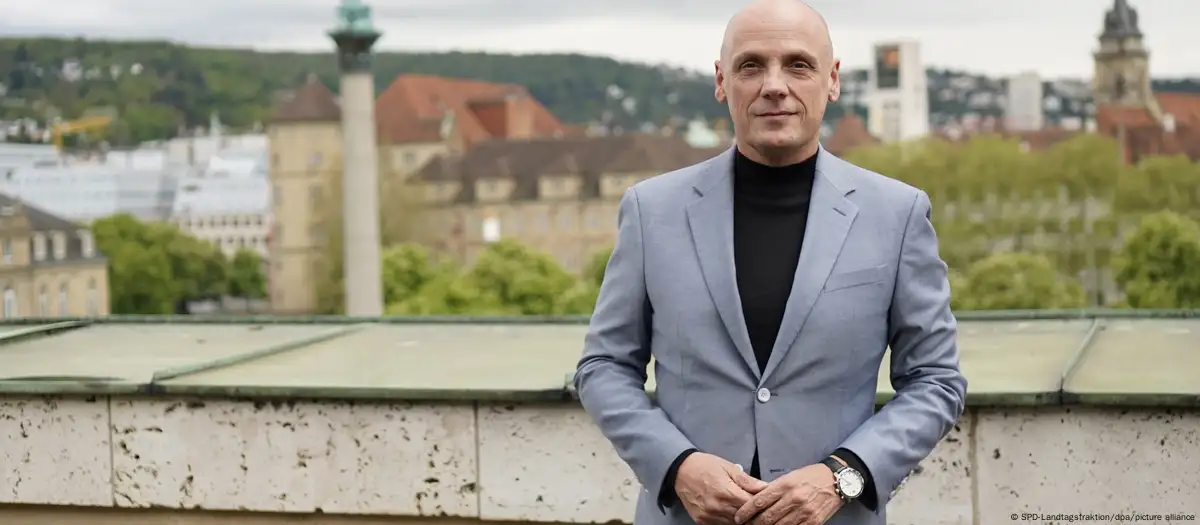
German Politician Resigns After Drawing Swastika on Ballot—Calls It a ‘Serious Mistake’

Top German Politician Quits Over Swastika Incident in State Parliament
In a stunning and swift political fallout, Daniel Born, the deputy speaker of the state parliament in Baden-Württemberg, Germany, has resigned after admitting he drew a swastika on a parliamentary ballot paper—next to the name of a far-right AfD (Alternative for Germany) lawmaker.
The act, which Born admitted was a “serious mistake,” took place during a secret vote. The revelation has triggered strong reactions across Germany’s political landscape.
What Happened?
During a recent parliamentary vote, Daniel Born—who held the position of vice president of the state parliament—scribbled a swastika symbol next to the name of an AfD candidate. The far-right AfD party has long been accused of fostering nationalist and extremist rhetoric, but Born’s method of protest has crossed a legal and ethical line in Germany.
The swastika is a banned Nazi symbol in Germany, and using it—even in protest or satire—is considered a criminal offense under strict laws designed to prevent the resurgence of fascist ideology.
Born Calls It a “Serious Mistake”
After the incident came to light, Born voluntarily stepped down from his role. In a public statement, he acknowledged his wrongdoing:
“It was a serious mistake. I deeply regret what I did and take full responsibility.”
While some may interpret his actions as a form of protest against extremism, Born himself admitted that the gesture was inappropriate, offensive, and legally indefensible.
Legal and Political Fallout
Could He Face Charges?
Because the swastika is a protected symbol under Germany’s criminal code, Born may face further legal consequences, even though his intention was likely symbolic. Authorities have not yet confirmed whether a formal investigation will be launched.
Impact on His Party
Daniel Born is a member of the Social Democratic Party (SPD). His resignation is a blow to the party, especially as it faces rising pressure from both the far-right AfD and more moderate centrist coalitions.
Leaders across the political spectrum have condemned the incident while acknowledging Born’s decision to take responsibility and step down.
Why This Matters
Germany’s History Demands Caution
Germany’s post-WWII political system is built around the principle of “never again”—a deep commitment to preventing the return of fascism. The use of Nazi symbols, no matter the context, is not taken lightly, and politicians are held to especially high standards.
AfD Tensions Running High
The far-right AfD party continues to gain ground in some regions, fueling national anxiety over the rise of nationalist politics. Born’s action was intended, by some interpretations, as a protest against what he sees as dangerous ideologies—but it backfired spectacularly.
Final Thoughts
Daniel Born’s resignation underscores how fragile the line between protest and provocation can be—especially in a country like Germany with such a painful past. His symbolic gesture may have been aimed at condemning extremism, but it ended up highlighting just how seriously Germany takes the protection of democratic values and historical accountability.
Whether further consequences await him remains to be seen, but one thing is clear: in German politics, the symbols of hate have no place—even in protest.