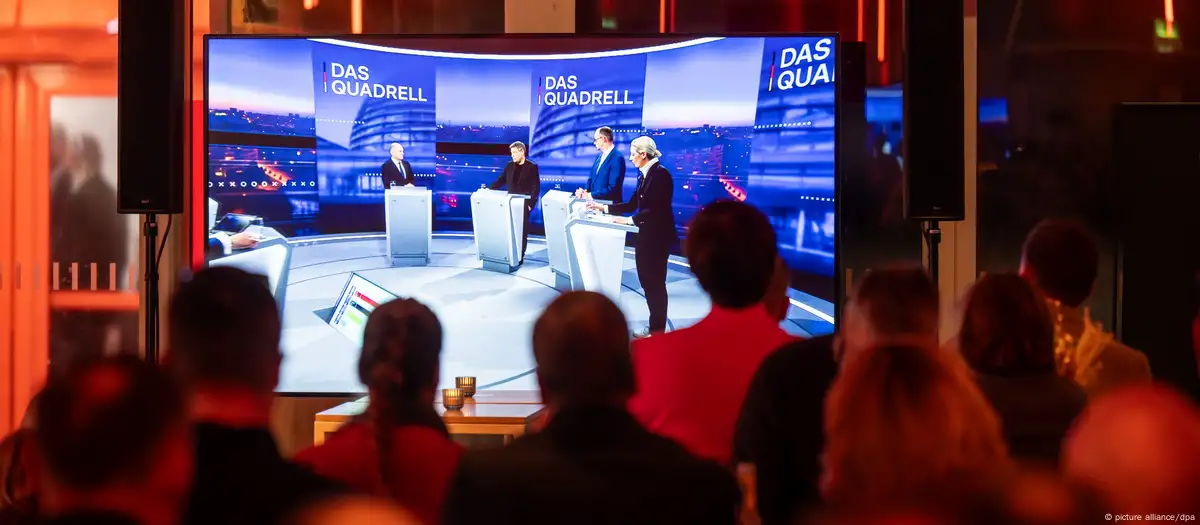

As Germany’s federal election approaches on February 23, 2025, the four main candidates for chancellor—Olaf Scholz (SPD), Friedrich Merz (CDU/CSU), Alice Weidel (AfD), and Robert Habeck (Greens)—participated in a live televised town hall on public broadcaster ARD. This event allowed citizens to pose questions directly to the candidates, providing insight into their policies and leadership styles.
Current Polls and Political Landscape
Recent opinion polls indicate a significant shift in Germany’s political landscape. The conservative Christian Democrats (CDU/CSU), led by Friedrich Merz, are projected to secure around 30% of the vote, positioning them as the leading party. The far-right Alternative for Germany (AfD) is expected to double its vote share to approximately 20%, reflecting growing support for their platform. Incumbent Chancellor Olaf Scholz’s Social Democrats (SPD) are currently polling at 15%, with the Green Party slightly behind at just over 13%. citeturn0news16
Key Issues Influencing Voters
Several critical issues are influencing voter sentiment in the lead-up to the election:
- Economic Concerns: Germany is grappling with economic challenges, including a potential recession and rising unemployment rates. Voters are keenly interested in candidates’ plans to stimulate economic growth and address financial instability.
- Immigration and Integration: The influx of migrants and refugees has sparked debates on immigration policies and integration strategies. Parties are presenting their approaches to managing migration and fostering social cohesion.
- Climate Change and Energy Policy: Environmental sustainability remains a top priority. Candidates are outlining their strategies for transitioning to renewable energy sources and meeting climate targets.
- National Security: In light of recent global events, national security and defense policies are under scrutiny. Voters are evaluating candidates’ plans to enhance Germany’s security posture.
Implications for Coalition Formation
Given the fragmented nature of the current political landscape, no single party is expected to achieve an outright majority. This scenario necessitates coalition negotiations to form a stable government. The CDU/CSU is anticipated to seek alliances with either the SPD or the Greens to secure a governing majority. However, ideological differences may complicate these negotiations, potentially leading to prolonged discussions before a coalition is established.
Conclusion
The upcoming German federal election is poised to be a pivotal moment in the nation’s political trajectory. With a diverse array of parties and pressing issues at the forefront, the election outcome will significantly influence Germany’s domestic and foreign policies in the years to come. Voter engagement and informed decision-making will be crucial in shaping the future direction of the country.