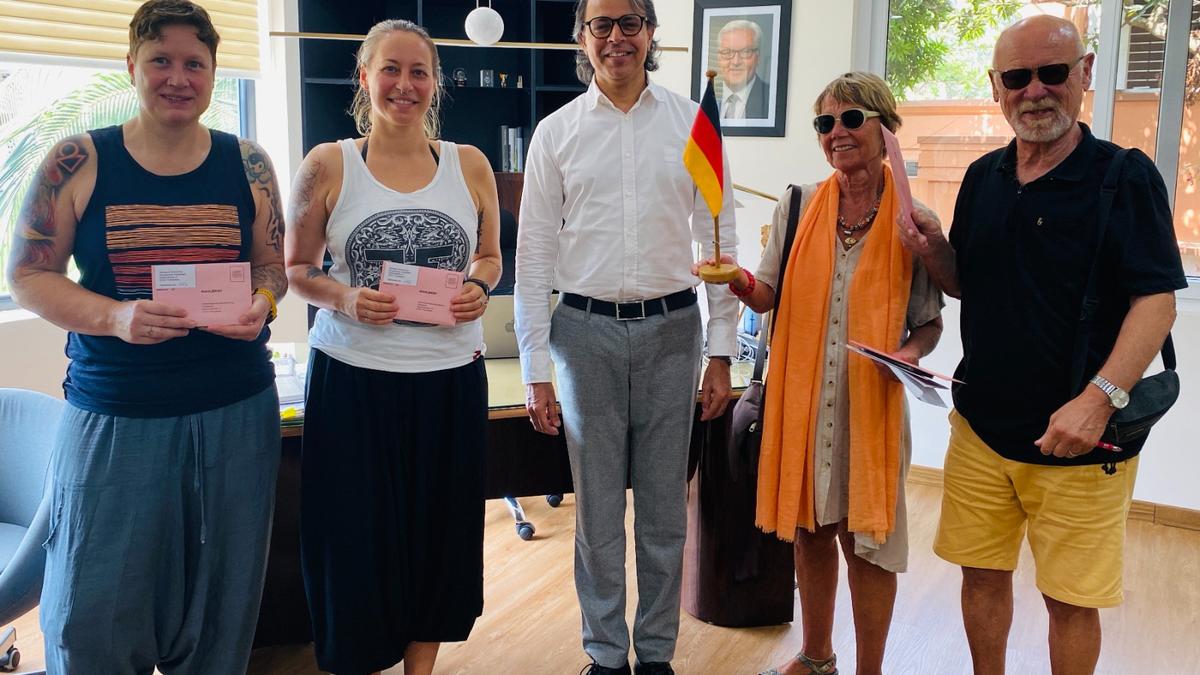

In a significant development, four German nationals vacationing in Kerala have cast their votes for Germany’s upcoming federal elections, marking the first instance of such voting from the region. This event underscores the global reach of Germany’s electoral process and the active participation of its citizens abroad.
Historic Voting in Kerala
On Monday, February 17, 2025, Rainer Helbing, Uta Helbing, Evelyn Kirn, and Veronika Zhuravleva exercised their democratic rights by casting postal ballots at the German Honorary Consulate in Thiruvananthapuram. This marks the first time that German citizens have cast their votes for their national elections from Kerala. The ballots were subsequently sent to the German Consulate in Bengaluru and then forwarded to Berlin, ensuring their timely inclusion in the electoral process.
Understanding Germany’s Electoral Process
Germany employs a mixed-member proportional representation system, combining direct and proportional representation. Eligible voters, including those residing abroad, have two votes:
- First Vote (Erststimme): Cast for a candidate in their local constituency.
- Second Vote (Zweitstimme): Cast for a political party, determining the overall composition of the Bundestag.
To participate in federal elections, German expatriates must apply to be included in the voters’ register before each election.
Implications of the 2025 Federal Elections
The upcoming federal elections, scheduled for February 23, 2025, are pivotal for Germany’s political landscape. Recent polls indicate a potential shift in leadership, with the Christian Democratic Union (CDU) and its Bavarian sister party, the Christian Social Union (CSU), leading the race. The far-right Alternative for Germany (AfD) is also expected to secure a significant share of the vote, reflecting a rise in right-wing populism.
Global Participation and Its Significance
The participation of German citizens abroad, such as those in Kerala, highlights the inclusive nature of Germany’s electoral system. It ensures that expatriates can influence the political direction of their home country, regardless of their current residence. This practice fosters a sense of connection and responsibility among Germans worldwide, reinforcing the democratic values of representation and participation.
Conclusion
The casting of votes by German nationals in Kerala is a testament to the global engagement of Germany’s citizens in their national democratic processes. As the federal elections approach, the active participation of expatriates underscores the importance of inclusive electoral practices in a modern, interconnected world.