
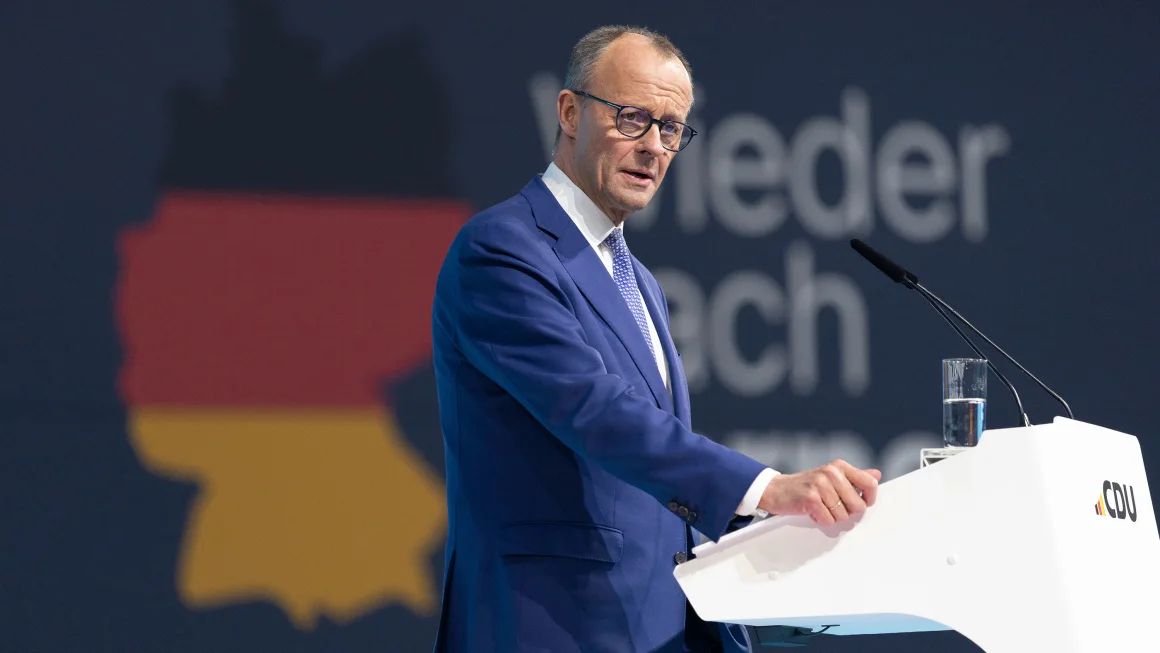
Frontrunner for German Chancellor Promises Stricter Immigration Policies Amid Election Campaign

As Germany heads into the final stretch of its election campaign, Friedrich Merz, the leader of the Christian Democratic Union (CDU), has made it clear that tightening immigration policies will be a key focus if he wins.
Merz, who is leading the polls with his CDU/CSU party coalition, has vowed to introduce stronger border controls and limit immigration. However, despite his hardline stance on immigration, he’s also made it clear he won’t work with the far-right in forming a government.
Tough on Immigration: Merz’s Clear Stance
In a recent interview with CNN in Berlin, Friedrich Merz outlined his tough stance on immigration, saying, “We will control our borders and return those who are coming without documents.” His comments signal a shift towards stricter immigration policies, with Merz promising to take action against those entering Germany illegally.
Merz’s stance on immigration has become a central theme of his campaign. His CDU party, which is currently in a strong position to win the election, is pushing for stricter laws and measures to deal with migration. This includes proposals to tighten border controls and deport migrants who are in Germany without proper documentation.
Rising Concerns Over Immigration and Security
The issue of immigration has become particularly sensitive in Germany due to several high-profile incidents. A series of violent attacks allegedly carried out by migrants have fueled public concerns. The attacks have pushed immigration to the forefront of political debate.
In January, a tragic incident in Aschaffenburg shocked the country when an Afghan migrant carried out an attack that left two people dead, including a two-year-old boy. This followed a deadly incident just before Christmas, when a Saudi-origin migrant drove his car through a Christmas market in Magdeburg, killing six people.
These tragic events have amplified concerns over migration and security, making it a key issue in the current election. Merz and his party have capitalized on this by focusing their campaign on addressing these security fears, with immigration becoming a central rallying cry.
A Shift Rightward in Germany’s Politics
As the CDU and its Bavarian sister party the CSU lead in the polls with 30% of the vote, Merz’s position on immigration is a clear signal that Germany is moving toward more conservative policies. His statements reflect a broader shift rightward in the country’s politics, with many voters concerned about the implications of migration and security.
Merz has also proposed legislation aimed at curbing migration, including the controversial Influx Limitation Act, which would limit the number of migrants allowed into the country. However, despite the focus on these laws, Merz faced a setback in parliament when his bill failed to pass. Some members of his own party voted against the bill, showing the divisions within the CDU on how strict immigration policies should be.
Merz: ‘I Won’t Work with the Far-Right’
Despite his tough stance on immigration, Merz has been clear about his political boundaries. He has repeatedly stated that he will not work with far-right political parties to form a government. This is an important distinction, as Germany’s political landscape has seen a rise in support for far-right parties, particularly the Alternative for Germany (AfD), which has gained traction in recent years by appealing to voters frustrated with immigration policies.
Merz’s firm stance against the far-right has been seen as an effort to distance his party from extremist views and maintain a more centrist approach, despite his hardline immigration policies. While some voters may welcome his tougher stance on immigration, Merz is making an effort to avoid alienating moderates by drawing clear lines with far-right groups.
Public Opinion: Growing Support for Stricter Immigration Policies
Germany’s changing political landscape reflects a growing frustration among many voters with the current immigration policies. According to recent polls, a large portion of the electorate supports stricter immigration controls, with security concerns at the forefront of their minds.
While Merz and his CDU/CSU coalition are capitalizing on these concerns, the public debate around immigration is complicated. Critics argue that overly harsh immigration policies could damage Germany’s international reputation and harm its relationship with other European Union countries. Additionally, many worry that turning away migrants could undermine Germany’s commitment to human rights and its role in providing refuge for those fleeing war and persecution.
The Road Ahead: What Does This Mean for Germany?
As the election draws nearer, the focus on immigration is unlikely to fade. The issue is not just about numbers and policies but also about Germany’s identity and its approach to its place in the world. The outcome of the election could signal a major shift in the country’s political direction, with a government led by Friedrich Merz potentially ushering in a period of stricter immigration policies and closer alignment with more conservative views.
If Merz becomes chancellor, his government will face significant challenges in balancing the security concerns of voters with the need to maintain a fair and humane immigration policy. His promise to tighten borders and deport undocumented migrants may resonate with many, but it will also face opposition from those who advocate for a more compassionate approach to migration.
Conclusion: The Future of Germany’s Immigration Policy
Friedrich Merz’s push for tougher immigration laws is likely to remain a key issue as Germany’s election campaign enters its final weeks. With security concerns top of mind for many voters, Merz’s hardline stance has gained him support from those who feel that Germany’s current policies are too lenient. However, his clear refusal to cooperate with the far-right highlights his efforts to maintain a moderate approach in a polarized political climate.
Germany is at a crossroads, and the next few weeks will determine whether the country will shift rightward, embracing more restrictive policies, or if it will take a more centrist path that balances security with compassion.

