
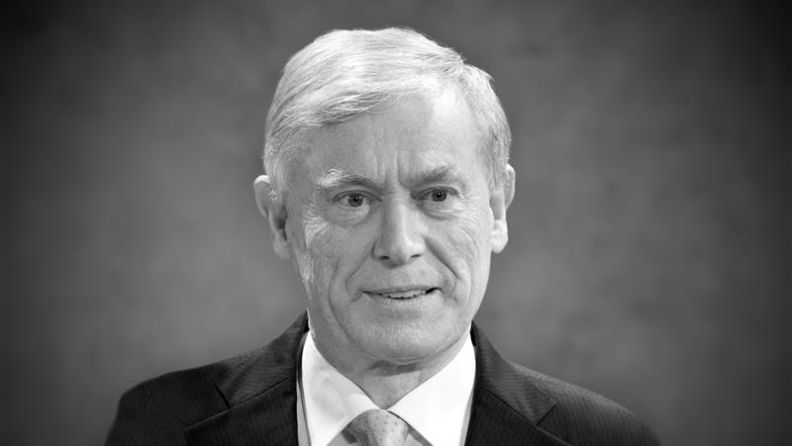
Germany Mourns the Loss of Former President Horst Köhler: A Champion for Africa

Germany is in mourning after the death of Horst Köhler, the former Federal President and passionate advocate for Africa. Köhler passed away at the age of 81, leaving behind a legacy of dedication to global fairness, international cooperation, and a deep connection to Africa.
In a heartfelt tribute, Federal Chancellor Olaf Scholz described Köhler as someone who had dedicated his life to creating a fairer world, while Federal President Frank-Walter Steinmeier called him “a blessing for our country.” Köhler’s passing marks the end of an era for one of Germany’s most beloved public figures, whose influence reached far beyond his time in office.
A Lifelong Commitment to Justice and Equality
Horst Köhler’s career spanned decades, with significant contributions to international finance, European unity, and global diplomacy. His background as an economist, combined with his positions at major global financial institutions, positioned him as a leading figure in shaping Germany’s approach to global affairs.
Köhler was elected as Germany’s Federal President in May 2004, and his second term was secured in 2009. Though he was immensely popular with the public, he made the surprising decision to resign from office in May 2010 after only six years, citing personal reasons. His resignation stunned many, as he was one of the most respected leaders of his time.
Despite stepping down from politics, Köhler’s passion for global development did not fade. His post-presidency years were marked by continued advocacy for Africa and international peace, especially in his role as the UN Special Envoy for the Western Sahara conflict.
Köhler’s Focus on Africa: A Lifelong Passion
Köhler’s dedication to Africa was one of the defining features of his career. As President of the IMF and later as Germany’s Federal President, Köhler was a tireless campaigner for a new, fair partnership between Europe and Africa. His deep understanding of the continent and its challenges led him to speak out against the lingering effects of colonialism in Europe’s relationship with African nations.
In his view, Africa should be treated as an equal partner in international affairs, not as a continent to be exploited. Steinmeier praised Köhler for being “ahead of his time” in advocating for a more equitable relationship between Europe and Africa. Köhler often called for the end of the colonial mindset that had long characterized European involvement in Africa, instead emphasizing a partnership based on mutual respect and shared goals.
Even after resigning from the presidency, Köhler continued his work in promoting Africa’s interests. He was especially passionate about economic development, sustainable growth, and democratic reforms across the continent.
A Legacy of Diplomacy and Global Leadership
Before becoming President of Germany, Köhler held a number of important roles on the global stage. He served as Germany’s chief negotiator for the Maastricht Treaty, which established the European Monetary Union, laying the groundwork for the Euro. He then went on to lead the European Bank for Reconstruction and Development (EBRD) in London, where he focused on rebuilding economies in post-Soviet countries.
As the head of the International Monetary Fund (IMF) from 2000 to 2004, Köhler was involved in numerous financial crises and worked to stabilize global markets. His efforts in reforming international financial systems were widely recognized, and his time at the IMF earned him a reputation as a fair and empathetic leader.
Köhler’s approach to global issues was always rooted in solidarity and fairness. He consistently championed policies that were not just beneficial to Germany but to the world at large. His leadership was marked by a commitment to global cooperation and an understanding that the challenges faced by one country could impact the entire international community.
Köhler’s Resignation and the Aftermath
Despite being incredibly popular throughout his presidency, Köhler made the decision to step down in May 2010. His resignation came as a shock to many, as he had been widely seen as one of the most capable and respected political figures in Germany.
At the time, Köhler explained that he needed to “take a step back” and reassess his role in public life. Many speculated that his decision was driven by internal political pressure, although he maintained that it was a personal decision. Regardless, his resignation left a gap in German leadership, and his absence was deeply felt.
Though he was no longer in the public eye, Köhler’s philosophical approach to governance continued to resonate with many. His strong stance on human rights, economic equality, and international solidarity shaped his legacy.
Köhler’s Impact on Germany’s Global Role
Horst Köhler’s influence extended far beyond Germany’s borders. He played a significant role in shaping Germany’s diplomatic approach to international issues, especially in the context of global financial stability and human rights.
Köhler’s legacy continues to inspire politicians and world leaders today. His work emphasized the importance of cooperation and mutual respect between nations, particularly in dealing with global challenges like climate change, poverty, and conflict. His approach to international relations was characterized by a commitment to making the world a better place for future generations.
A Farewell to a Visionary Leader
Horst Köhler’s death marks the end of an era in German politics. His passing leaves a significant void, not just in Germany but globally, where his leadership and vision for a fairer world were admired by many.
Köhler’s legacy is one of dedication to a better world, a commitment to fairness, and a deep love for Africa and its people. As Frank-Walter Steinmeier said, Köhler was truly “a blessing for our country,” and his impact will continue to be felt for many years to come.

