European Stocks Surge Amid Positive News on German Fiscal Reform and Trade Optimism

European stock markets saw a strong rebound on Wednesday, boosted by hopes that tensions over U.S. tariffs on Canada and Mexico could ease, and the possibility of Germany relaxing its strict fiscal rules to allow for higher defense and infrastructure spending. The positive momentum came after a tough day for global equities on Tuesday, driven by concerns over rising trade barriers.
Stock Market Rally in Europe: A Strong Rebound
By mid-morning Wednesday, European stocks were up significantly, with the Stoxx 600 index rising by 1.64%. This surge followed a sharp downturn in the previous day, as global markets struggled under concerns about U.S. tariffs. The Stoxx autos index, which had dropped nearly 6% on Tuesday, rebounded impressively, climbing by 3.4%.
However, not all sectors saw a positive outcome. Utilities and food and beverage stocks were among the few to remain in the red, despite the overall market bounce.
Germany’s DAX Leads the Charge
German stocks were the star performers in Europe, with Frankfurt’s DAX index soaring by almost 3%. This strong rally was led by some notable names across various industries:
- Hochtief, a construction company, jumped 17%.
- Kion Group, a manufacturing giant, surged by 15.4%.
- Deutsche Bank, Germany’s largest bank, gained 9.7%.
- Siemens Energy also saw a 9.6% increase.
The defense sector was also a major beneficiary of the positive market sentiment, with the Stoxx Aerospace and Defense index climbing by 3%, continuing its recent rally.
Germany’s Debt Brake Deal: A Path to Increased Spending
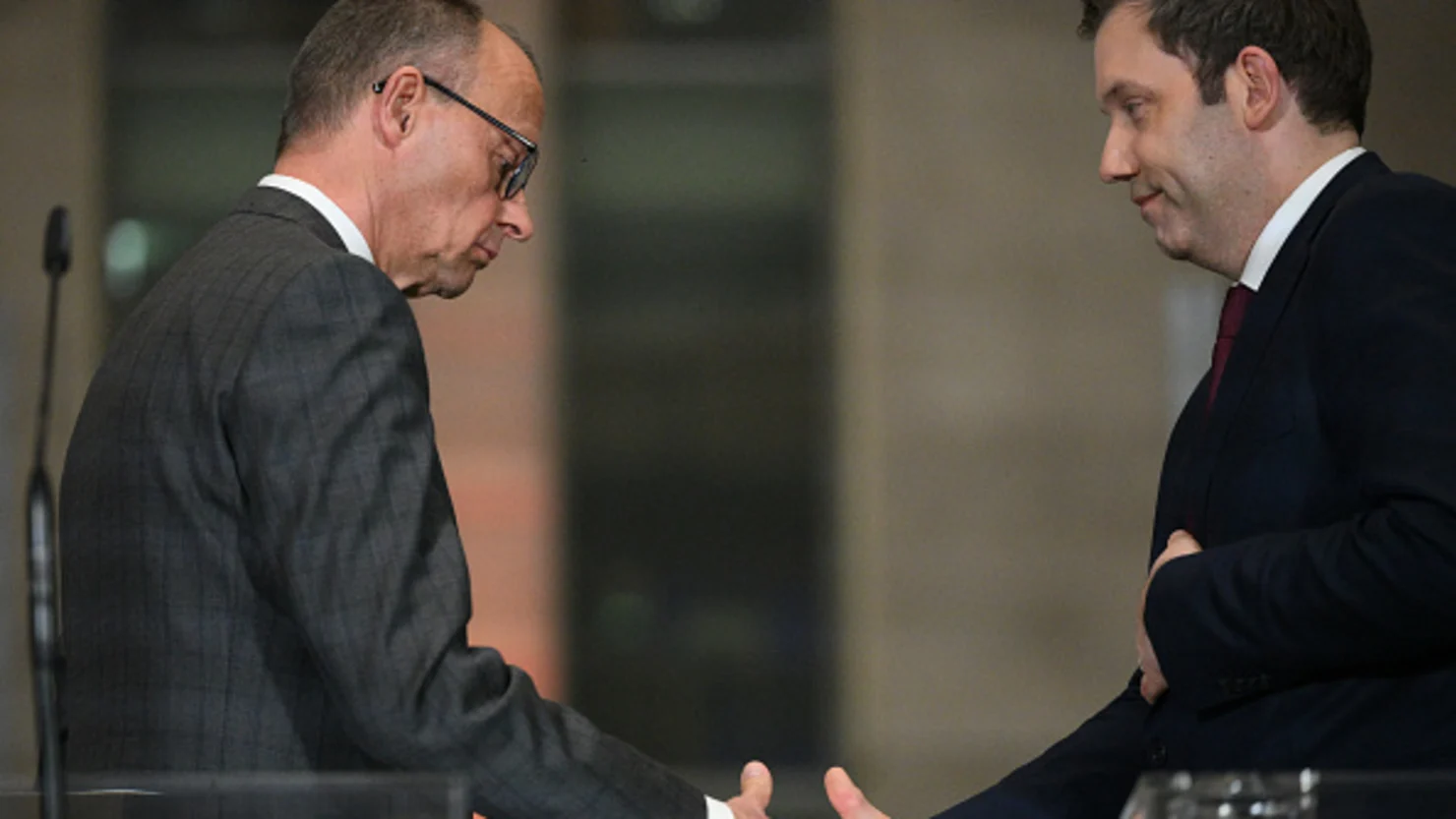
One of the key drivers behind the positive market performance was the news of a potential change in Germany’s fiscal policy. Germany’s ruling coalition, made up of the conservative alliance and the Social Democratic Party (SPD), reached an agreement to reform the country’s debt brake system.
The debt brake, a rule that limits government borrowing, has been a cornerstone of Germany’s fiscal policy for years. However, in the wake of growing economic challenges and the need for more defense spending, the government has agreed to consider adjustments. The goal is to allow defense spending to exceed 1% of Germany’s GDP, ensuring the country can modernize its military and meet European security standards.
The Special Infrastructure Fund: A Game Changer for Germany’s Economy
In addition to defense spending, the coalition also discussed creating a massive credit-financed special infrastructure fund worth 500 billion euros ($529 billion). This fund would be used over the next decade to revitalize Germany’s infrastructure, which has been in need of significant upgrades.
This proposed infrastructure investment could have far-reaching benefits for the economy, potentially creating jobs, boosting economic growth, and enhancing Germany’s global competitiveness. The idea has been met with mixed reactions, with some political factions supporting it, while others worry about the long-term financial implications.
The Political Challenges Ahead
While the agreement between Germany’s two major political parties may seem like a step forward, the plan to ease the debt brake remains politically controversial. The debt brake has been a crucial part of Germany’s fiscal philosophy, and any changes to it could spark intense debate.
Despite the challenges, figures like Friedrich Merz, who is widely expected to become the next chancellor, have stressed the importance of these reforms to boost Germany’s economy and military spending. Merz and others argue that adjusting the debt brake is essential for Germany to remain competitive in an increasingly unpredictable global environment.
What Does This Mean for the Eurozone and the Global Economy?
The proposed fiscal reforms in Germany could have a significant impact not only on the German economy but also on the broader Eurozone. Germany is the largest economy in Europe, and any move to relax its fiscal constraints could lead to increased economic growth and stability in the region.
At the same time, higher defense spending and improved infrastructure could make Germany a stronger player on the global stage, both in terms of military power and economic influence. This would align Germany more closely with other European nations that have been increasing their defense budgets in response to global security concerns.
The potential shift in fiscal policy also comes at a critical time for global trade. With concerns over rising tariffs and trade wars, Germany’s push for higher infrastructure and defense spending could help shield its economy from external shocks while boosting investor confidence in the country’s future growth prospects.
What’s Next for Germany’s Fiscal Policy?
While the announcement of reforms is positive news, it’s important to remember that the changes are still in the early stages. Political challenges remain, and it may take time for the proposals to gain full approval. As Germany works to find the right balance between fiscal responsibility and economic growth, the rest of the world will be watching closely.
For investors and businesses in Europe and beyond, the situation is one to watch carefully. If Germany succeeds in easing its debt brake and boosting spending, it could set a new precedent for fiscal policy in the Eurozone. However, the path to this outcome will require careful negotiations and political compromise, and the timeline for implementation remains uncertain.
A Positive Outlook for Europe
Overall, European markets are seeing a boost today, driven by optimism over U.S. trade policy and the potential for key fiscal reforms in Germany. The DAX and other major European indices have posted solid gains, and with the new infrastructure fund and defense spending on the horizon, Germany’s economy looks poised for a significant boost.
While challenges remain—especially in terms of political support for the debt brake changes—the steps being taken today could be crucial for Germany’s long-term economic and security goals. As the situation continues to develop, investors will be keeping a close eye on how these fiscal changes play out and what impact they have on both the German economy and broader European markets.