
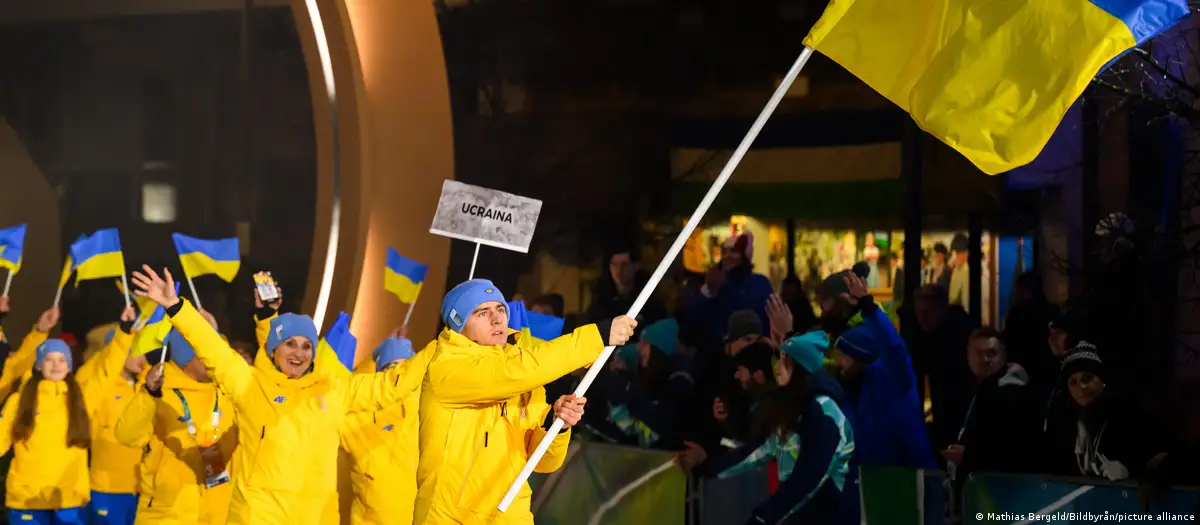

Ukraine has announced that its athletes will boycott the opening ceremony of the Paralympics in Verona on March 6, in protest against the decision to allow some Russian and Belarusian competitors to participate under their national flags.
The move has sparked tensions within the international sporting community, raising questions about the balance between inclusion in sports and accountability for ongoing geopolitical conflicts.
Background on the Paralympics Decision
The International Paralympic Committee (IPC) recently confirmed that certain Russian and Belarusian athletes would be permitted to compete under their national flags, despite widespread opposition due to the war in Ukraine.
- The decision comes after earlier bans that required Russian and Belarusian athletes to compete under neutral status.
- The current policy change has been criticized by Ukraine and other countries supporting sanctions against Russia and Belarus.
Ukraine’s Response
Ukrainian Paralympic athletes, along with their national committee, have strongly condemned the decision, calling it politically insensitive and unfair.
Officials stated that attending the opening ceremony under these conditions would implicitly legitimize the presence of countries engaged in aggression against Ukraine, which they cannot accept.
The boycott applies specifically to the March 6 opening ceremony, although Ukraine has not yet confirmed whether its athletes will participate in competitions themselves.
Implications for the Paralympic Movement
The controversy highlights the ongoing challenge for international sports organizations:
- Balancing the principle of inclusivity in sports with geopolitical realities
- Responding to public and national pressures in times of conflict
- Ensuring fairness for athletes from countries not involved in conflicts
Sports experts note that the decision could undermine the perceived neutrality and integrity of the Paralympic Games, as politics and conflict increasingly intersect with global competitions.
Reactions from the International Community
Several countries and human rights organizations have expressed concern over the IPC’s decision, suggesting that it may send the wrong message about accountability in international sports.
- Supporters argue that athletes should not be penalized for their governments’ actions
- Critics emphasize that allowing national representation could be seen as endorsing or overlooking acts of aggression
The IPC faces pressure to justify its decision and address concerns from affected nations.
Looking Ahead
As the opening ceremony approaches, Ukraine’s boycott is expected to draw attention and media scrutiny.
- It could influence other countries’ responses and participation
- Spark debates within international sports federations on conflict-sensitive policies
- Encourage discussions about the ethical responsibilities of global sporting organizations
Ukraine’s stance demonstrates the intersection of sports, politics, and international diplomacy, reflecting the broader tensions in Europe and beyond.

