
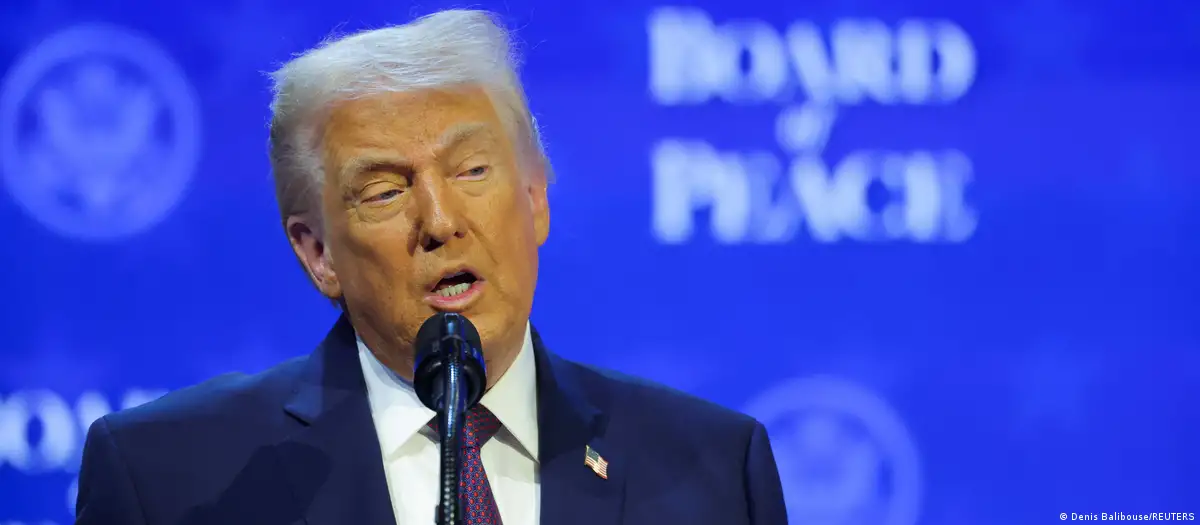

US President Donald Trump has announced the first meeting of his newly formed Board of Peace, aimed at addressing the ongoing situation in Gaza.
The initiative, however, has faced scrutiny due to the absence of several countries and concerns about the US-centric nature of the project. Observers question whether the board can achieve meaningful global consensus or solutions given its composition and limited international participation.
The Goals of the Board of Peace
According to the White House, the Board of Peace is intended to:
- Facilitate dialogue between conflicting parties in Gaza and surrounding regions.
- Develop proposals for humanitarian aid, reconstruction, and long-term stability.
- Serve as a platform for international collaboration on peace initiatives, even if the first meeting is dominated by US representation.
While the initiative is framed as a global effort, many diplomats note that the board’s current membership leans heavily toward US allies and partners, raising questions about its legitimacy and balance.
International Absences and Criticism
Several key nations have reportedly declined to participate in the inaugural meeting, citing concerns about the US-led structure:
- Critics argue the board risks being a symbolic platform rather than a substantive diplomatic forum.
- Some countries worry that a US-dominated approach could undermine established multilateral frameworks such as the United Nations or the Quartet on the Middle East.
- Observers note that effective peacebuilding in Gaza requires inclusive representation from regional actors, including Palestinian authorities, Israel, and neighboring Arab states.
The absence of broader international participation underscores the challenge of establishing credibility for the initiative.
Context: Gaza Conflict and US Involvement
The Gaza region remains a focal point of humanitarian and geopolitical concern:
- Ongoing clashes, blockades, and political instability have created a complex environment for intervention.
- Past US-led initiatives have faced criticism for being perceived as biased toward one side or limited in scope.
- Trump’s Board of Peace emerges amid a broader effort to position the US as a central mediator, though its effectiveness remains uncertain.
The initiative reflects longstanding US interest in Middle East diplomacy, but observers stress that any progress requires balanced engagement with all stakeholders.
Challenges Ahead for the Board
The board faces several immediate challenges in delivering tangible outcomes:
- Legitimacy: Without broad international support, the board risks being dismissed as a US-led political exercise.
- Representation: Meaningful dialogue requires participation from key regional actors, including Palestinians, Israelis, and neighboring states.
- Scope of Authority: Questions remain about whether the board can influence on-the-ground developments or primarily act as a consultative body.
- Global Perception: Skepticism from European, Middle Eastern, and UN representatives may limit cooperation and credibility.
Addressing these challenges will be critical if the board hopes to move beyond a symbolic first meeting toward real impact.
Looking Ahead
The inaugural meeting will set the tone for the Board of Peace and may determine its role in ongoing efforts to stabilize Gaza. Observers will be watching closely to see:
- Whether the board can expand its membership to include more global and regional actors.
- How proposals for humanitarian aid, ceasefires, or reconstruction will be received.
- Whether the US can leverage its position to build trust among parties historically skeptical of American-led mediation.
Success will likely depend on broadening participation and demonstrating tangible outcomes rather than relying solely on US leadership.

