
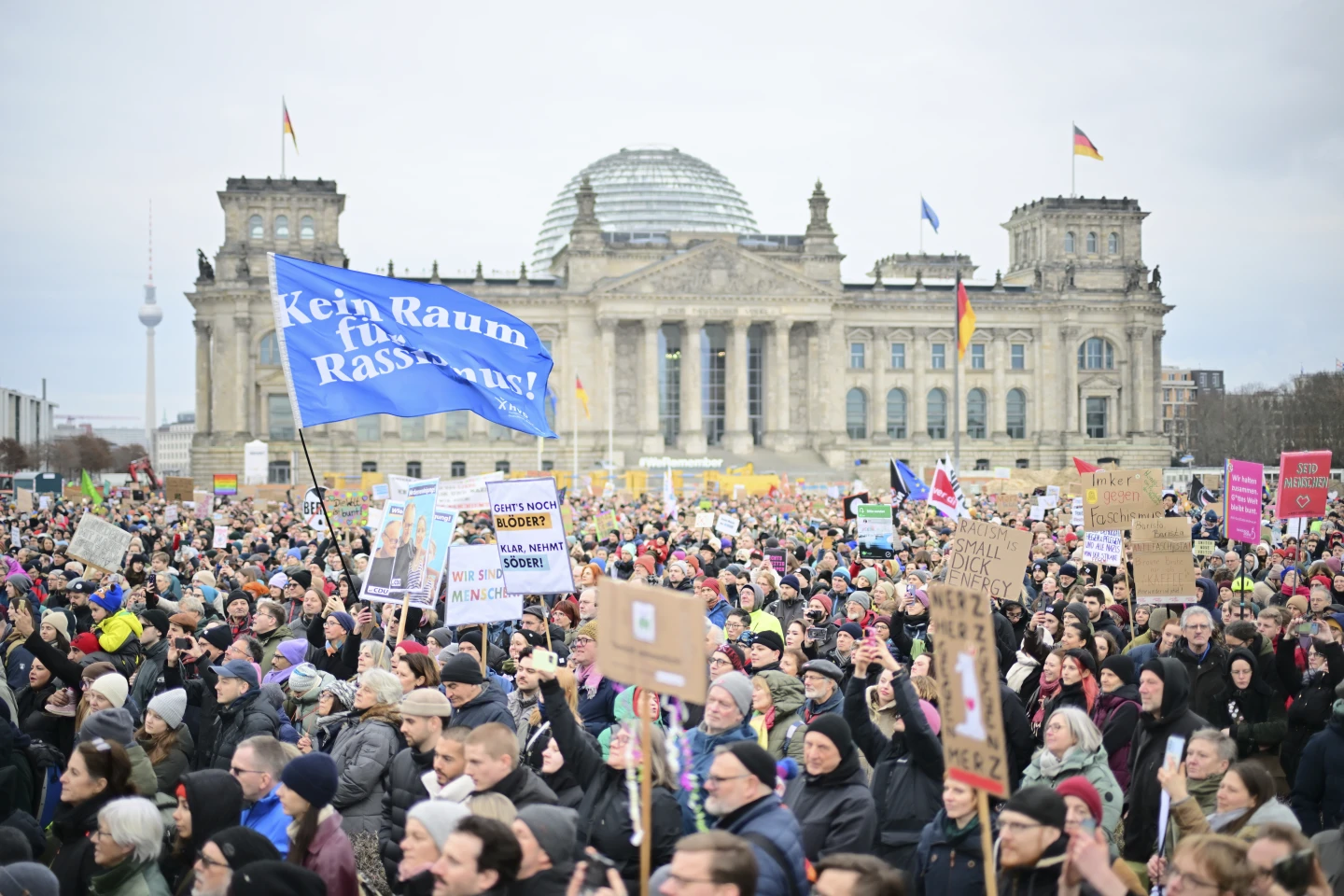
Tens of Thousands Protest Against German Leader’s Migration Proposal Backed by Far-Right Party

Germany is facing growing protests after center-right politician Friedrich Merz, leader of the Christian Democrats (CDU), introduced new migration rules that have sparked outrage across the nation. The new proposals, which aim to tighten border controls and reject more migrants, were controversially supported by the far-right party, Alternative for Germany (AfD). As the country approaches its February 25 elections, this move has ignited heated debates over Germany’s political direction and its dealings with the far-right.
The Controversial Proposal and Backlash
Tens of thousands of protesters took to the streets in major cities like Hamburg, Munich, Cologne, and Leipzig over the weekend, voicing their strong opposition to Merz’s stance on migration. The protesters argued that the CDU leader was breaking a longstanding political tradition in Germany — one that was forged in the aftermath of World War II.
Germany has had a symbolic rule that no democratic party should collaborate with far-right, nationalist groups like the AfD. However, Merz’s recent push for stricter immigration rules, backed by the AfD, has broken that unwritten promise. Many Germans see this as a dangerous shift toward right-wing extremism.
What Merz Proposed and Why It Matters
On Wednesday, Merz submitted a nonbinding motion to the German parliament calling for increased efforts to turn back migrants at the country’s borders. The proposal gained enough support to pass, but it only squeaked through thanks to the backing of the far-right AfD, which has consistently advocated for harsher immigration policies.
Merz’s push for stricter immigration laws comes in the wake of a tragic event — a deadly knife attack by a rejected asylum seeker. The attack has fueled fears about migrant crime in the country and given Merz and his political allies the opportunity to emphasize the need for tougher immigration controls. His plan is to reduce irregular migration, a stance he believes will resonate with voters who are concerned about national security.
Protesters’ Reactions: A Break from Post-Nazi Traditions
The protests that erupted across Germany reflect the strong disapproval of this political shift. Many protesters are especially concerned that Merz’s move compromises the values Germany worked hard to build after the end of Nazi rule. They argue that any cooperation with the AfD could lead to dangerous policies that undermine the democratic values of the country.
A key point of contention for many is the perception that Merz, by accepting AfD support, is opening the door for far-right ideologies to have more influence on mainstream politics. This is not just a disagreement over immigration policy; it’s a debate about the future of Germany’s political landscape and its commitment to a democratic, inclusive society.
The Fate of the Proposal in Parliament
On Friday, the German parliament narrowly rejected a bill that would have introduced even tougher rules on migration. The bill was controversial not only because of its content but also due to its connection with the AfD’s backing. If the bill had passed, it would have marked the first time in modern German history that a piece of legislation had been passed thanks to the support of a far-right party.
While this particular bill was rejected, the situation is far from resolved. The protests and the debate surrounding the issue continue to grow, and Merz’s approach remains a focal point as Germany approaches the upcoming election.
Looking Ahead: What Does This Mean for Germany’s Future?
The controversy over migration laws and Merz’s ties with the far-right have put his party, the CDU, under the microscope. For many, the Christian Democrats’ willingness to work with the AfD is a dangerous move that could lead to a further shift toward nationalism and populism in Germany.
As Germany heads to the polls on February 25, the issue of migration will likely dominate the election debate. Voters are left to decide whether they want to continue down a path of more restrictive policies or whether they believe Germany’s tradition of openness and inclusivity should prevail.
The protests and political division around this issue signal that the upcoming election could be one of the most contentious in recent history. Whether Merz and his CDU party will succeed in convincing voters to back their tough stance on migration remains to be seen, but one thing is clear: the future of German politics is at a critical crossroads.

