Scholz Urges Germany to Never Forget the Holocaust: ‘Our Responsibility Will Never End

Introduction:
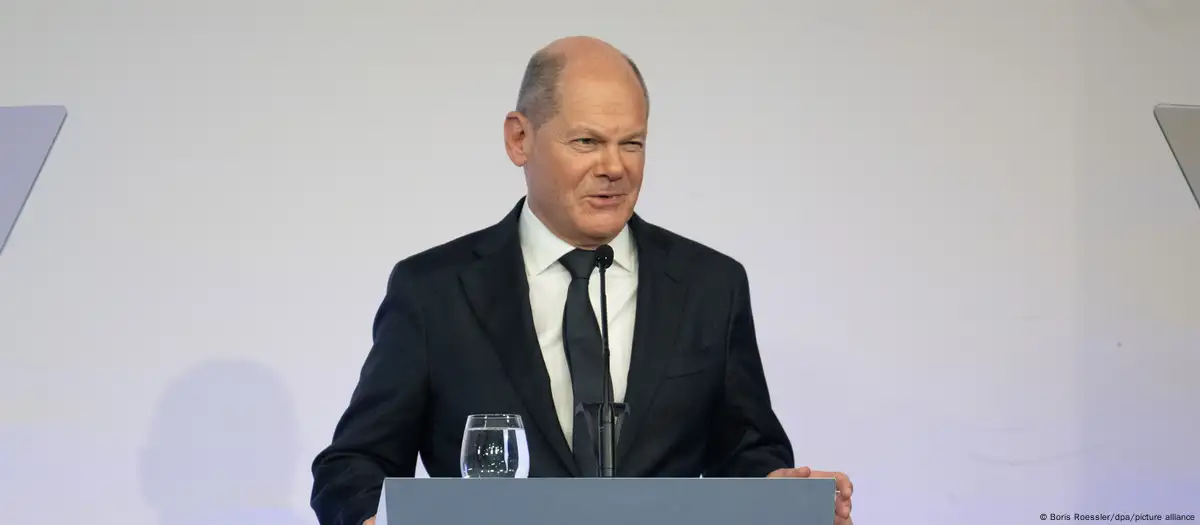
In a powerful speech marking the 80th anniversary of the liberation of Auschwitz, German Chancellor Olaf Scholz reinforced that Germany’s responsibility to remember the Holocaust will never fade. He emphasized that the tragic events of World War II must never be forgotten, warning against the normalization of antisemitism and hate, especially in today’s digital age.
Scholz’s remarks, made at a special event for the Jewish community in Frankfurt, serve as a stark reminder that Germany’s duty to uphold the memory of the Holocaust is something that must be passed down to future generations.
Germany’s Responsibility to Remember the Holocaust
A Commitment That Will Never Fade
Chancellor Scholz made it clear that Germany’s duty to remember the Holocaust will not end. As the world commemorated the 80th anniversary of Auschwitz’s liberation, Scholz stressed the importance of continuing to educate each new generation about the atrocities committed by Nazi Germany during World War II.
Speaking in Frankfurt, a city with a significant Jewish community, Scholz reflected on the devastation of the Holocaust, where over one million people—mostly Jews—lost their lives in Auschwitz alone. He stated that Jewish life is an integral part of both Frankfurt and Germany, adding, “Jewish life is us. That is Germany. That is our identity.”
The Dangers of Forgetting: Why Memory Matters
The Tragic Legacy of Auschwitz
Scholz’s speech focused on the importance of keeping the memory of the Auschwitz-Birkenau concentration camp alive. More than one million people were killed at Auschwitz during World War II, many of them Jews, but also Roma, non-Jewish Poles, and Soviet soldiers.
Scholz strongly rejected any attempt to “turn the page” on the past, saying, “I am against turning the page, saying ‘that was long ago.’” He argued that Germany’s responsibility to remember the Holocaust and its victims is a moral duty that extends far beyond the generations that lived through it.
The chancellor made it clear that forgetting or ignoring this history would be a betrayal of those who suffered. “The Holocaust is millions of individual stories. It’s the story of people just like you and me,” he said, urging the audience to remember each of these stories and pass them down to younger generations.
The Growing Threat of Antisemitism in the Digital Age
Social Media as a Hotbed for Hate
Scholz also expressed deep concern about the rise of antisemitism in today’s world. He highlighted the alarming normalization of hatred, particularly on social media platforms, where extreme views and far-right ideologies are often amplified.
“The internet and social networks, in particular, often become a breeding ground for extremism, incitement, and hatred,” Scholz warned. He stressed that this was a growing threat that cannot be ignored, as online platforms continue to spread dangerous ideas that challenge the values of tolerance and acceptance.
The Role of Education: Passing Down the Memory
A Collective Responsibility for Future Generations
In his remarks, Scholz underscored the idea that the memory of the Holocaust must be passed down to each generation, ensuring that future Germans understand the importance of remembering the civilizational breakdown caused by the Nazis.
“This is a collective memory based on indisputable facts that every person in our country must face, regardless of their origin, family history, or religion,” Scholz stated. He made it clear that this education is crucial for the continued preservation of democratic values and for preventing such horrors from happening again.
By continuing to educate young people about the history of the Holocaust, Germany hopes to foster a more compassionate, inclusive, and aware society—one that is equipped to resist the rise of antisemitism and extremism.
What’s at Stake for Germany’s Future?
Facing the Past to Protect the Future
Scholz’s call to action is not just about remembering the past, but also about shaping the future. He emphasized that only by confronting the ugly truths of Germany’s history can the country prevent a recurrence of such horrors. Antisemitism and hate speech are not just problems of the past—they are still present in today’s world, and as technology advances, they pose even greater risks.
Germany’s commitment to remembering the Holocaust is integral to safeguarding the values of democracy and human rights. By continuing to educate its citizens about the atrocities of the past, Germany can ensure that these lessons are never forgotten, no matter what challenges the future holds.
Conclusion: A Call for Unity and Responsibility
Chancellor Scholz’s speech serves as a powerful reminder that the memory of the Holocaust must remain an integral part of Germany’s national identity. The responsibility to remember and pass down the lessons of history is one that Germany must uphold for generations to come.
In a world where antisemitism is again on the rise, and where social media platforms often serve as breeding grounds for hate, Scholz’s message is clear: Germany must never turn a blind eye to the past, and must continue to fight for a future rooted in tolerance, respect, and human dignity.
Germany’s commitment to preserving the memory of the Holocaust is a collective responsibility—one that cannot and must not be ignored.