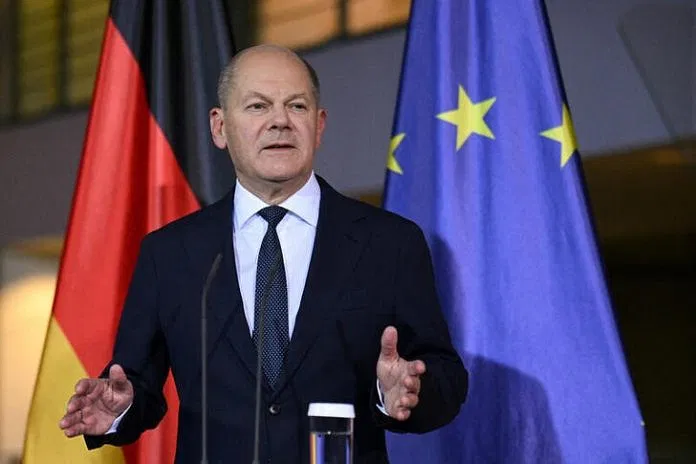
Pressure Builds on Chancellor Scholz as German Government Collapses: Calls for Immediate Elections

Germany is in political turmoil after the collapse of Chancellor Olaf Scholz’s government, leaving the country facing uncertainty at a critical time. Opposition parties and business groups are demanding that Scholz call for new elections immediately, to avoid further instability after his three-party coalition fell apart in dramatic fashion.
Here’s a breakdown of what led to the government collapse, the growing pressure on Scholz, and what it means for Germany’s economy and future.
The Collapse of Scholz’s Coalition: What Happened?
On Wednesday, Germany’s ruling coalition of Scholz’s Social Democratic Party (SPD), the Greens, and the Free Democratic Party (FDP) finally broke down after years of internal conflict. The immediate cause of the collapse was a bitter dispute over how to fix Germany’s massive budget gap—a hole worth billions of euros—and tackle the country’s struggling economy.
The disagreement came at a time when Germany is facing its second year of economic contraction, with forecasts predicting slower growth and mounting challenges in the post-pandemic recovery.
In short, the coalition couldn’t find common ground on key issues, particularly how to fund long-term economic growth while addressing a growing fiscal deficit. The collapse left the government fractured, with no clear path forward, and no real plans on how to rebuild trust between the parties involved.
Why the Pressure is on Scholz to Call for Elections
As the leader of Germany’s largest political party, Scholz is now under intense pressure from both opposition parties and business groups to trigger early elections and give the country a fresh start. For many, the current crisis has highlighted a lack of leadership and an inability to solve critical issues, making it difficult for the country to move forward.
Opposition parties have jumped on the situation, accusing Scholz of failing to lead effectively, while calling for a snap election to allow the German people to choose a new government.
“Germany cannot afford more uncertainty,” said Friedrich Merz, leader of the Christian Democratic Union (CDU). “The country needs new leadership to restore confidence in the economy and politics.”
Business leaders, too, are expressing their concerns, with many seeing the collapse of the government as a signal that Germany’s political system is unstable and struggling to meet the challenges of the 21st century. Leading business groups warn that the current political crisis is only adding to the economic pressures faced by German companies.
The Economic Stakes: A Struggling German Economy
The timing of the government collapse couldn’t be worse. Germany’s economy is already facing several headwinds, including high inflation, sluggish growth, and rising energy prices.
Germany, once considered the economic powerhouse of Europe, is now grappling with the second year of economic contraction. Growth forecasts for 2024 are bleak, with analysts warning that the country may face a recession if action is not taken soon to stabilize the economy.
The collapse of the coalition government means there’s no clear plan on how to address these challenges. Without a unified government, there’s little chance of the kind of decisive action needed to steer the country back to stability.
Germany’s budget deficit is one of the biggest concerns. How the country handles this issue will determine its fiscal future and its ability to maintain its position as Europe’s largest economy. With no functioning government in place, investors and businesses are growing increasingly wary.
What Happens Next?
With the government in limbo, the immediate question is whether Chancellor Scholz will call for a snap election or try to negotiate a new coalition government. Scholz has yet to make any concrete announcements, but the pressure to act is mounting.
If Scholz does decide to hold new elections, it could spark a major political shift. Voters are already frustrated with the government’s inability to address the country’s most pressing issues. With the right-wing CDU and populist parties gaining traction, the next election could see a major change in Germany’s political landscape.
What Does This Mean for the Future of Germany?
The collapse of Scholz’s coalition marks a pivotal moment in Germany’s political history. As the country’s economy continues to face challenges, the next government will need to act decisively to restore confidence and set the country on a path to recovery.
In the short term, the collapse could lead to economic instability and further uncertainty in Germany’s political future. However, there’s a possibility that a new government, with a clearer vision and mandate, could find ways to revive Germany’s economy and address its budgetary concerns.
For now, the ball is in Scholz’s court. Whether he calls for elections or tries to rebuild the coalition, the next steps will be crucial for the future of both Germany’s political system and its economic recovery.
Conclusion: Germany at a Crossroads
Germany’s government crisis has put the country at a crossroads. The collapse of Scholz’s coalition raises significant questions about leadership, economic policy, and political stability. With the opposition calling for snap elections, the pressure is building on Scholz to act quickly.
The decisions made in the coming weeks will have far-reaching consequences for the country’s future, its economy, and its role in the European Union. Whatever happens next, Germany is heading into a period of uncertainty, and its political landscape is likely to look very different when the dust settles.