
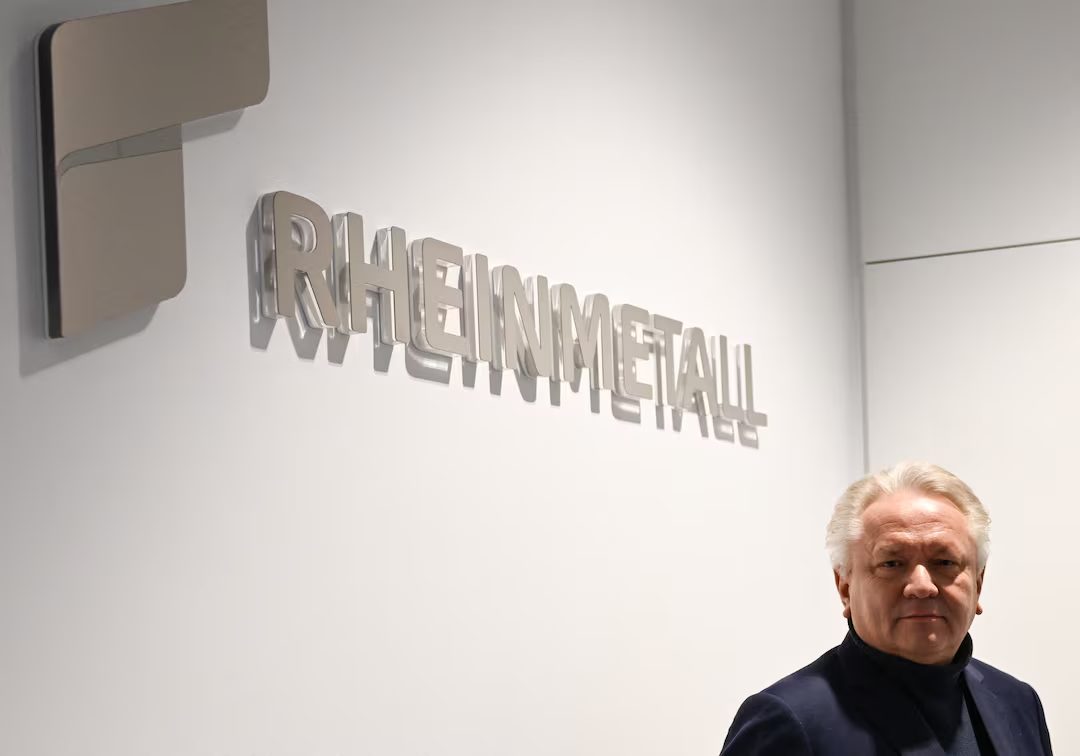
NATO Reveals Shocking Plot to Assassinate CEO of German Arms Maker Rheinmetall Amid Sabotage Campaign

NATO Exposes Assassination Threats Against Rheinmetall CEO as Part of Ongoing Sabotage Campaign
In a shocking revelation, NATO officials confirmed that there were plans to murder the CEO of the German arms company Rheinmetall, Armin Papperger, as part of a larger campaign of sabotage targeting key industry leaders across Europe.
Speaking at the European Parliament on January 28, NATO’s deputy assistant Secretary-General for innovation, hybrid, and cyber, James Appathurai, confirmed media reports that suggested the Russian government may have been involved in plotting against Papperger. This plot is said to be part of a broader strategy to disrupt Europe’s support of Ukraine in its ongoing war with Russia.
The Disturbing Campaign: Acts of Sabotage Across Europe
According to Appathurai, the assassination attempt against Papperger was just one piece of a much larger campaign of sabotage that NATO believes has been ongoing for years. This campaign is described as a series of coordinated attacks, including derailment of trains, arson, and attacks on the property of politicians.
Appathurai further stated that the plot to kill Rheinmetall’s CEO was not an isolated event. NATO believes there were other similar plots aimed at defence industry leaders across the continent, with the ultimate goal of disrupting the supply of arms and equipment to Ukraine.
The Role of Rheinmetall in Ukraine’s War Effort
Rheinmetall, one of Germany’s largest defence companies, has played a key role in supplying weapons and military equipment to Ukraine in its battle against Russian aggression. The company has been involved in producing tanks, artillery, and other heavy weaponry used by the Ukrainian army.
As one of the leading companies supplying Ukraine with essential military equipment, Rheinmetall and its executives, like CEO Armin Papperger, have become prime targets for Russian operatives. This assassination plot appears to be a deliberate attempt to undermine Western support for Ukraine by targeting those who are providing crucial military resources to the war effort.
Russian Government Denies Involvement
In July 2023, CNN reported that the Russian government was behind the plot to kill Armin Papperger, as part of a larger campaign to eliminate key figures in the European defence industry. However, the Kremlin swiftly rejected these allegations, calling them unfounded. Russia has repeatedly denied any involvement in the targeted attacks on Western politicians and business leaders, despite increasing evidence to the contrary.
NATO’s confirmation of the plot, however, has raised serious questions about Russia’s role in orchestrating and supporting such attacks. If these allegations are proven to be true, it would represent a dangerous escalation in the ongoing geopolitical conflict between Russia and the West.
NATO’s Response and Strategy for Tackling Hybrid Threats
James Appathurai also revealed that NATO is actively working on strategies to counter these hybrid threats, which combine conventional military tactics with cyberattacks, sabotage, and disinformation campaigns. These forms of attack are designed to undermine democratic governments and destabilize the political systems of NATO member states.
NATO has been working on a strategy to combat these hybrid threats for years. According to Appathurai, NATO aims to agree on a coordinated approach to tackling these challenges by summer 2025. The alliance’s response will focus on strengthening resilience against such threats and enhancing cooperation between NATO member states, particularly in cybersecurity and intelligence-sharing.
NATO has emphasized the importance of being able to rapidly respond to these attacks, whether they involve physical sabotage, cyberattacks, or disinformation campaigns. The alliance has also made it clear that the West will not be intimidated by these threats and that countries will continue to support Ukraine in its fight against Russian aggression.
The Growing Threat of Hybrid Warfare
The revelation of these assassination plots highlights the growing threat posed by hybrid warfare—a blend of traditional military tactics and modern methods of subversion and sabotage. This type of warfare allows a nation-state like Russia to target civilian infrastructure, disrupt economies, and create political instability without engaging in full-scale military conflict.
By using cyberattacks, sabotage, and covert operations, Russia has been able to carry out attacks without direct military confrontation. These strategies are designed to weaken NATO countries from within and to cause internal divisions by targeting key sectors of society, such as politicians, business leaders, and military contractors.
This type of warfare has become especially concerning for NATO and its allies, as it can be difficult to trace and respond to. NATO’s commitment to developing a strategy to counter these hybrid threats is a clear sign of how seriously the alliance is taking the growing cyber and hybrid security risks.
What’s Next for NATO’s Strategy on Hybrid Warfare?
NATO’s strategy to combat hybrid warfare is expected to focus on a few key areas:
- Enhanced Cybersecurity: Protecting the digital infrastructure of NATO member states from cyberattacks will be one of NATO’s top priorities. This will include strengthening defences against disinformation campaigns, data breaches, and sabotage in the digital space.
- Intelligence Sharing and Coordination: NATO countries will need to work more closely together to share intelligence about hybrid threats. By pooling their resources and expertise, NATO members can better anticipate and respond to attacks.
- Training and Resilience Building: NATO will continue to help its member countries build resilience against hybrid threats, providing training on how to detect and respond to sabotage, cyberattacks, and other forms of hybrid warfare.
- Deterrence and Accountability: NATO will also explore ways to deter aggressor nations from engaging in hybrid warfare, as well as holding nations accountable for any attacks on member states or their allies.
Global Repercussions: What Does This Mean for Europe and Beyond?
The plots against Rheinmetall and other industry leaders are just the latest chapter in the ongoing conflict between Russia and the West. As hybrid threats become more sophisticated and widespread, NATO and its allies must be ready to defend against them.
For Europe, this means an increasing focus on cybersecurity, political resilience, and military preparedness. As hybrid warfare tactics evolve, countries will need to adapt their strategies to ensure that they remain secure and united in the face of such threats.
Conclusion: A New Era of Hybrid Warfare
NATO’s confirmation of assassination plots targeting key industry leaders is a stark reminder of the dangerous and unpredictable nature of hybrid warfare. As the world becomes more interconnected and technology continues to evolve, NATO’s efforts to counter these threats will be crucial in maintaining global stability.
The future of European security depends not only on military might but also on the ability to defend against cyberattacks, disinformation, and sabotage—all of which will require cooperation, innovation, and determination from NATO and its allies.

