
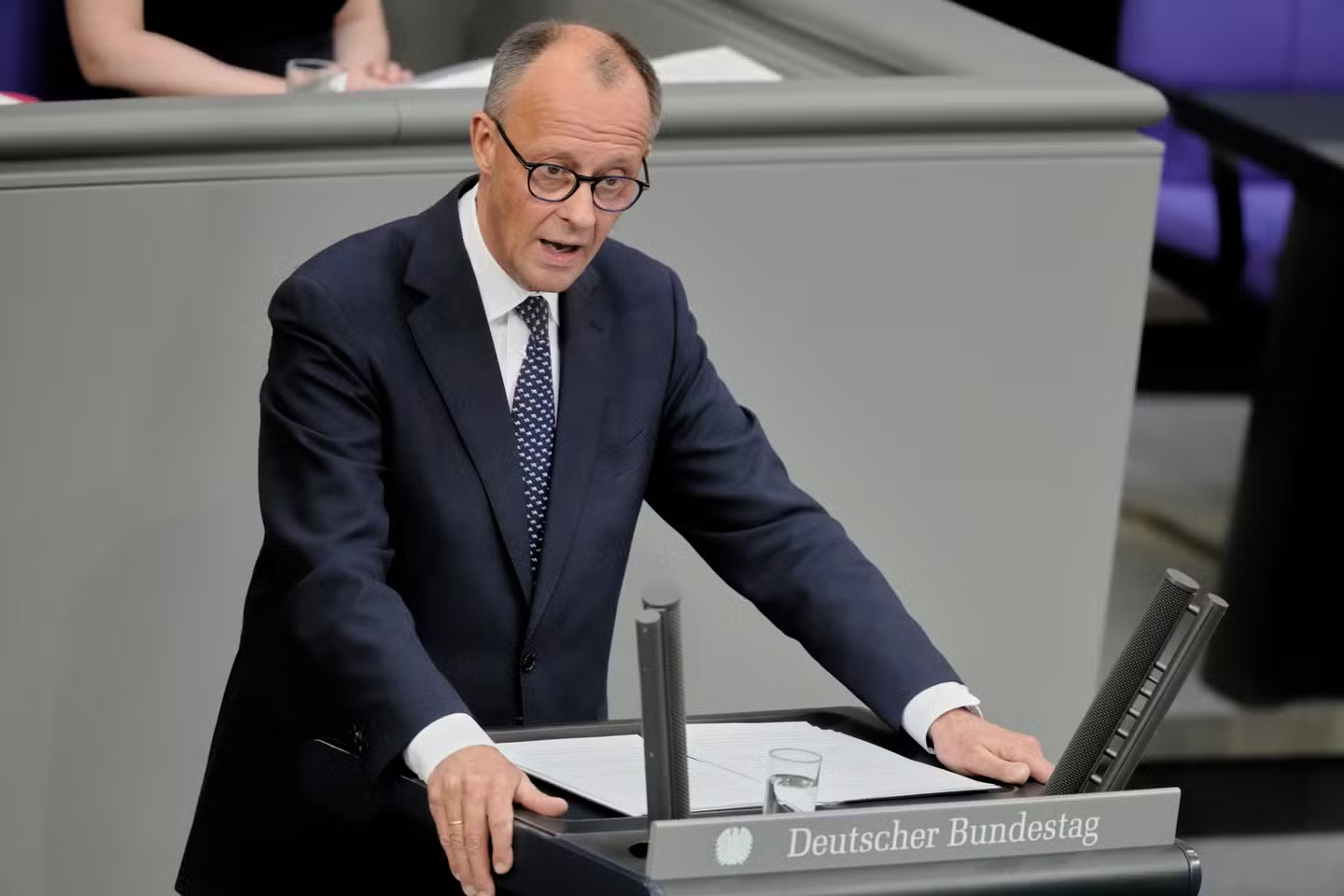

Merz’s Economic Promises Face a Reality Check
When Friedrich Merz took office as Germany’s chancellor in May, he vowed to achieve something his predecessors couldn’t: revive growth in Europe’s largest economy.
Backed by a €500 billion spending program and a package of reforms, Merz entered office with confidence and bold promises. But only months later, his ambitious agenda is running up against the stubborn realities of a sluggish economy, structural hurdles, and global uncertainty.
The Grand Promise: Growth at Any Cost
Merz’s economic pitch was clear—he would unleash massive public spending to modernize Germany’s infrastructure, accelerate green energy, and strengthen its industrial base. The €500 billion package was one of the largest fiscal pushes in recent history, aimed at:
- Rebuilding Germany’s energy security after the shocks of recent years
- Investing in new technologies and digital transformation
- Cutting red tape and enacting labor-market reforms
- Restoring confidence in Germany’s role as Europe’s economic engine
For a country known for fiscal restraint, the scope of Merz’s plan was remarkable.
The Harsh Economic Reality
But since then, the numbers have painted a less encouraging picture. Germany continues to struggle with:
- Sluggish growth: Forecasts show only marginal expansion, far below expectations.
- High energy costs: Despite investment pledges, industry remains under pressure.
- Global headwinds: Trade tensions, supply chain instability, and weak demand from China—Germany’s key export market—are biting hard.
- Domestic hurdles: Bureaucracy and political divisions have slowed implementation of reforms.
The result? Confidence among businesses and consumers remains fragile, undercutting the very recovery Merz promised to deliver.
Critics Take Aim
Opposition politicians and economists are quick to argue that Merz over-promised. Some say his spending program risks inflating public debt without guaranteeing growth. Others suggest his reforms don’t go far enough to address structural weaknesses, such as Germany’s aging workforce and heavy reliance on exports.
Green Party lawmakers, meanwhile, argue that his industrial push lacks sufficient climate focus, while conservatives worry about runaway spending.
Merz’s Response
The chancellor has acknowledged the challenges but insists his plan is still the right path. He argues that growth strategies take time and that Germany is laying the foundations for long-term resilience.
“We are not just patching holes. We are building the future competitiveness of Germany and Europe,” Merz said recently.
Still, with public patience wearing thin and polls showing rising discontent, Merz faces mounting pressure to show tangible results sooner rather than later.
Why This Matters for Europe
Germany is not just another economy—it’s the engine of the European Union. When Germany stalls, the entire bloc feels the slowdown.
A weak German recovery raises concerns for:
- Eurozone stability
- European competitiveness in global markets
- The EU’s ability to fund and lead green and digital transitions
If Merz cannot deliver on growth, the ripple effects could extend far beyond Berlin.
Final Word
Chancellor Friedrich Merz came into office promising to revive Germany’s economy with big spending and bold reforms. But just months in, his agenda faces a sobering reality check: weak growth, global headwinds, and domestic resistance.
Whether his €500 billion gamble can turn the tide remains an open question. For now, Germany—and Europe—are watching closely to see if Merz can turn lofty promises into lasting prosperity.