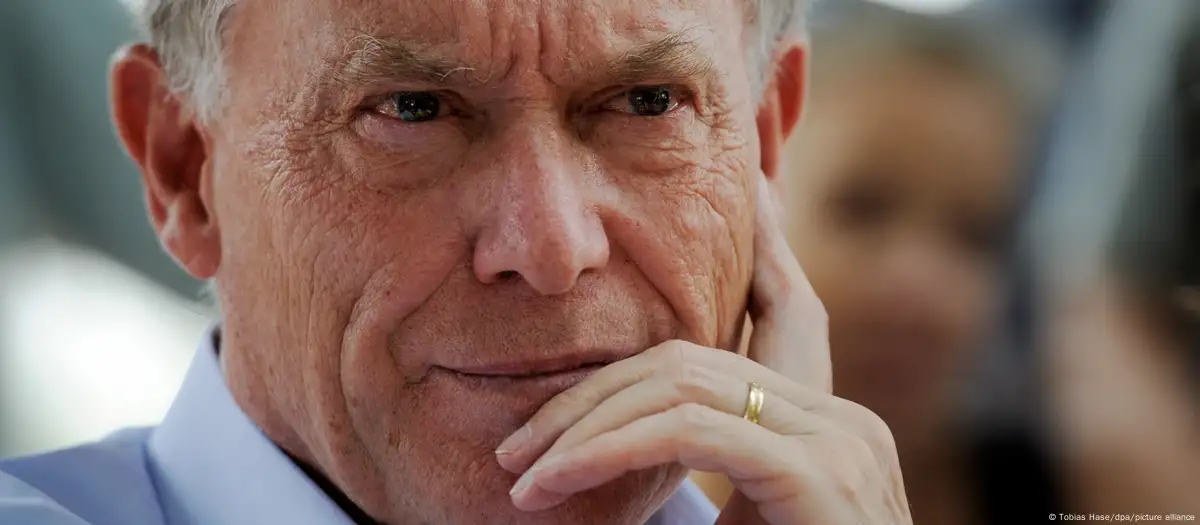
Horst Köhler: Remembering the Humble German President Who Stepped Down After Controversial Remarks

Introduction: A Career of Humility and Service
Horst Köhler, the former German president, was a man of great influence and even greater humility. His long career, which spanned from the World Bank to the International Monetary Fund (IMF) and ultimately to the presidency of Germany, left an indelible mark on the country and the world. Sadly, Köhler passed away at the age of 81, leaving behind a legacy that reflected both his dedication to public service and his quiet, unassuming personality.
Though he was not one to seek the spotlight, Köhler’s resignation in 2010 shocked Germany and made international headlines. His decision to step down after a controversial statement about Germany’s military involvement revealed much about the character of the man who had once held the country’s highest office.
In this article, we’ll look back at the life and career of Horst Köhler, and explore the circumstances that led to his unexpected resignation.
A Career That Spanned the World
Horst Köhler’s career began in the 1970s, when he entered the world of economics and international development. He became a key figure at the International Monetary Fund (IMF), where he worked for several years before returning to Germany. There, his deep understanding of global finance earned him a reputation as a top economist and policy advisor.
But Köhler’s true calling came when he was appointed President of Germany in 2004, a largely ceremonial but highly respected position. During his time in office, he focused much of his attention on issues related to international trade, global economics, and development in Africa—a cause that remained close to his heart throughout his career.
Despite his prestigious roles, Köhler was never one to bask in the limelight. He preferred to let his work speak for itself, focusing on global challenges without seeking personal recognition. His quiet demeanor and commitment to service earned him the admiration of many.
The 2010 Controversy: When a Single Statement Changed Everything
In the spring of 2010, a single interview turned Köhler from a beloved figure to a highly controversial one. In a conversation with Deutschlandradio, Köhler made a statement that would ignite political outrage across Germany.
He said, “A country of our size, which is oriented toward foreign trade and therefore heavily reliant on it, must also know that in case of doubt, in an emergency, military interventions could also be necessary to uphold our interests, for example, to secure trade routes.”
While his remarks were a reflection of Germany’s broader military policy, they struck a chord with both the political class and the general public. The idea of a president discussing military action in such a direct manner—especially in relation to trade—was considered both unusual and risky.
The Backlash: A Storm of Criticism
Almost immediately, Köhler’s words were met with outrage. Critics from all political parties condemned the remarks, calling them “ambiguous” and even “dangerous.” Many felt that the president had overstepped the boundaries of his ceremonial role, making a statement that appeared to justify military interventions abroad for economic reasons.
The reaction was swift, with political figures from across Germany demanding clarification and apologizing for the remarks. Even though Köhler later explained that his comments were not specifically about the ongoing Afghanistan operation, but rather about piracy and the broader role of the Bundeswehr (Germany’s armed forces), the damage had already been done.
Köhler’s statement seemed to touch a nerve in a nation that had long been wary of military interventions, especially after the experiences of World War II. The idea that Germany’s military could be used for purposes of securing trade routes was unsettling to many, and it raised uncomfortable questions about the country’s foreign policy.
A Humble Resignation: Köhler’s Decision to Step Down
Deeply affected by the backlash, Köhler made the surprising decision to resign from the presidency. In a heartfelt statement, he explained that he felt the criticism against him lacked respect for his office. He also said that the personal attacks on him were unfair and unjustified.
Despite his resignation, Köhler remained popular among the German public, with approval ratings that were notably high. Chancellor Angela Merkel, too, supported him during the controversy and even expressed regret at his departure. However, the president’s decision to step down was ultimately his own, driven by his strong sense of personal integrity and the belief that his comments had been misinterpreted.
Köhler’s resignation in 2010 left many wondering whether the country’s system of checks and balances was truly functioning as it should. His departure marked the end of an era of calm, diplomatic leadership and set the stage for a new chapter in Germany’s political history.
Legacy: A Quiet, Humble Leader
Though his presidency was short-lived, Horst Köhler’s legacy is one of quiet service and dedication. His focus on international trade, global economics, and development in Africa shaped his time in office and continued to influence his work even after he left the presidency. Köhler’s deep understanding of the interconnectedness of global markets was a hallmark of his leadership, and his efforts to elevate global discussions on these issues were widely praised.
But it wasn’t just his work on the global stage that defined Köhler. His humility, commitment to service, and belief in personal responsibility were what truly set him apart. Even after stepping down from the presidency, Köhler continued to work behind the scenes on various global economic issues, always seeking to make a difference without the need for public recognition.
Horst Köhler will be remembered not for the controversial statement that led to his resignation, but for the decades of hard work and selfless service that he devoted to his country and the world. His legacy reminds us that true leadership is not about seeking the spotlight, but about quietly working to make the world a better place.
Conclusion: Farewell to a Quiet Giant
Horst Köhler’s passing at the age of 81 marks the end of an era in German politics. While his resignation in 2010 was a pivotal moment in his career, his life’s work shows that leadership doesn’t always have to be loud—it can be humble, steady, and full of integrity.
As Germany reflects on the life and career of Horst Köhler, we remember a leader who gave everything to his country and the world. His quiet, yet powerful approach to leadership will continue to inspire future generations of public servants.