

Germany is entering a new phase of political momentum after a strong showing by the conservative bloc in a recent state election. Friedrich Merz has pledged to move quickly with long-promised reforms to taxes and social security, signaling a more aggressive policy direction in the weeks ahead.
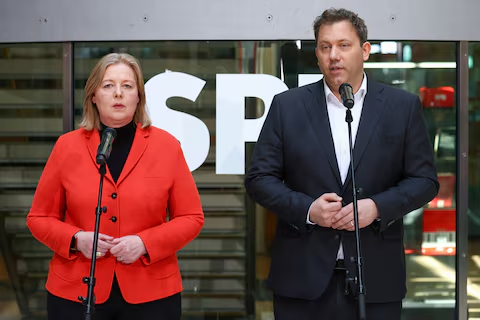
The results of the election have put pressure on the governing coalition, especially the Social Democratic Party of Germany, which lost ground to Merz’s party.
Election Results Shake Up the Coalition
Conservatives Gain Momentum
Merz’s party, the Christian Democratic Union, secured a strong performance in the state election, giving it increased political leverage.
This shift is significant because it:
- Strengthens Merz’s position within the government
- Weakens coalition partners
- Increases pressure to deliver on campaign promises
The outcome has effectively reset the political balance within Germany’s governing coalition.
Focus on Tax and Social Security Reforms
A Push for Structural Change
Following the election results, Merz emphasized the need to act quickly on reforms that have been under discussion for some time.
Key areas of focus include:
- Tax policy adjustments
- Social security system reforms
- Measures to boost economic growth
These reforms are expected to be central to his agenda as he works to stabilize and strengthen the coalition.
Why These Reforms Matter
Economic Pressure and Public Expectations
Germany’s economy is facing challenges, including:
- Slower growth
- Rising costs for households
- Pressure on public finances
Reforming tax and social systems is seen as a way to:
- Encourage investment
- Support businesses
- Maintain social stability
However, such reforms are often politically sensitive and require careful negotiation within the coalition.
Coalition Tensions Could Rise
Balancing Different Political Views
The coalition between Merz’s conservatives and their Social Democratic partners has already shown signs of strain.
With the election results in play, tensions may increase as:
- Conservatives push for faster reforms
- Social Democrats advocate for more cautious changes
- Negotiations become more complex
Maintaining unity will be crucial to avoid political instability.
A More Assertive Leadership Style
Merz Signals Speed and Decisiveness
Merz’s promise to move quickly suggests a shift toward a more decisive governing style.
Rather than prolonged debate, he appears focused on:
- Delivering visible results
- Strengthening his party’s position
- Responding to voter expectations
This approach could define the next phase of his leadership.
The Bigger Picture
A Test for Germany’s Political System
The election results and subsequent policy push highlight a broader trend in German politics:
- Increasing competition between major parties
- Pressure for faster policy decisions
- Greater importance of regional elections
How the coalition handles this moment could shape Germany’s political direction for years to come.
Final Thoughts
Friedrich Merz’s response to the election results signals a turning point for Germany’s government. With momentum shifting toward the conservatives, there is now greater urgency to implement reforms — but also greater risk of internal conflict.
The coming months will reveal whether the coalition can stay united while pushing forward on economic and social changes, or whether political tensions will slow down the reform agenda.

