

Zero Growth. Two Years of Recession. Now This?
Germany just dropped an economic bombshell: zero growth is expected in 2025. After back-to-back years of recession, hopes for a turnaround have been officially dashed.
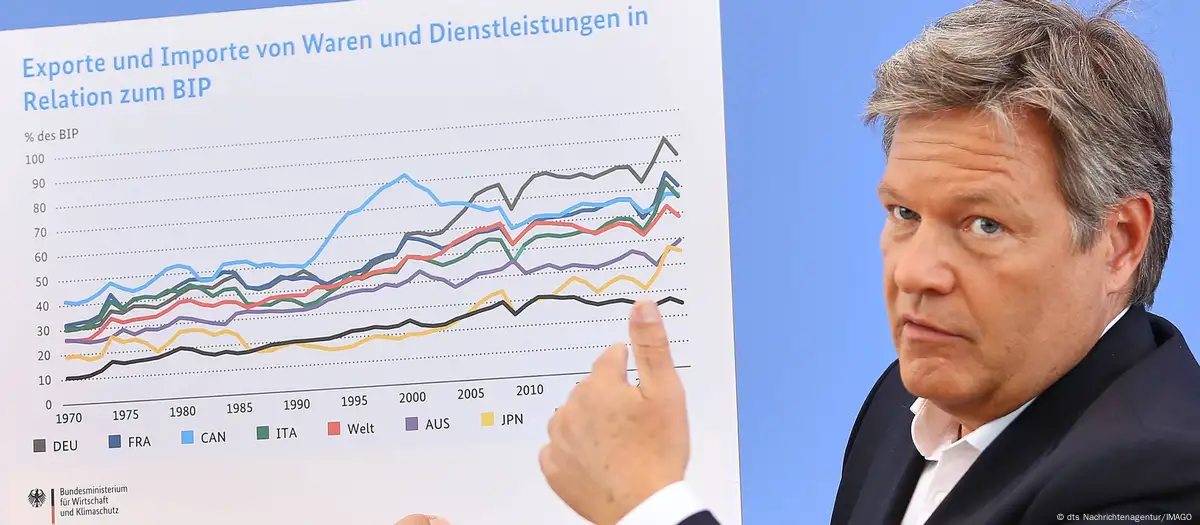
The reason? According to Germany’s outgoing Economy Minister Robert Habeck, there’s one name at the top of the blame list: Donald Trump.
Trump Tariffs Blamed for Economic Meltdown
In a blunt and dramatic statement, Habeck pointed directly at U.S. trade policy under President Trump for throttling Germany’s economic engine.
“There is above all one reason for this,” he said Thursday. “Namely Donald Trump’s trade policy and the effects on Germany.”
The tariffs, which have already begun to take a toll, are threatening to escalate even further—with a proposed 20% tax on EU goods still on the table. And for Germany, that’s a worst-case scenario.
Germany’s Numbers Paint a Grim Picture
Let’s break it down:
- 2023: German economy shrank by 0.3%
- 2024: It shrank again by 0.2%
- 2025: Now projected to see 0% growth
In total, that’s three years of stagnation or outright contraction—Europe’s largest economy stuck in a prolonged slump.
Why Are Trump’s Tariffs Hitting Germany So Hard?
Simple: the U.S. is Germany’s single biggest trading partner.
And when Washington starts slapping tariffs on European goods—especially cars, machinery, and high-tech exports—Germany gets hit first and hardest.
Here’s how the tariffs ripple through:
- German manufacturers face higher costs and less demand in the U.S.
- Auto exports take a massive hit (Germany’s car industry is a pillar of its economy)
- Business confidence drops, leading to slower investment and hiring
- Supply chains become more complex and expensive
For a nation that thrives on exports, particularly to the U.S., Trump’s “America First” trade moves are more than a headache—they’re an economic chokehold.
The EU Is Trying to Negotiate—But Time’s Running Out
Behind closed doors, the European Union has been working to negotiate with the U.S. and head off the worst of Trump’s proposed tariffs.
But those talks are on shaky ground.
With Trump doubling down on protectionism and threatening to further escalate the trade war, European officials fear they may be out of time—and out of leverage.
And Germany, as the EU’s economic powerhouse, stands to lose the most.
Habeck’s Stark Warning: “Little Hope” Left
In his press conference, Habeck didn’t sugarcoat the situation.
He warned that there’s “little hope of relief” for Germany’s economy in the short term—especially if the trade war continues to escalate.
The country, already battered by energy shocks, inflation, and supply chain issues in recent years, now faces what could be its longest economic slowdown in over a decade.
Could This Spark a Broader European Crisis?
What happens in Germany rarely stays in Germany. As the economic engine of the EU, any slowdown in Berlin reverberates across the continent.
- Slower German imports hurt suppliers in countries like Poland, Czech Republic, and the Netherlands
- Weak German demand can drag down the entire eurozone
- Financial markets may respond with uncertainty, putting more pressure on the euro
And with the U.S. and China both playing hardball, Europe could find itself caught in the crossfire—with Germany taking the first and deepest hit.
Final Thoughts: A Warning to the World?
Germany’s zero-growth forecast isn’t just a local story—it’s a global red flag.
It shows how deeply connected the modern economy is, and how quickly trade wars can turn into economic crises. It also shows how a single policy shift in Washington—like a tariff hike—can shake the foundations of an ally’s economy halfway across the world.
Whether you love or hate Trump’s trade tactics, one thing is clear: they’re working—just not for Germany.

