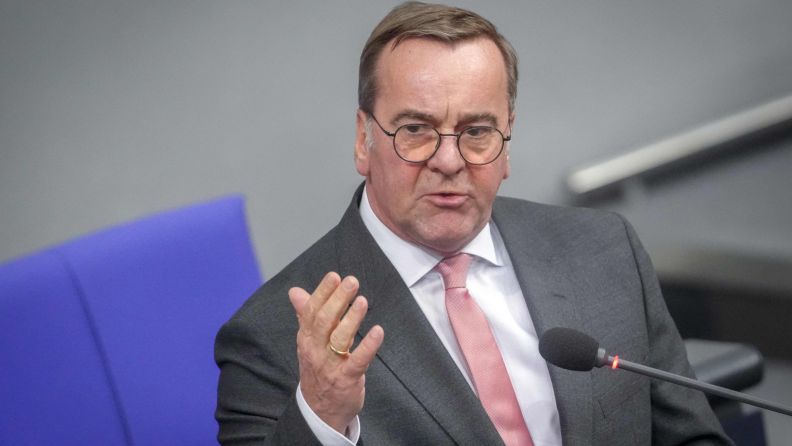
Germany’s Defence Minister Boris Pistorius Visits Kyiv to Strengthen Military Support for Ukraine

In a significant diplomatic move, German Defence Minister Boris Pistorius has arrived in Kyiv to engage in high-level talks with the Ukrainian government, focusing on boosting military support as Ukraine continues its fight against Russia.
Strengthening Ukraine’s Defence Efforts
Pistorius’ visit underscores Germany’s commitment to supporting Ukraine in its ongoing battle against Russian aggression. During his visit, the Defence Minister emphasized that his trip was not just a gesture of solidarity but a clear signal of Germany’s unwavering support for Ukraine.
“Germany, as the largest NATO member in Europe, stands at Ukraine’s side—not alone, but with the Group of Five, and many other allies,” Pistorius stated during his arrival.
The Group of Five consists of Germany, Poland, France, the United Kingdom, and Italy, which have been working together to provide comprehensive military support to Ukraine. These European nations are also focused on bolstering Ukraine’s arms industry, helping it produce more military equipment to sustain its defensive efforts against Russia’s invasion.
Key Discussions and Future Plans
The meeting in Kyiv follows previous talks held in Warsaw with the Defence Ministers of the Group of Five countries, where they discussed joint strategies to strengthen Europe’s security and defence readiness.
One of the main goals of this collaboration is to ensure that Ukraine has the necessary resources and equipment to continue its military resistance. The ministers are working on strategies to enhance Ukraine’s arms production capabilities, ensuring that the country remains self-reliant as it faces the ongoing challenges of the war. Pistorius has called for increased European cooperation to reinforce military supplies and other strategic aid.
Germany’s active involvement in this collective European approach demonstrates the country’s role as a key player within NATO and its commitment to Ukraine’s long-term security.
Germany’s Role in European Security
The Group of Five represents a concerted effort to strengthen European security in the face of external threats, particularly from Russia. By pooling resources and military expertise, these nations aim to enhance their collective defence capabilities. Pistorius’ remarks highlight Germany’s position as a leading European power, and his visit is a demonstration of the country’s leadership in the ongoing conflict.
Germany’s contribution to Ukraine’s war efforts has been crucial, including the supply of advanced weapons and other military aid. Pistorius’ trip reinforces Germany’s position as one of Ukraine’s most important military allies, showing that the country is prepared to continue supporting Ukraine, not only in terms of military aid but also through long-term cooperation in arms production and European defence.
Broader Implications for NATO and European Unity
The collaboration among the Group of Five highlights the strengthening of European unity in the face of external threats, particularly from Russia. By working together, these nations are aiming to create a more resilient and independent defence network within Europe, reducing reliance on external powers.
The talks between Pistorius and the Ukrainian government also emphasize the broader NATO strategy to support Ukraine in its fight against Russian forces. As a leading member of NATO, Germany is taking an active role in ensuring that Ukraine receives the support it needs to defend its sovereignty, while also contributing to Europe’s long-term security framework.
Conclusion: A Strong Signal of Solidarity
Boris Pistorius’ visit to Kyiv sends a powerful message of solidarity from Germany to Ukraine. As part of the Group of Five, Germany is committed to supporting Ukraine both in the short and long term, working to strengthen Ukraine’s arms industry and ensuring continued military aid. This visit marks another important step in the ongoing efforts to defend European security and reinforce NATO’s resolve against Russian aggression.