
Germany’s Chancellor Merz Falls Behind Far-Right Party in Polls Amid Controversial Decisions

A Rocky Start for Chancellor Friedrich Merz
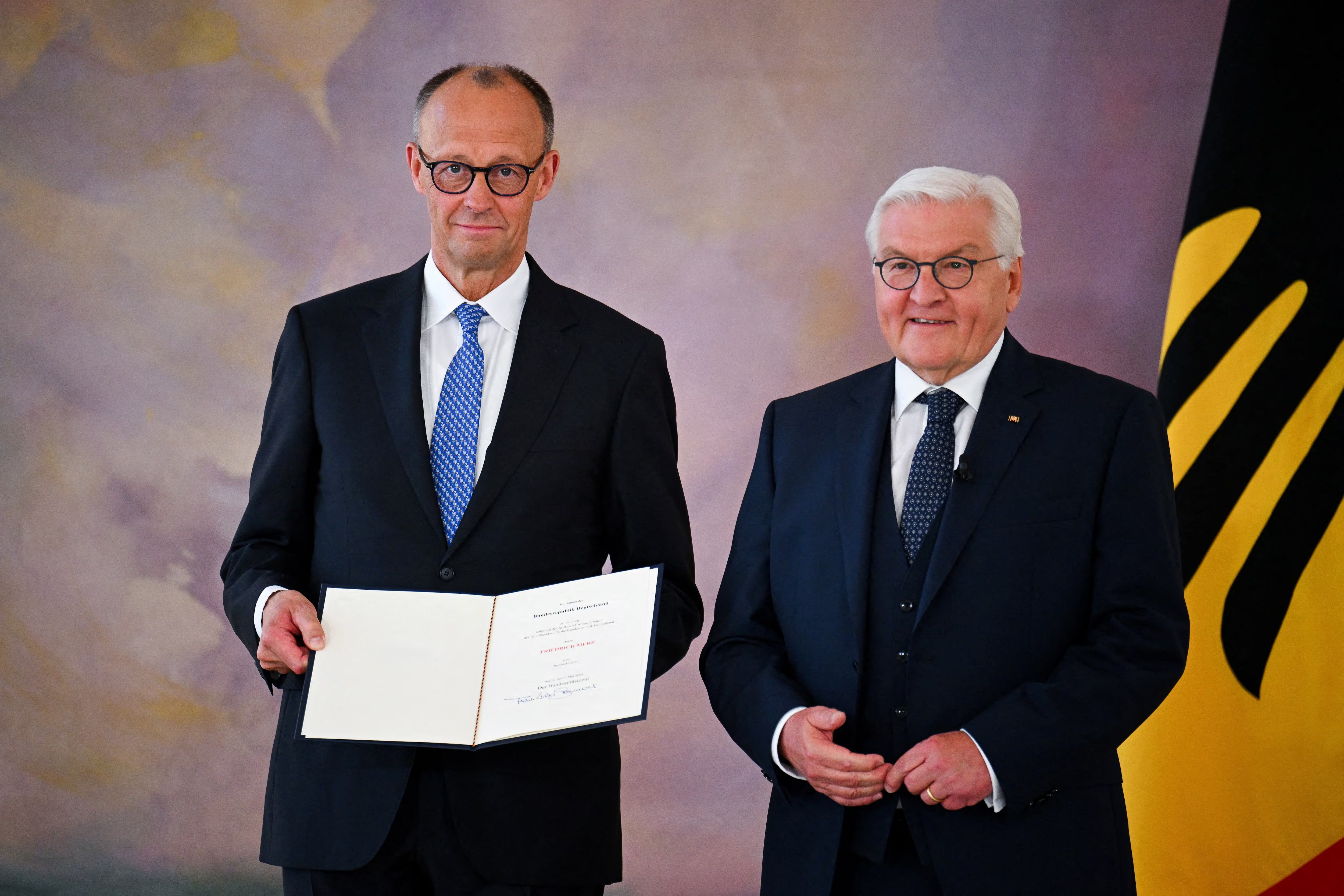
Germany’s Chancellor Friedrich Merz has experienced a challenging start to his tenure, with his conservative party slipping behind the far-right Alternative for Germany (AfD) in recent polls. Marking his 100th day in office, Merz’s leadership has been tested by a series of controversies and policy reversals that have unsettled both allies and critics alike.
This unexpected dip in popularity highlights growing unease within Germany’s political landscape and raises questions about the future direction of the country’s conservative movement under Merz’s leadership.
The Polls: A Shocking Shift in Public Opinion
Recent opinion polls show Merz’s Christian Democratic Union (CDU) trailing the far-right AfD, a development that was unthinkable just months ago. The AfD, known for its nationalist and often polarizing stances, has capitalized on public dissatisfaction and political missteps by Merz’s government.
This shift reflects voter frustration over key issues such as judicial appointments, foreign policy decisions, and internal party divisions. It also signals a potential realignment in German politics as voters seek alternatives amid growing uncertainty.
Key Controversies: What Went Wrong?
Several incidents have contributed to the decline in support for Merz and the CDU:
1. The Botched Judicial Appointment
One of the most damaging episodes was a controversial judicial appointment that drew criticism for appearing politically motivated and lacking transparency. The decision sparked outrage among legal experts and opposition parties, who accused the government of undermining judicial independence.
This misstep damaged Merz’s image as a strong and principled leader, instead portraying him as prone to political calculation at the expense of institutional integrity.
2. U-Turn on Supplying Arms to Israel
Merz’s initial hesitation and subsequent reversal on supplying arms to Israel during a period of heightened conflict further complicated his standing. Germany’s support for Israel has long been a sensitive issue domestically and internationally, and the wavering stance confused allies and critics alike.
The flip-flop raised concerns about Germany’s foreign policy consistency and its role on the global stage, especially within NATO and the European Union.
3. Alienation of Allies and Foes
Beyond these headline controversies, Merz has struggled to maintain support within his own party and among coalition partners. His assertive leadership style and policy shifts have alienated both traditional conservative voters and centrist allies.
This political isolation has made it difficult for Merz to rally a unified front or push through his agenda effectively, further eroding public confidence.
The Rise of the Far Right: Why AfD Gains Ground
The AfD’s ascent in the polls reflects broader social and political trends across Germany and Europe. Economic anxieties, immigration debates, and dissatisfaction with established parties have fueled support for nationalist and populist movements.
The AfD has positioned itself as the voice of those frustrated by the status quo, leveraging concerns over Germany’s energy policies, EU regulations, and cultural changes. As the CDU stumbles, the AfD’s message resonates more loudly with segments of the electorate seeking decisive and unorthodox leadership.
What This Means for Germany’s Political Future
Merz’s slipping support signals potential turbulence ahead for Germany’s political landscape. The CDU, historically a dominant force, now faces the challenge of reclaiming voter trust and countering the AfD’s momentum.
Several scenarios could unfold:
- Internal Party Reforms: Merz may attempt to rebrand the CDU by addressing internal divisions, clarifying policy positions, and rebuilding alliances to present a united front.
- Coalition Reconsiderations: The government might need to strengthen ties with coalition partners or consider new alliances to maintain parliamentary stability.
- Policy Reassessment: Responding to voter concerns with clear, consistent policies—especially on judicial independence and foreign affairs—will be crucial to restoring credibility.
- Rise of Opposition: If the AfD continues its ascent, it could force a significant shift in German politics, pushing mainstream parties to adopt harder stances on immigration, security, and EU relations.
Expert Opinions and Public Sentiment
Political analysts warn that Merz’s challenges are emblematic of a wider crisis within conservative politics in Europe, where traditional parties struggle to adapt to changing voter demands and rising populism.
Public opinion surveys suggest that many Germans are concerned about the country’s direction but remain wary of the far right’s divisive rhetoric. This creates a complex political environment where centrist parties must navigate carefully to regain trust.
Merz’s Response and Next Steps
In response to the setbacks, Chancellor Merz has pledged to listen more closely to the public and focus on delivering pragmatic solutions. His office emphasizes ongoing efforts to stabilize the economy, improve energy security, and strengthen Germany’s role internationally.
Whether these measures will be enough to reverse the polling trends remains uncertain. The next few months, including legislative debates and upcoming elections, will be critical tests for Merz’s leadership and the CDU’s future.
A Pivotal Moment for German Politics
Friedrich Merz’s first 100 days as Germany’s Chancellor have been marked by significant challenges and unexpected setbacks. The CDU’s fall behind the far-right AfD in polls underscores growing political uncertainty and voter dissatisfaction.
As Germany faces complex domestic and international issues, Merz’s ability to unify his party, clarify policies, and restore public confidence will determine not only his own political survival but also the country’s broader path forward.
The coming months will be closely watched by political observers and citizens alike, as Germany’s political landscape may be reshaped in ways that will influence European politics for years to come.

