
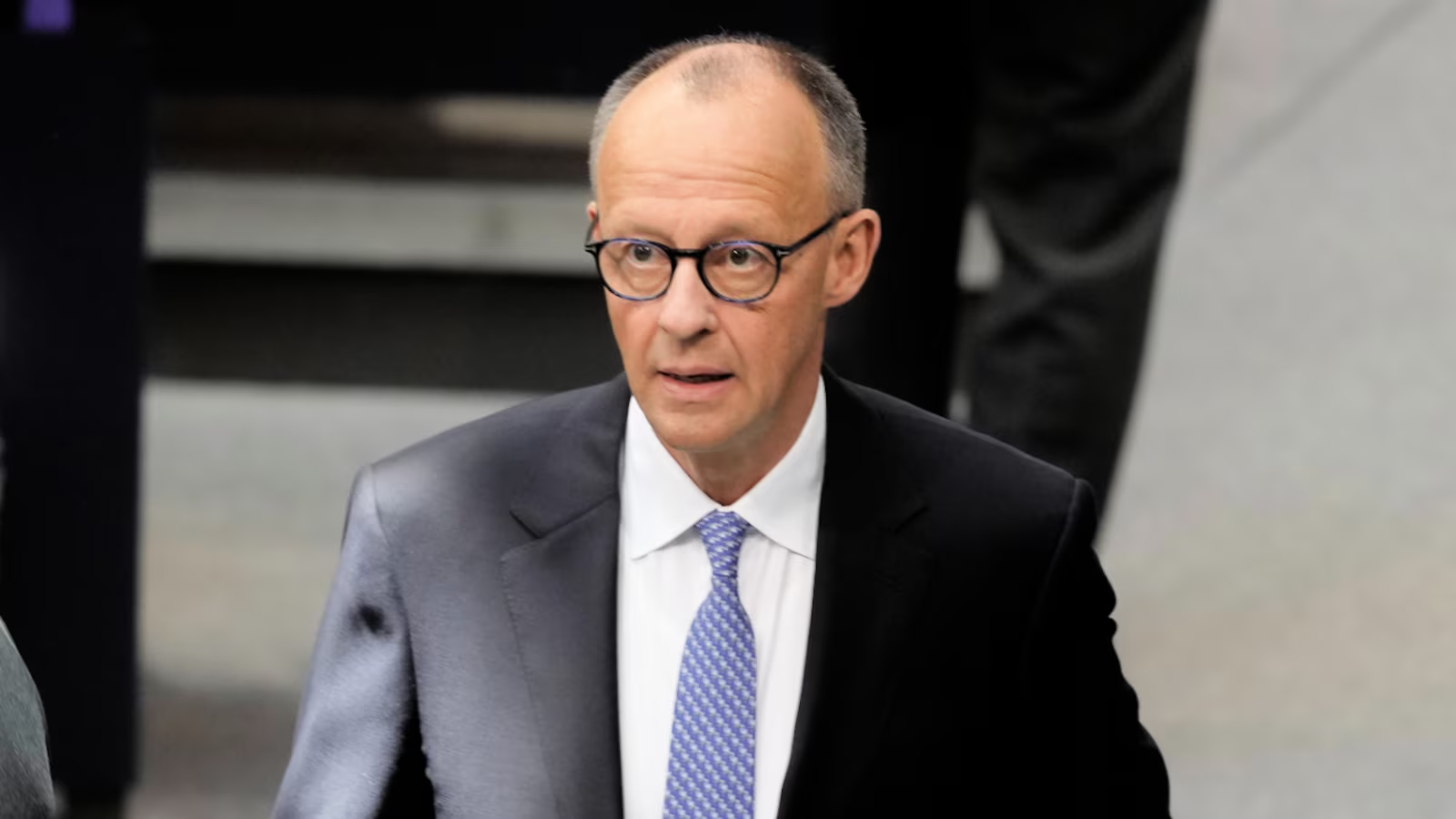
Germany Hopes Ukrainian President Zelenskiy Will Join Trump-Putin Summit, Says Chancellor Merz

Chancellor Merz Expresses Hope for Ukraine’s Inclusion in Key Russia-US Talks
German Chancellor Friedrich Merz has expressed his hope that Ukrainian President Volodymyr Zelenskiy will be included in the upcoming summit between US President Donald Trump and Russian President Vladimir Putin. The meeting, set to address critical issues in international relations, could have far-reaching implications for the ongoing conflict in Ukraine.
Why Ukraine’s Participation Matters
The Russia-Ukraine war remains one of the most pressing global crises, with devastating humanitarian and geopolitical consequences. Chancellor Merz emphasized that involving Zelenskiy in the talks would ensure that Ukraine’s perspective is directly represented during negotiations that could shape the region’s future.
Merz’s Diplomatic Approach
Merz’s comments reflect Germany’s ongoing commitment to supporting Ukraine while seeking diplomatic solutions. By advocating for Zelenskiy’s presence, the German government aims to foster a more inclusive dialogue that considers the interests of all parties affected by the conflict.
The Significance of the Trump-Putin Summit
The summit between Trump and Putin is widely anticipated as a pivotal moment for US-Russia relations. Observers hope it could pave the way for de-escalation or new agreements addressing the war in Ukraine, arms control, and broader security concerns.
Challenges Ahead
Including Zelenskiy in the talks, however, presents diplomatic challenges. Russia has often rejected Ukraine’s direct involvement in negotiations, and the dynamics between the leaders will be closely scrutinized. Still, Germany’s push for Ukraine’s voice highlights the importance of comprehensive peace efforts.
What Comes Next?
As preparations continue for the summit, global attention will focus on the agenda and participants. Chancellor Merz’s call for Ukraine’s involvement signals a desire for transparency and fairness in resolving one of today’s most complex conflicts.

