Germany’s 2025 Federal Elections: Everything You Need to Know – Key Dates, Candidates, and Issues at Stake

Germany’s 2025 Federal Elections: What You Need to Know
With just 18 days left before the German federal elections on February 23, 2025, the country is gearing up for a highly anticipated political event that could shape the future of Germany’s governance. The Bundestag elections will decide the composition of Germany’s lower house of parliament, which holds significant legislative authority.
In light of recent political upheavals, this election has become a crucial moment in German politics. Chancellor Olaf Scholz’s coalition government collapsed in November 2024 after a dramatic cabinet reshuffle, which included the sacking of Finance Minister Christian Lindner. The government was further weakened by a vote of no confidence in January 2025, leading to the dissolution of the 20th Bundestag and the announcement of this snap election.
When Is the Election?
The official date for the election is February 23, 2025, marking a critical day for German democracy. Voters will head to the polls to choose their representatives for the Bundestag, which has the power to shape national policy across a wide range of issues, from the German economy to foreign relations and climate change.
Key Parties and Candidates
Germany’s political landscape is dominated by a mix of center-left and center-right parties, each vying for control of the chancellorship. Here are the key players to watch:
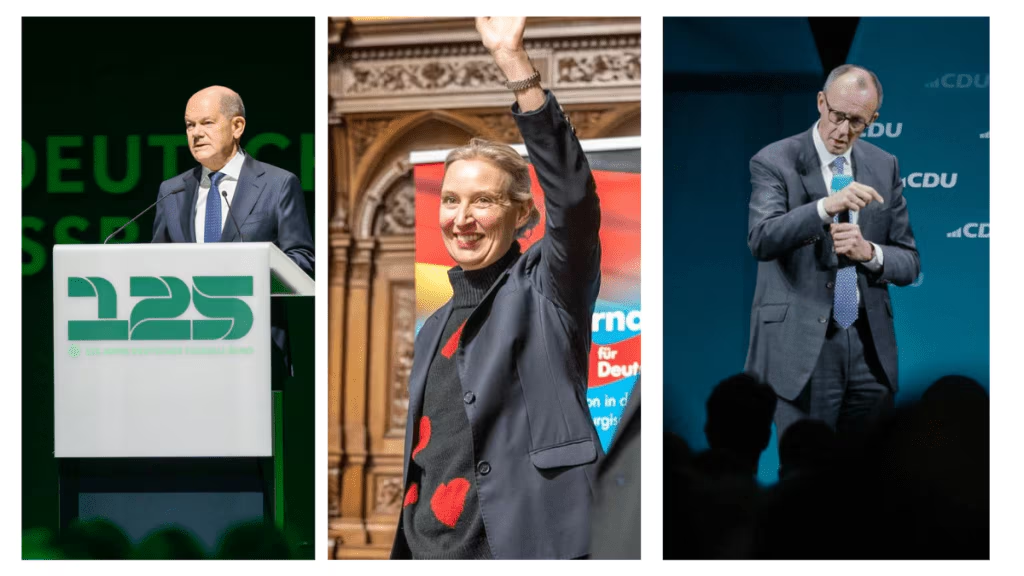
1. Olaf Scholz and the Social Democrats (SPD)
Chancellor Olaf Scholz from the Social Democratic Party (SPD) has been the face of the ruling government since 2021. Scholz, a center-left leader, has focused on climate policy, economic stability, and European cooperation during his tenure. However, his leadership faced challenges after a cabinet crisis in late 2024, and now, Scholz’s ability to maintain power is in question.
The SPD is keen on preserving the policies that Scholz has championed, but the party faces stiff competition from both the opposition conservatives and rising smaller parties like the Greens and AfD.
2. Friedrich Merz and the Christian Democrats (CDU)
On the opposite side, the Christian Democratic Union (CDU), led by Friedrich Merz, is the main opposition party. Merz, a former corporate lawyer, is known for his conservative values, advocating for stronger economic reform and a firmer stance on migration. He has pushed for a harder approach to Russia’s actions in Ukraine, calling for more military support and increased economic sanctions.
The CDU, along with its Bavarian sister party, the Christian Social Union (CSU), forms a powerful center-right alliance that has traditionally dominated German politics. However, with the rise of smaller parties, the CDU’s grip on power is now under threat.
3. The Greens: Germany’s Climate Champions
The Green Party, a key player in Germany’s current coalition, has seen growing support over the last few years. The Greens focus on climate action, sustainable energy, and social justice. While the Greens are a natural ally for Scholz’s SPD, their left-leaning policies on environmental protection and social welfare are increasingly popular among younger voters. However, the Greens also face challenges balancing their environmental agenda with the economic realities of Germany’s heavy industrial sector.
4. Alternative for Germany (AfD): The Far-Right Challenge
The Alternative for Germany (AfD) has risen in prominence in recent years, positioning itself as an anti-establishment party with strong views on immigration and national sovereignty. The party has grown by capitalizing on public concerns over migrants, social issues, and Germany’s EU membership. The AfD’s rise is a symptom of the political polarization in Germany, particularly among voters frustrated with the traditional left-right divide.
Key Issues in the 2025 Election
The political landscape for the 2025 election is shaped by several key issues that are top of mind for voters:
1. Ukraine Conflict and Germany’s Role
One of the most pressing issues is Germany’s stance on Ukraine. As the war with Russia continues, Germany’s role as a key EU player has been under intense scrutiny. Scholz has advocated for supporting Ukraine through sanctions on Russia and military aid, but this has divided public opinion. The AfD and conservative factions within the CDU are calling for a harder line, while the Greens push for stronger humanitarian efforts and peace negotiations.
2. The German Economy and Growth Challenges
Germany’s economy, once the engine of Europe, has faced significant challenges, particularly since the outbreak of the Ukraine war. The country is grappling with rising inflation, energy shortages, and supply chain issues. The next government will need to address these issues, with economic recovery, job creation, and industrial innovation at the forefront.
Merz’s CDU has focused on tax cuts and economic liberalization, while Scholz and the SPD emphasize government investments in green technologies and social welfare programs. However, the Greens argue that sustainable economic growth is the key to a future-proof economy.
3. Migration Policy and Integration
Migration has been a divisive issue in German politics, especially since the 2015 refugee crisis. The CDU and AfD have called for stricter controls on immigration, focusing on national security and cultural preservation. In contrast, the SPD and Greens advocate for a more inclusive approach, with emphasis on integration and human rights. This issue will play a key role in the election, especially with Germany’s growing immigrant population.
4. Climate Change and Energy Policy
The future of Germany’s climate policy is another hot topic. While the SPD and Greens emphasize aggressive climate action, the CDU and AfD are more skeptical about the impact of green energy policies on the economy. The next government will need to balance environmental goals with economic realities, particularly in energy-intensive sectors like automotive and manufacturing.
The Road Ahead: What’s at Stake?
The outcome of the 2025 elections will have a profound impact on Germany’s future — both within Europe and globally. The next chancellor will inherit a nation facing economic challenges, political instability, and international pressures. How these issues are managed could determine whether Germany emerges stronger or more divided.
For voters, this election offers a chance to shape the future of Germany’s climate policy, economic strategy, and foreign relations. With key issues like Ukraine, migration, and the economy on the table, the 2025 election is shaping up to be one of the most important in recent memory.