
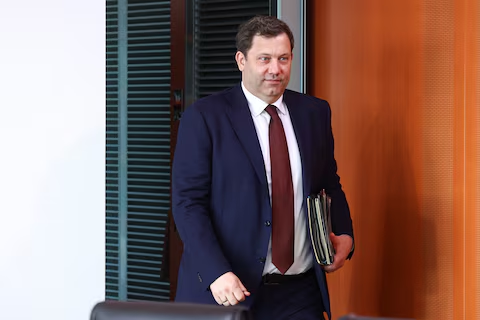

Germany’s Finance Minister Lars Klingbeil has outlined a sweeping set of economic reforms aimed at revitalizing the country’s slowing economy. Speaking on Wednesday, Klingbeil emphasized the need for a new growth model that balances fiscal responsibility with measures to ease the burden on households and businesses.
Proposed Measures to Strengthen the Economy
Among the key initiatives proposed are reforms to income tax and a cap on the excess profits of energy companies. Klingbeil explained that these steps are designed to address both long-term structural challenges and immediate cost pressures caused by global energy market shocks.
The income tax reform aims to simplify the system while providing relief to middle-income earners. Meanwhile, the proposal to limit energy companies’ excess profits seeks to prevent extraordinary price gains from further straining households already facing rising living costs.
Addressing Germany’s Economic Slowdown
Klingbeil described Germany’s current economic situation as sluggish, highlighting that growth rates have lagged behind historical averages. He stressed that the country needs a new approach to growth, one that is resilient to global market volatility and geopolitical uncertainty.
The energy sector, in particular, has faced enormous pressure from global supply disruptions and rising costs, making the reform of profit structures a key part of broader economic stability measures.
Balancing Fiscal Responsibility and Relief
While outlining these reforms, Klingbeil emphasized the importance of maintaining fiscal discipline. He indicated that any measures would be designed to support growth without undermining the country’s long-term financial health. This dual approach is intended to strengthen the economy while also protecting citizens from excessive costs.
The proposals reflect a broader European trend of governments seeking creative solutions to balance economic growth, social equity, and energy market challenges.
Next Steps
Finance Minister Klingbeil said the government would now begin consultations with stakeholders, including businesses, labor groups, and regional authorities, to refine and implement the proposed reforms. The goal is to create a growth model that is sustainable, inclusive, and capable of withstanding external shocks such as global energy price fluctuations.
The proposals mark a significant step in Germany’s economic strategy, signaling a willingness to adopt structural reforms to ensure long-term stability and prosperity.

