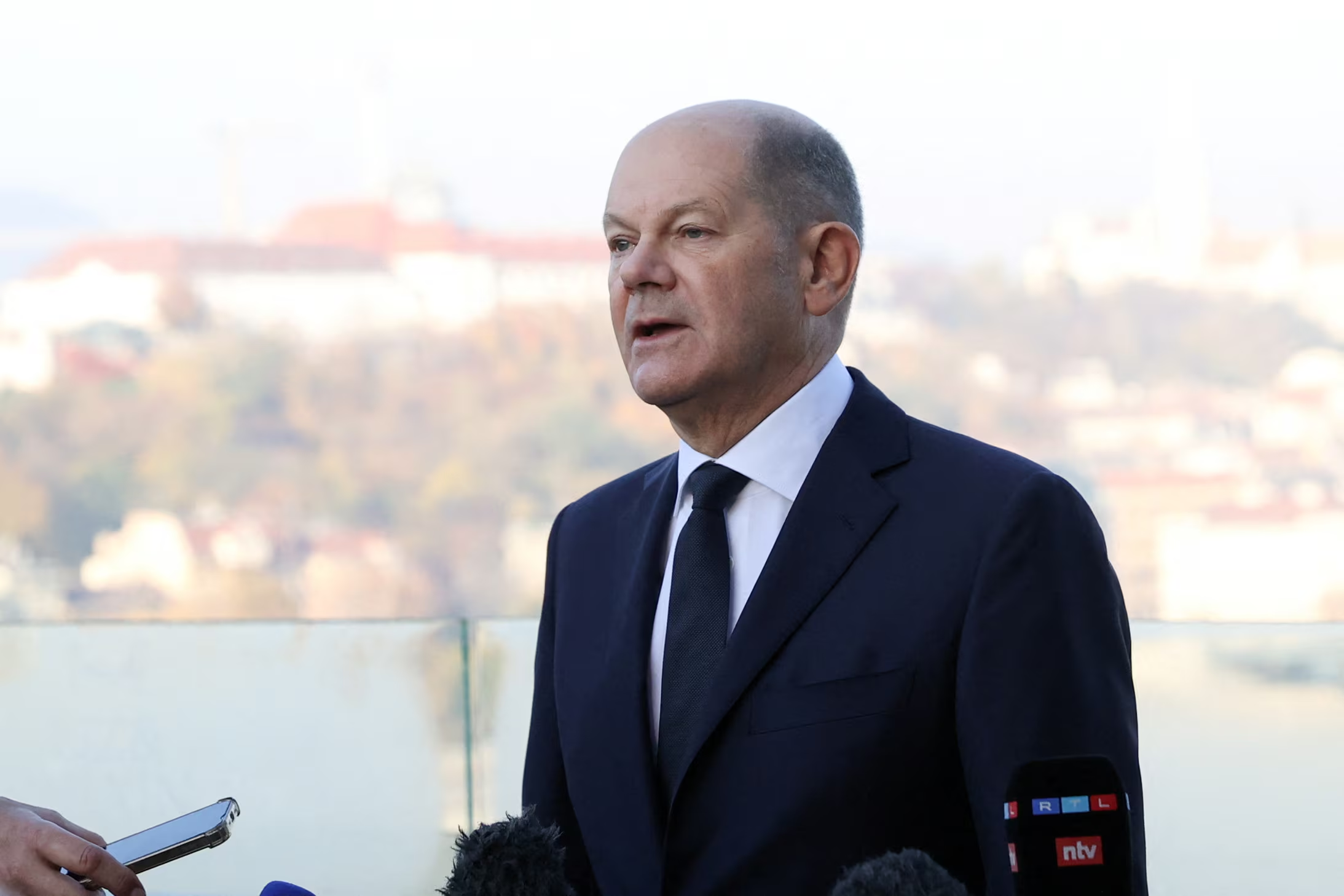
Germany to Hold Snap Election in February After Chancellor Scholz Loses Confidence Vote

Germany’s Parliament Dissolved: Snap Election Scheduled for February
In a dramatic move, German President Frank-Walter Steinmeier has announced the dissolution of Germany’s parliament, confirming that the country will hold snap elections on February 23, 2025. The decision follows the collapse of Chancellor Olaf Scholz’s government, after his coalition government lost a confidence vote earlier this month.
This decision comes at a time of significant political instability in Germany, with the country grappling with both domestic challenges and global issues. Let’s explore what led to this momentous decision and what it means for Germany’s future.
Chancellor Scholz’s Government Collapses Amid Political Turmoil
The crisis began when Chancellor Olaf Scholz, a member of the Social Democrats (SPD), lost a critical confidence vote in parliament. The collapse followed the exit of Christian Lindner’s Free Democrats (FDP) from the ruling coalition, leaving the government without a majority in the Bundestag.
As a result, Olaf Scholz will continue as caretaker chancellor until the new elections take place. However, the situation has raised serious questions about Germany’s ability to maintain political stability during this period of uncertainty.
In his speech at Bellevue Palace in Berlin, President Steinmeier emphasized that the country needed a “government capable of acting” and “reliable majorities in parliament” in order to navigate through what he called “difficult times”. With rising security concerns and ongoing economic instability, Steinmeier made it clear that it was crucial for Germany to find political leadership that could unite the country.
Recent Events Add to the Pressure: The Aftermath of the Christmas Market Attack
The political crisis comes at a time when Germany is reeling from a shocking attack. A deadly car-ramming incident at a Christmas market last week has sparked renewed debates about security and immigration policies. The suspect, Taleb al-Abdulmohse, a psychiatrist from Saudi Arabia, had lived in Germany for nearly 20 years. He was reportedly a supporter of the far-right Alternative for Germany (AfD) party, and the attack has led to further polarizing discussions about national security.
President Steinmeier expressed his concerns over the state of political discourse, urging that hatred and violence have no place in Germany’s upcoming election campaign. He also referenced the influence of foreign entities, particularly social media platforms like X (formerly Twitter), highlighting the risks posed by disinformation.
Germany’s Political Landscape: Rising Right-wing Influence and Polls
The upcoming election will be a key moment in shaping the future of German politics. According to recent polls, Friedrich Merz, the conservative challenger from the Christian Democratic Union (CDU), is currently leading by a comfortable margin of more than 10 percentage points over Scholz’s Social Democrats.
Merz has been vocal in criticizing the government’s approach to the economy, arguing that the current administration has stifled growth with excessive regulations. As a result, many voters are leaning toward Merz’s promises of economic reform and tax cuts.
However, the far-right AfD is also gaining momentum in the polls, positioning itself as a strong contender for the next election. Although mainstream parties have refused to collaborate with the AfD, its rising popularity could complicate coalition negotiations and make it difficult for any single party to secure a clear majority in parliament.
Election Campaign: Key Issues and Challenges Ahead
With the election just weeks away, several critical issues are expected to dominate the campaign trail:
1. Economic Instability
Germany is facing an economically unstable environment, exacerbated by global challenges like inflation, supply chain disruptions, and energy prices. Voters are anxious about the future, and there’s widespread debate about how to handle rising living costs and the country’s economic recovery in a post-pandemic world.
2. Immigration and Security
The recent Christmas market attack has refocused attention on Germany’s immigration policies and its approach to national security. With the rise of right-wing extremism and anti-immigrant sentiment, immigration is set to be a hot-button issue in the upcoming election.
3. Climate Change and Energy
Germany’s ambitious climate goals are another area of concern. The country’s commitment to green energy and reducing its carbon footprint continues to be a polarizing issue. While many support these efforts, others worry about the economic costs of transitioning away from fossil fuels.
What’s at Stake: A Pivotal Election for Germany’s Future
The February election is shaping up to be a highly contentious and transformative moment in German politics. With Scholz’s government in disarray, the Social Democrats face a tough battle to retain power, while the conservatives and far-right AfD are capitalizing on the uncertainty.
Germany’s next government will have to address a variety of pressing issues, including economic recovery, immigration reform, national security, and climate action. The result will not only shape the future of Germany but could also have broader implications for Europe and global politics as the country navigates its way through these uncertain times.
Looking Ahead: What’s Next for Germany?
In the coming weeks, the election campaign will intensify, and we can expect to see more debates over the country’s economic policies, security measures, and social issues. With the stakes so high, it is clear that the next German government will have a critical role to play in shaping both national and international relations.
As Germany heads toward its February election, the question remains: which party will lead the nation through these turbulent times and deliver the stability it desperately needs?
Stay tuned for more updates as the election draws closer, and the political landscape continues to evolve.
Conclusion:
Germany’s upcoming snap election marks a pivotal moment in the nation’s political journey. The collapse of Chancellor Scholz’s government, combined with rising concerns over security and economic instability, sets the stage for a high-stakes battle in February. With conservative and far-right parties gaining momentum, the results will have profound consequences not just for Germany but for Europe as a whole. Will Germany choose stability or change? Only time will tell.