
Germany to Begin Gaza Airdrops This Week as Public Urges Tougher Stance on Israel

Germany Steps In with Urgent Gaza Aid Mission
Germany is preparing to launch a humanitarian airlift operation to deliver urgently needed aid into Gaza. Chancellor Friedrich Merz announced that the first airdrops will begin this week in partnership with Jordan, using German military aircraft to get supplies to civilians trapped in the devastated region.
The move comes amid growing frustration at the worsening humanitarian crisis in Gaza and increasing public pressure on the German government to do more — not just with aid, but by urging Israel to ease restrictions and work toward ending the conflict.
Why Germany Is Getting Involved
Germany’s decision to participate in airdrops is both a logistical and symbolic action. Merz made it clear that airlifting supplies will not solve the crisis on its own — the scale of suffering in Gaza is too large, and airdrops can only deliver a fraction of what is needed each day.
Still, Merz believes this move sends a powerful signal: Germany is willing to act and lead. It also reflects mounting political and public demand for a firmer stance on Israel’s role in the ongoing conflict.
Germans Want Stronger Pressure on Israel
A new national survey shows that nearly 75% of Germans believe the government should apply more diplomatic pressure on Israel. Many Germans are deeply disturbed by the scale of suffering in Gaza and feel that simply calling for peace is not enough. They want Berlin to take more decisive steps, including pushing Israel to allow more aid access and move toward a long-term resolution.
The survey reflects a notable shift in public sentiment. Germany has traditionally supported Israel’s right to self-defense, but many now feel that humanitarian concerns must take precedence, especially in the face of mass civilian casualties and widespread starvation.
Working with Jordan to Deliver Relief
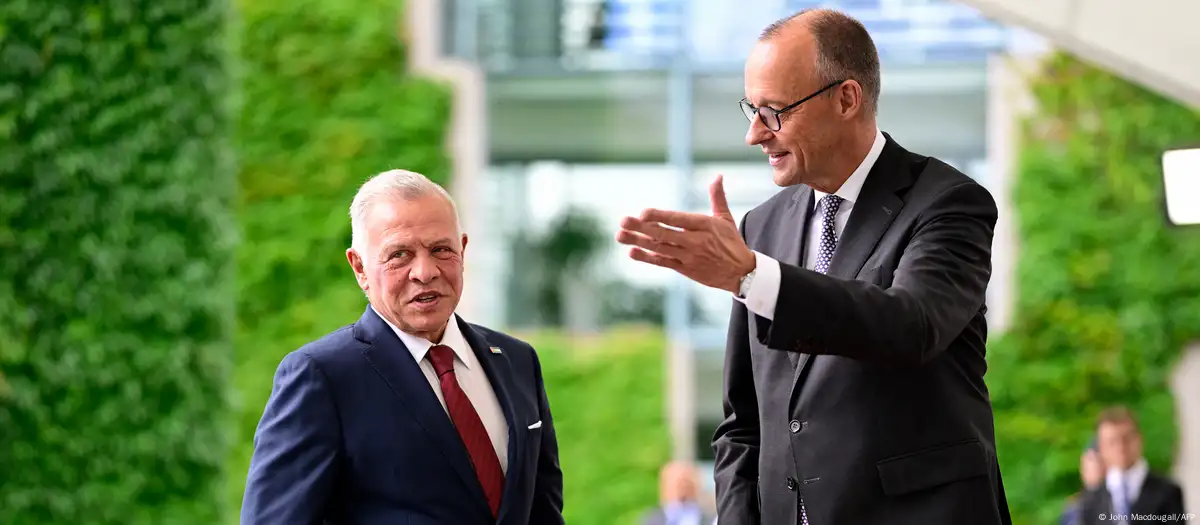
Chancellor Merz hosted King Abdullah II of Jordan in Berlin this week to finalize the details of the aid operation. Jordan, which has already been involved in aid efforts to Gaza, will serve as the staging ground for the German military aircraft.
Germany plans to send its large A400M transport planes to Jordan, where they will be loaded with food, medical supplies, and other essentials before flying over Gaza and dropping aid packages into designated areas.
King Abdullah has long warned that the humanitarian situation in Gaza has reached catastrophic levels. During his visit, he urged unified international action to halt the suffering and called for a full ceasefire and safe humanitarian access for aid workers.
The Humanitarian Crisis in Gaza
Conditions in Gaza have deteriorated to an alarming degree over the past months. With borders tightly controlled, many aid convoys have been blocked or delayed. Hospitals are overwhelmed, clean water is scarce, and food supplies are running dangerously low. Aid agencies have repeatedly warned that Gaza is on the brink of famine.
While air drops can help in the short term, humanitarian experts caution that they are no substitute for sustained aid deliveries via land routes. Trucks can carry far more supplies than planes, and are far less risky. But in the absence of a functioning corridor, the international community is increasingly relying on aerial deliveries as a temporary solution.
International Coordination Ramps Up
Germany’s new initiative is part of a broader push by European allies to coordinate aid efforts. France and the UK are reportedly exploring similar airlift options, and discussions are underway to potentially send high-level foreign ministers to Israel to press for a ceasefire and expanded humanitarian access.
Chancellor Merz has expressed frustration with the current pace of aid delivery and has called on Israel to do more. While he welcomed some recent steps taken by Israel to ease restrictions, he emphasized that they are far from enough. He said the international community must stay united and firm in its demands for humanitarian protection and political progress.
A New Direction in German Foreign Policy?
Germany’s latest move could mark a turning point in its Middle East policy. Historically cautious in its approach to Israel due to its World War II legacy, Germany now appears ready to take a more assertive role. Merz’s government has spoken more openly in recent weeks about the need for a two-state solution and a long-term political settlement.
The airlift to Gaza may be a limited measure in terms of physical aid, but it is rich in political symbolism. It shows that Germany is no longer content to stand on the sidelines while the humanitarian crisis deepens — and that public opinion is pushing leaders to act with urgency and compassion.
What Happens Next?
- German aircraft are expected to begin airdrops this week, possibly starting on Wednesday.
- The operation will be closely coordinated with Jordan, with supplies loaded and launched from its military bases.
- Additional European countries may soon join the effort, adding aircraft and supplies to the mission.
- Diplomatic conversations are ongoing to pressure Israel to allow more consistent ground aid and agree to a full ceasefire.
- Humanitarian agencies continue to urge world leaders to prioritize access for food, water, and medicine — not just air drops, but long-term infrastructure support.
Germany’s airlift plan is a first step. What follows will determine whether it becomes a one-off operation — or the start of a new, more forceful European approach to the Gaza crisis.

