
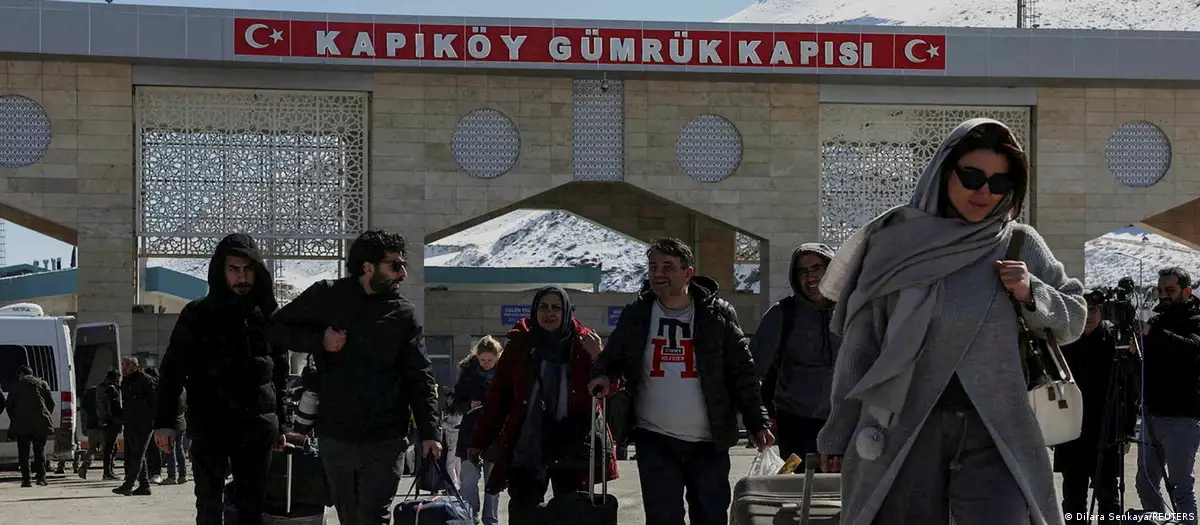

Public concern is growing in Germany over the potential consequences of the ongoing conflict involving Iran, with nearly three-quarters of people fearing a surge in refugees if the war continues.
At the same time, government officials are warning that the conflict could have serious economic and energy-related consequences for the country.
Public Concern Over Migration
A recent outlook suggests that around three in four Germans believe the country could struggle to handle a large influx of migrants fleeing the war in Iran.
This reflects broader concerns about:
- Capacity of social systems
- Housing and infrastructure
- Political and social stability
Migration has long been a sensitive topic in Germany, and global conflicts often intensify public debate.
Economic Risks Highlighted by Officials
Germany’s Economy Minister Katherina Reiche warned that the country’s fragile recovery could be at risk due to the impact of the conflict.
She estimated that the war could cause up to $40 billion (€34.5 billion) in economic damage to Germany and Europe.
Key Drivers of Economic Impact
- Rising energy prices
- Increasing inflation
- Global market instability
These factors could slow growth and increase pressure on businesses and households.
Energy Concerns and Possible Shortages
Reiche also raised concerns about potential fuel shortages in the coming months if the conflict continues.
While current supply levels remain stable, she warned that:
- Risks could emerge by April or May
- Prolonged conflict may disrupt supply chains
- Energy markets remain highly sensitive
Impact on Global Oil Prices
The conflict could have a major impact on global oil prices.
According to the German Economic Institute in Cologne, if Brent crude oil reaches $150 per barrel:
- Germany and its energy-intensive industries could face costs of around $80 billion over two years
- Inflation could rise further
- Industrial production could slow
This would significantly affect one of Europe’s largest economies.
Heavy Reliance on Energy Imports
Germany depends heavily on imported energy, making it vulnerable to global disruptions.
The war could:
- Increase energy import costs
- Reduce supply stability
- Affect manufacturing and exports
Industries such as automotive, chemicals, and manufacturing could be particularly impacted.
Night Workers Highlight Labor Trends
In addition to economic concerns, data shows that about 4 million employed Germans work night shifts.
This reflects:
- A significant portion of the workforce engaged in non-standard hours
- The importance of continuous industries like healthcare, logistics, and manufacturing
- Ongoing labor demands across sectors
Broader Economic Outlook
Germany’s economy is already facing challenges, and the Iran conflict adds further uncertainty.
Key Challenges
- Inflationary pressures
- Energy security concerns
- Slowing economic recovery
- Potential refugee pressures
These combined factors could shape Germany’s economic trajectory in the coming years.
Germany is facing a complex mix of challenges linked to the ongoing conflict in Iran, from public fears about migration to serious concerns about energy supply and economic stability.
With warnings from officials like Katherina Reiche and projections of major financial losses, the country is preparing for potential disruptions ahead.
As the situation evolves, Germany’s ability to manage energy, migration, and economic pressures will be closely watched across Europe.

