
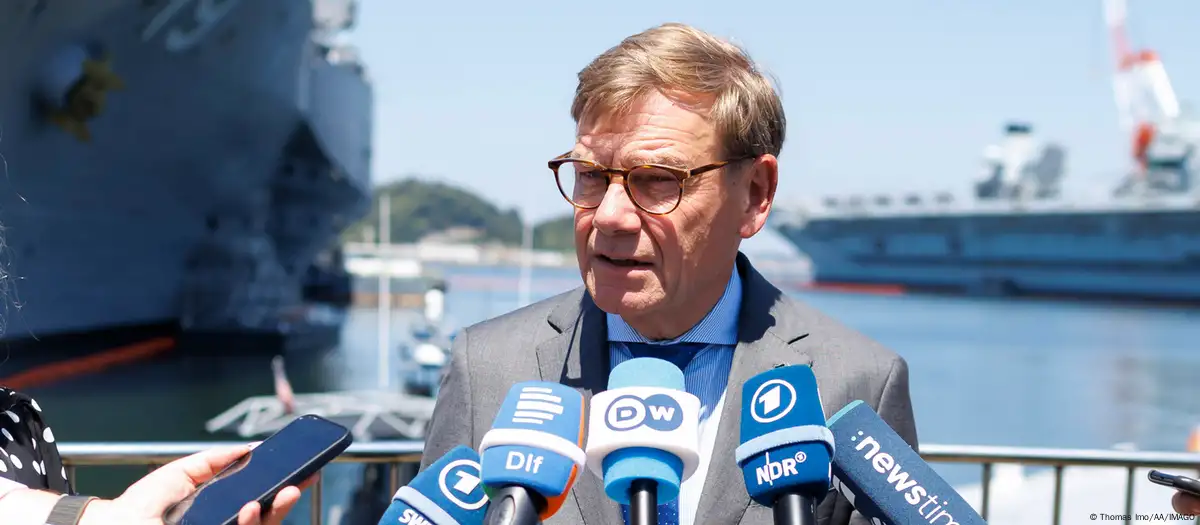

During a recent visit to Japan, German Foreign Minister Johann Wadephul underscored the deepening partnership between Germany and Japan as they work together to address the growing influence of China in the Indo-Pacific region. Standing before warships at the Japanese naval base in Yokosuka, Wadephul delivered a pointed message: the era of shifting borders by force must end — whether in Europe, Asia, or anywhere else in the world.
A Complex History, A Clear Message
Germany and Japan share a complicated past, having been allies during World War II. This history remains sensitive, especially for China, which viewed the old alliance warily. Wadephul’s comments and the strengthening of ties between Berlin and Tokyo have drawn sharp responses from Beijing, which accused both countries of “inciting confrontation and tensions” in the region.
Despite the diplomatic sensitivity, Wadephul appeared resolute. His visit to Japan was not merely symbolic but part of a broader push by Germany to take on more responsibility on the global stage — diplomatically, economically, and militarily — in cooperation with key partners like Japan.
Responding to China’s Growing Regional Influence
China’s rise as a dominant power in the Indo-Pacific has unsettled many countries, especially those in close proximity to the region. Beijing’s increasingly assertive policies, including military drills around Taiwan and territorial claims in the South China Sea, have raised alarm bells.
Taiwan, officially known as the Republic of China, is a self-governing democratic island that Beijing claims as part of its territory. China has never ruled out using force to bring Taiwan under its control, making the region a potential flashpoint for conflict.
Wadephul made it clear that Germany stands against any attempts to change borders by force. “Neither in Europe, nor in the Indo-Pacific, nor anywhere else in the world, should borders be shifted by force,” he said during his visit.
Germany’s Position on Taiwan and China
Germany officially adheres to the “one China policy,” which recognizes the government of the People’s Republic of China in Beijing as the sole legitimate government of China. This policy means Berlin does not officially recognize Taiwan as a separate state.
However, Wadephul’s comments show a careful balancing act. While maintaining diplomatic relations with Beijing, Germany also supports stability in the Indo-Pacific and opposes aggressive moves that threaten peace and security.
This stance is part of a broader strategic pivot by Germany to become a more active player on the world stage, moving beyond its traditional focus on European affairs.
Strengthening Germany-Japan Cooperation
Japan, as a leading democracy in the Indo-Pacific and a key U.S. ally, shares many of Germany’s concerns about China’s ambitions. The two countries have been steadily increasing their diplomatic and security cooperation in recent years.
Wadephul’s visit to Japan signals Germany’s intention to deepen this partnership, working together to promote stability, uphold international law, and support open and free trade routes.
“Berlin wants to take on more responsibility together with Tokyo — diplomatically, economically, and militarily,” Wadephul stated.
This cooperation includes joint efforts on cybersecurity, climate change, economic development, and defense. Germany and Japan also support multilateral organizations that promote dialogue and conflict resolution in the region.
Military Presence and Strategic Cooperation
Wadephul’s speech in front of Japanese warships at Yokosuka is a symbolically significant moment. The base is home to both Japan’s Maritime Self-Defense Force and the United States Navy’s Seventh Fleet, making it a strategic hub for regional security.
Germany, traditionally not a major military power in the Indo-Pacific, is signaling its readiness to collaborate more closely with partners like Japan, reflecting a shift in German foreign and defense policy.
This shift is also driven by concerns over the increasing militarization of the Indo-Pacific and the potential threat posed by unilateral actions that destabilize the region.
China’s Reaction and Regional Implications
Beijing reacted swiftly to Wadephul’s comments, accusing Germany and Japan of stoking tensions. China warned against actions that could worsen the situation and emphasized its commitment to defending its sovereignty and territorial integrity.
This reaction highlights the sensitivity of the Indo-Pacific region and the complex interplay between major powers. The balance of diplomacy, military posturing, and economic ties in the area remains fragile.
For Germany and Japan, the challenge lies in managing this relationship carefully — standing firm on principles of sovereignty and peace, while avoiding unnecessary escalation.
Germany’s Global Role Expands
Wadephul’s trip to Asia illustrates a broader trend in Germany’s foreign policy. Once primarily focused on European and transatlantic issues, Berlin is increasingly engaging with Asia’s rising geopolitical importance.
This engagement includes strengthening economic ties, participating in global security dialogues, and collaborating on issues such as climate change, trade, and technology.
By partnering with Japan, Germany aims to amplify its voice and impact in international affairs, while promoting a rules-based international order that supports peace and stability.
Looking Forward
As China continues to assert itself more aggressively in the Indo-Pacific, Germany and Japan’s deepening cooperation sends a clear message: respect for sovereignty and peaceful resolution of disputes are non-negotiable.
This partnership also reflects a new chapter in international relations, where traditional allies and like-minded democracies band together to address shared challenges.
Wadephul’s firm stance against border changes by force and his commitment to working closely with Japan underscore Germany’s evolving role as a global actor, ready to contribute to peace and stability far beyond its traditional sphere.
In a world facing complex geopolitical shifts, such partnerships may prove essential in maintaining balance and preventing conflict.

