
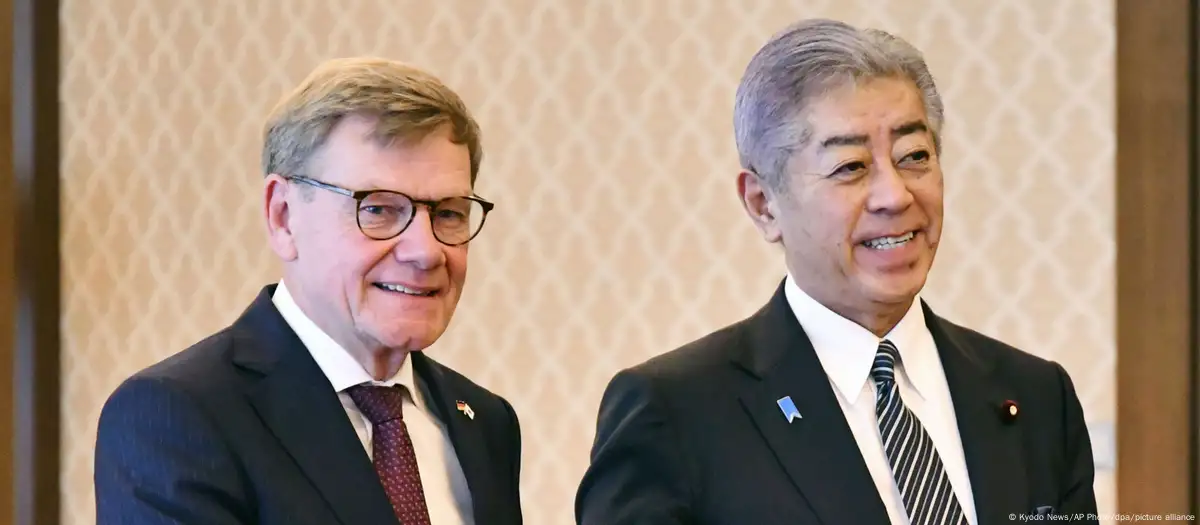

German Foreign Minister Johann Wadephul recently highlighted the growing strength of the strategic partnership between Germany and Japan, emphasizing their joint commitment to addressing regional security challenges — particularly the rise of what he described as an “increasingly aggressive” China.
Speaking during his visit to Japan, Wadephul praised the deepening ties between the two countries and stressed the importance of working together to uphold peace and stability in the Indo-Pacific region. His comments reflect a shared concern about China’s expanding influence and assertive actions in the area, which have raised alarms among many nations.
A Stronger Alliance Amid Rising Tensions
Germany and Japan have a history of economic and diplomatic cooperation, but recent developments have pushed the two nations to strengthen their defense and security collaboration. Both countries face common challenges linked to China’s growing military presence, territorial claims, and efforts to reshape regional dynamics.
Wadephul’s remarks came at a time when China’s actions around Taiwan and in the South China Sea continue to generate global concern. Beijing claims Taiwan as part of its territory and has repeatedly threatened to use force to assert control. These moves have heightened tensions, prompting countries like Germany and Japan to signal their support for the status quo and international law.
Standing Firm on Principles
Wadephul made it clear that Germany rejects any attempts to change borders through force, whether in Europe, Asia, or elsewhere. This principle is a cornerstone of international relations and reflects Germany’s commitment to a rules-based world order.
“Neither in Europe, nor in the Indo-Pacific, nor anywhere else in the world, should borders be shifted by force,” Wadephul said.
At the same time, Germany adheres to the one-China policy, recognizing the government in Beijing as the sole legal government of China. Yet, Wadephul’s statements also underscore the delicate balancing act Berlin must perform — maintaining diplomatic relations with China while condemning aggressive behavior.
Japan’s Role and Partnership with Germany
Japan, as a key player in the Indo-Pacific and a long-standing U.S. ally, shares Germany’s concerns about China’s ambitions. The two countries have increasingly aligned their diplomatic and defense policies to counter potential threats to regional stability.
Wadephul stressed that Germany aims to take on more responsibility alongside Japan — in diplomacy, economics, and military cooperation. This collaboration is part of a broader international effort to maintain peace, promote open trade routes, and uphold international law.
China’s Response
China swiftly criticized Wadephul’s comments, accusing Germany and Japan of fueling tensions and confrontation. Beijing remains sensitive to foreign criticism of its policies and is determined to assert its claims over Taiwan and the South China Sea.
This exchange highlights the fragile nature of the Indo-Pacific security landscape and the challenges facing diplomatic efforts to ease tensions.
Looking Ahead
The Germany-Japan partnership sends a clear message: the international community will not tolerate attempts to change borders by force or undermine the rules that have kept global peace for decades. As China continues to rise, such alliances will be crucial in maintaining a balanced and peaceful international order.

