
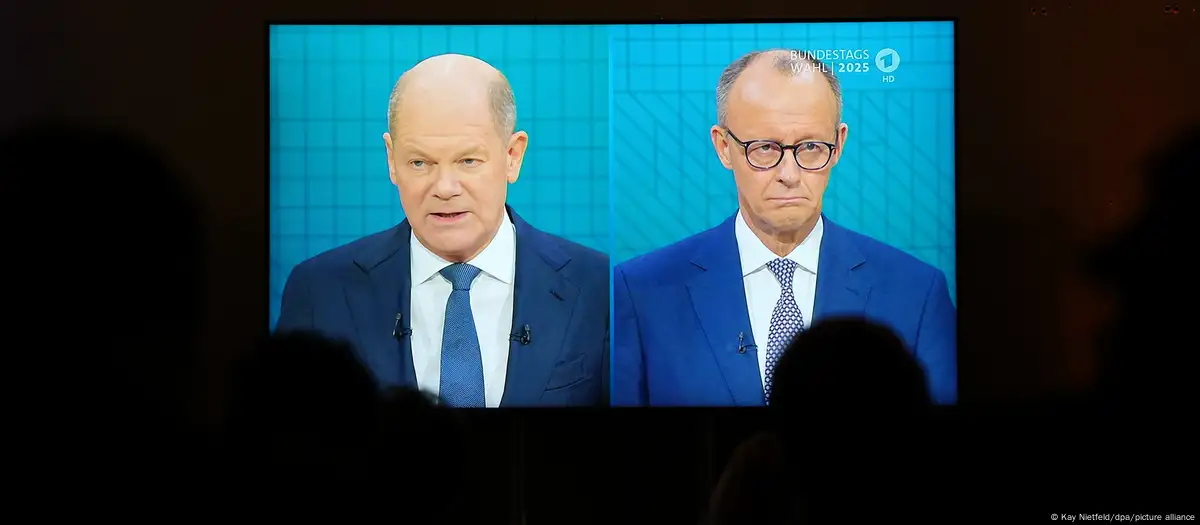

The Duel for Germany’s Top Job
As Germany’s Bundestag elections loom closer, the battle for the chancellorship has intensified. On February 10, Chancellor Olaf Scholz of the center-left Social Democrats (SPD) and his main rival, Friedrich Merz of the conservative Christian Democratic Union (CDU), took part in a highly anticipated televised debate. The event, which lasted 90 minutes, showcased the two leaders clashing over key national issues that will shape Germany’s future.
With just two weeks remaining until the elections, it’s clear that migration and economic stability are the dominant topics. But as both candidates took aim at each other’s policies and positions, critics have pointed out that some critical issues, like climate change, were notably absent from the debate.
Here’s a rundown of the debate highlights, the key issues on the table, and how the debate unfolded:
Key Issues: Migration and Economic Stability at the Forefront
The debate saw Scholz and Merz engage in a fiery exchange on national issues that are set to define the Bundestag elections. With 59.2 million people eligible to vote on February 23, the candidates are focusing on issues that matter most to Germans today.
The top contenders argued on migration, with both sides asserting their stances on how to handle asylum-seekers. They also discussed Germany’s economic future, addressing concerns about the country’s stability, especially in the wake of global challenges.
Scholz’s Stance: A Balanced Approach
Chancellor Olaf Scholz defended his record, emphasizing a balanced approach to economic growth and immigration. Scholz spoke about the need to ensure Germany remains an open and welcoming country, while also addressing economic challenges that affect everyday citizens. He positioned himself as a leader who understands the complexity of migration and economic issues, aiming for stability amidst global uncertainty.
Merz’s Position: A Tougher Stance
On the other hand, Friedrich Merz took a tougher line on migration, emphasizing the importance of border control and stricter policies to curb illegal immigration. He criticized Scholz’s policies, arguing that Germany’s immigration system needed a radical overhaul to prevent the strain on public services. Merz also expressed strong views on how Germany should tackle its economic challenges, calling for more fiscal discipline and tax cuts.
While the debate remained civil, the difference in their approaches was clear. Scholz focused on inclusivity and economic stability, while Merz sought to tighten controls and advocate for a more conservative approach to Germany’s future.
Climate Change and the Missed Opportunity
Despite the significant issues being discussed, one area that many felt was largely ignored during the debate was climate change. In a world facing increasingly severe environmental challenges, many expected that climate policy would take center stage. But instead, the debate centered more on immigration and tax policies.
Felix Banaszak, co-leader of the Green Party, criticized both candidates for failing to address the climate crisis. He argued that the debate ignored the “central question of survival” for future generations. Banaszak pointed out that climate change is an issue that affects everyone and should have been a priority in discussions about the country’s future.
In fact, as global temperatures rise and extreme weather events become more frequent, climate protection is more urgent than ever. However, it was sidelined in favor of debates on tougher immigration policies and national security.
Banaszak also called out the candidates for competing over who could be the “toughest” on immigration, instead of showing more compassion for asylum-seekers who may be fleeing dangerous conditions. His comments reflected a growing concern among many that empathy and human rights have been overshadowed in political debates.
What’s Next? A Four-Way Debate Awaits
The Scholz-Merz duel may have been a draw for now, but the stakes are far from over. The two candidates will face off again in another debate, but this time, they will be joined by Robert Habeck of the Green Party and Alice Weidel from the far-right Alternative for Germany (AfD).
This four-way debate promises to bring even more perspectives to the table as Germany’s political future hangs in the balance. The Green Party, led by Habeck, will likely push for stronger commitments to climate action and sustainable policies, while Weidel and the AfD are expected to focus on immigration and national security, two issues that have dominated the political landscape.
With the Bundestag elections just around the corner, voters will have to decide which vision for Germany’s future aligns best with their values and priorities. Will they choose the more progressive, inclusive policies of Scholz and the SPD, or the more conservative approach advocated by Merz and the CDU?
Conclusion: A Tight Race for Chancellor
The Scholz-Merz debate has highlighted the stark differences between the two candidates on issues of migration, economic stability, and national security. However, the debate has also raised concerns about the lack of focus on climate change, an issue that many feel should be central to Germany’s political discourse.
As the Bundestag elections approach, the next debate will offer even more insights into the candidates’ positions. With 59.2 million voters set to decide the future of Germany, the outcome of this election will not only shape the country’s policies but also influence its role on the global stage.

