
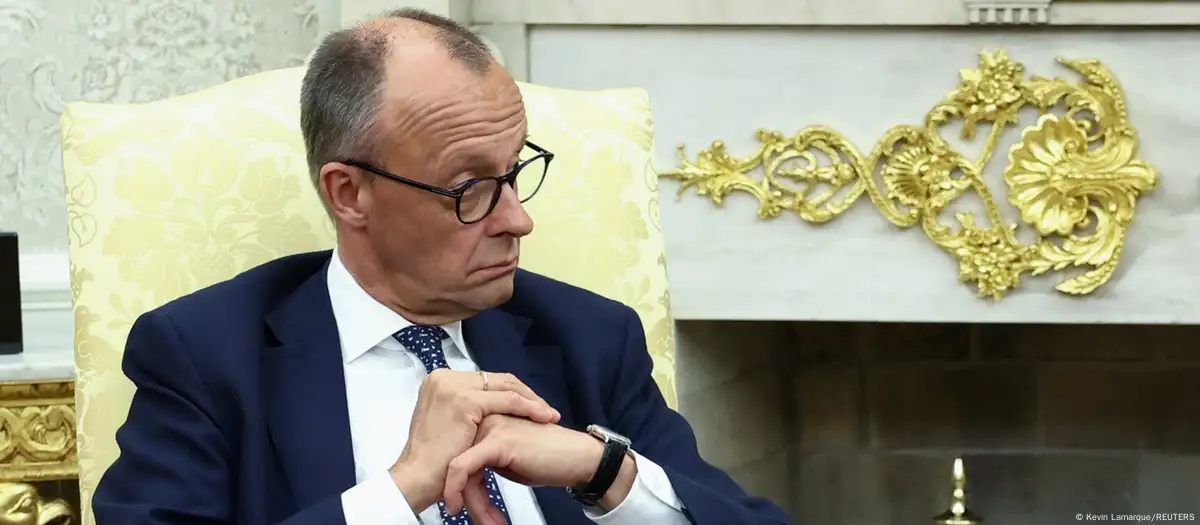
German Chancellor Merz Blames Migrants for Rise in Antisemitism, Vows Tougher Action

As Lufthansa plans to resume Tel Aviv flights, debate grows over roots of antisemitism in Germany
BERLIN – German Chancellor Friedrich Merz has said that migrants in Germany are contributing to a noticeable rise in antisemitism, sparking renewed national debate over integration, security, and social cohesion. The comments came as Lufthansa announced it would resume flights to Tel Aviv later this month.
Speaking at a press conference on Thursday, Merz addressed the growing concern around antisemitic incidents in Germany, stating:
“We must address the problem clearly. A significant portion of antisemitic attitudes comes from migrant communities. This cannot be ignored.”
Antisemitism on the rise in Germany
Antisemitic incidents have been rising steadily in Germany, particularly in the wake of recent Middle East conflicts. The Federal Office for the Protection of the Constitution has cited both far-right extremists and Islamist-influenced individuals as sources of the increase.
According to official data, 2023 saw over 2,500 reported antisemitic crimes in Germany—a record high. Many of these incidents included hate speech, vandalism, threats, and even physical violence. In recent months, several high-profile protests in German cities have featured antisemitic slogans and symbols.
Migrant communities under the spotlight
While Germany has long struggled with antisemitism linked to far-right and neo-Nazi groups, Merz’s comments shift the focus toward recent immigrant populations, particularly those from the Middle East and North Africa.
“We have welcomed many people into this country,” Merz said. “But we must also expect them to respect our laws, values, and historical responsibility. That includes zero tolerance for antisemitism of any kind.”
Critics argue that Merz’s remarks risk stigmatizing entire communities and undermining integration efforts, while supporters see them as an overdue acknowledgment of complex social challenges.
Political and public reaction
The Chancellor’s statement has drawn mixed reactions across the political spectrum.
- Supporters on the center-right praised Merz for confronting a sensitive issue head-on, claiming that political correctness has for too long stifled open discussion.
- Opposition leaders and human rights groups expressed concern, warning that such rhetoric could fuel xenophobia and deepen divisions.
- Jewish organizations welcomed the focus on antisemitism but urged policymakers to avoid blanket blame and instead focus on targeted education and prevention strategies.
Josef Schuster, head of Germany’s Central Council of Jews, said:
“Antisemitism must be confronted wherever it appears—whether from the far right, the far left, or within migrant communities. But we must be precise in our language and unified in our response.”
Lufthansa to resume Tel Aviv flights
In a related development, German airline Lufthansa announced it will resume flights to Tel Aviv on June 23, following a temporary suspension due to regional instability.
The airline cited improved security conditions and demand from travelers as key factors behind the decision. Lufthansa had suspended flights to Israel in October amid escalating conflict in Gaza.
The return of flights is seen as a signal of renewed confidence in regional travel and may serve as a symbolic step toward normalcy.
Germany’s ongoing challenge with antisemitism
Germany continues to walk a delicate line in its efforts to combat antisemitism while promoting social integration and upholding democratic values. Merz’s remarks have reignited long-standing debates over how best to balance these priorities in a changing society.
With over 20 million people in Germany having a migrant background, the conversation around identity, inclusion, and national values is far from over.
Final thoughts
As Germany confronts an uncomfortable spike in antisemitic incidents, Chancellor Merz’s comments have brought attention to a politically sensitive aspect of the issue. Whether this marks a turning point in Germany’s policy approach or sparks deeper societal division remains to be seen.

