
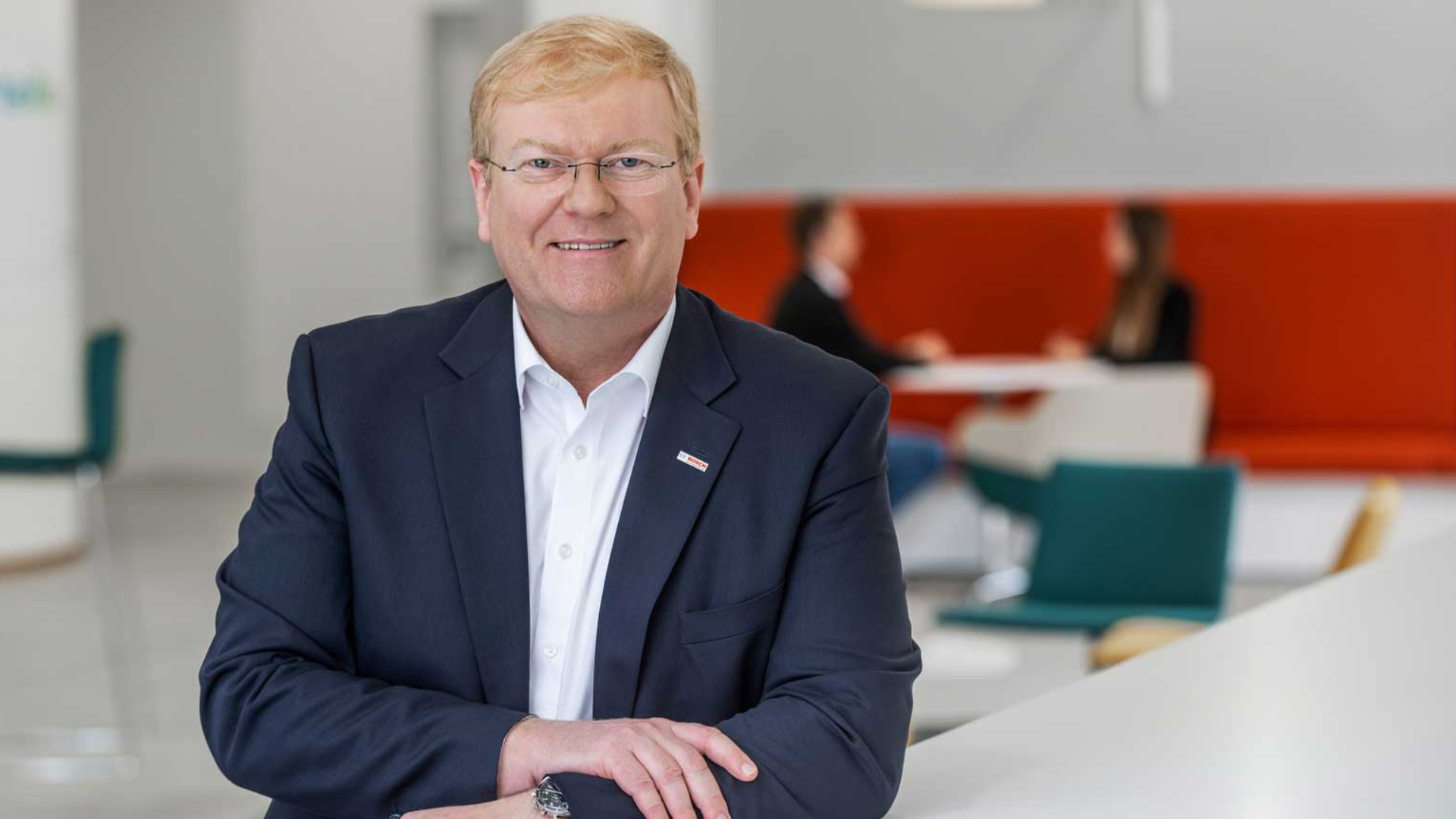
Bosch Extends CEO Stefan Hartung’s Term Amid Cost Pressures and Industry Headwinds

In a bold move that reflects confidence and stability, German manufacturing titan Bosch has renewed the term of its Chief Executive Officer, Stefan Hartung, for five years — locking him in until 2031. The renewal, as reported by Handelsblatt and later confirmed by sources close to the company, coincides with Bosch facing a host of challenges, such as cost inflation, deteriorating global demand, and structural change in the automotive and industrial technology businesses.
Navigating Through Change
Hartung, who became CEO in 2022, has been a key player in Bosch’s transformation strategy in progress. Under his leadership, the company has picked up the pace of its advances in electrification, hydrogen technology, and software-based automotive solutions. These are viewed as essential shifts for the world’s leading automotive supplier as the sector transitions away from combustion engines towards cleaner, connected mobility.
However, in spite of Bosch’s robust record of innovation, the group is increasingly under pressure to maintain profitability in the face of decelerating European demand, intense Asian competition, and sharply increasing cost of operations. The recent extension of Hartung’s contract is generally perceived to be an effort to deliver strategic continuity in these tumultuous times.
“Stability in leadership is vital when the company is undergoing structural transformation,” said an industry analyst based in Frankfurt. “Hartung understands Bosch’s DNA — balancing engineering excellence with long-term social and economic responsibility — and that makes him the right person to guide the company through this next decade.”
Cost Challenges and Workforce Adjustments
Bosch’s leadership overhaul is just a few weeks after the firm revealed it would slash approximately 13,000 positions worldwide by 2027. The action, while divisive, is a manifestation of Bosch’s desire to close what management termed an annual cost difference of €2.5 billion.
Hartung stressed that these steps, though hard, are essential to help Bosch stay competitive in a fast-changing market. “We must make our organization leaner and our processes quicker,” he wrote in a recent internal memo. “We do not aim for short-term profitability, but for long-term strength and leadership in emerging technologies.”
The firings will most directly impact units dealing with conventional combustion-engine parts, whose demand is falling more rapidly than anticipated. Bosch is also heavily investing in semiconductor production, battery power systems, and industrial automation involving AI — all fields Hartung sees as essential to the company’s next period of growth.
Strategic Continuity Amid Uncertainty
Bosch’s move reflects a wider trend among German industrial companies opting for stability over disruption. With worldwide uncertainty over energy markets, supply chains, and geopolitical configurations, calm leadership is being seen as more of an asset than a liability.
Hartung’s fresh mandate provides him with the political and strategic capital to drive Bosch’s aggressive investment initiatives without worrying about immediate shareholder opposition. Bosch is likely to spend over €30 billion on R&D expenses in the five years ahead with a strong focus on sustainability and digitalization.
“Bosch is not a company that goes along with market trend,” Hartung said earlier this year. “We think in the long term. Our responsibility not only affects future generations of engineers but also society as a whole.”
The Broader Economic Context
Hartung’s reappointment also coincides with a cooling sentiment among German CEOs. According to a recent KPMG survey, optimism about business growth in Germany has dropped to a three-year low. Only 72% of CEOs expect their companies to expand in the next three years — down sharply from 90% in 2022.
Bosch’s leadership action, thus, is a testament to resilience. It is an expression of a confidence that long-term strategy and innovation can best storms out cycle downturns. To policymakers and investors, the move by the company is a vote of confidence in Germany’s industrial strength, while manufacturing industries in Europe struggle with diminishing margins and increasing competition from China and America.
Looking Ahead
With his extended term, Hartung is set to double down on Bosch’s “Invented for Life” credo — converting its engineering heritage into eco-friendly business practices. Some of the top-line initiatives are expected to include ramping up hydrogen fuel-cell technology, driving smart home automation, and expanding the firm’s presence in fast-growing markets such as India.
For partners and employees alike, the continuity of leadership brings confidence. For rivals, it is a reminder that Bosch is committed to leading — not merely surviving — the next industrial revolution.
While Europe’s industrial backbone is being transformed in its most substantial makeover in decades, Bosch’s long-term leadership under Stefan Hartung announces an important message: even innovation is not sufficient; long-term leadership and strategic stability are what ultimately carry industrial behemoths through global upheaval.

