
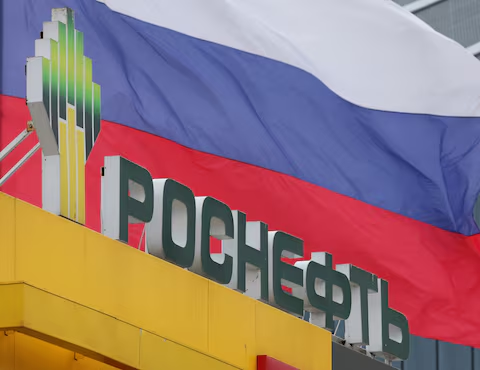

The German government has taken decisive action to gain long-term control over the German operations of Russia’s Rosneft. The country’s economy ministry announced on Saturday that Berlin has placed the Russian oil group’s German units under a trusteeship.
Purpose of the Trusteeship
The trusteeship is designed to ensure that Germany can manage and oversee the operations of Rosneft’s assets within its borders. Officials said the measure is intended to protect the continuity of energy supply, safeguard employment, and prevent strategic assets from being influenced by foreign state interests amid ongoing geopolitical tensions.
By placing the units under trusteeship, the German government gains oversight authority, enabling it to make decisions on operational and financial matters while maintaining compliance with local regulations and security considerations.
Background and Geopolitical Context
Germany’s move comes amid heightened scrutiny of Russian energy companies following ongoing tensions between Russia and Western nations. European governments have expressed concerns about foreign control over strategic energy infrastructure, particularly in light of Russia’s actions in international conflicts and its influence on global energy markets.
Rosneft, one of Russia’s largest state-controlled oil companies, has previously faced sanctions and restrictions in various jurisdictions. The decision to place its German operations under trusteeship signals Berlin’s intent to mitigate any risks to national energy security and economic stability.
Implications for the Energy Sector
The trusteeship may affect Rosneft’s operations, including refining, distribution, and fuel supply agreements in Germany. Analysts suggest that while the measure does not constitute nationalization, it gives the government significant leverage over strategic decisions, ensuring that operations align with Germany’s energy and economic priorities.
The move also serves as a warning to other foreign-controlled energy companies operating in Germany, highlighting the government’s willingness to intervene to safeguard national interests.
Economic and Political Significance
Germany relies heavily on energy imports and has been actively reshaping its energy policies, including transitioning toward renewable sources while securing critical oil and gas supplies. By placing Rosneft units under trusteeship, the government aims to balance energy security with regulatory oversight, reducing potential exposure to geopolitical risks.
Politically, the trusteeship underscores Berlin’s assertive stance in protecting domestic economic assets and signals alignment with European efforts to monitor and limit foreign influence in key industries.
Key Takeaways
- Germany has placed Rosneft’s German units under trusteeship to secure long-term control.
- The move ensures oversight of operations, protecting energy supply and employment.
- The decision reflects geopolitical tensions and concerns over foreign state influence.
- The measure may influence Rosneft’s refining and distribution operations in Germany.

