
Germany’s Culture Minister Invites Berlusconi to Talk ProSieben Takeover, Stresses Media Independence

German Government Steps In Over Berlusconi’s Bid for ProSieben
Germany’s Culture Minister has taken an unusual step in the world of European media politics — formally inviting Italian media tycoon Pier Silvio Berlusconi to a meeting over his company’s attempt to gain control of ProSiebenSat.1, one of Germany’s largest private broadcasters.
The move highlights Berlin’s growing concern over foreign ownership in the German media sector and the potential risks it could pose to journalistic independence and editorial integrity.
A Bid That’s Causing Political Ripples
Berlusconi, CEO of MediaForEurope (MFE) and the son of former Italian Prime Minister Silvio Berlusconi, has been gradually increasing his company’s stake in ProSieben, sparking a mix of economic interest and political unease in Berlin.
Germany’s Culture Minister, Claudia Roth, confirmed over the weekend that she has reached out to Berlusconi, asking for a direct conversation about the takeover bid.
“I have invited Mr. Berlusconi to meet and discuss the plans for ProSiebenSat.1,” Roth said in a public statement. “The journalistic and editorial independence of the German media must be guaranteed.”
Why ProSieben Matters
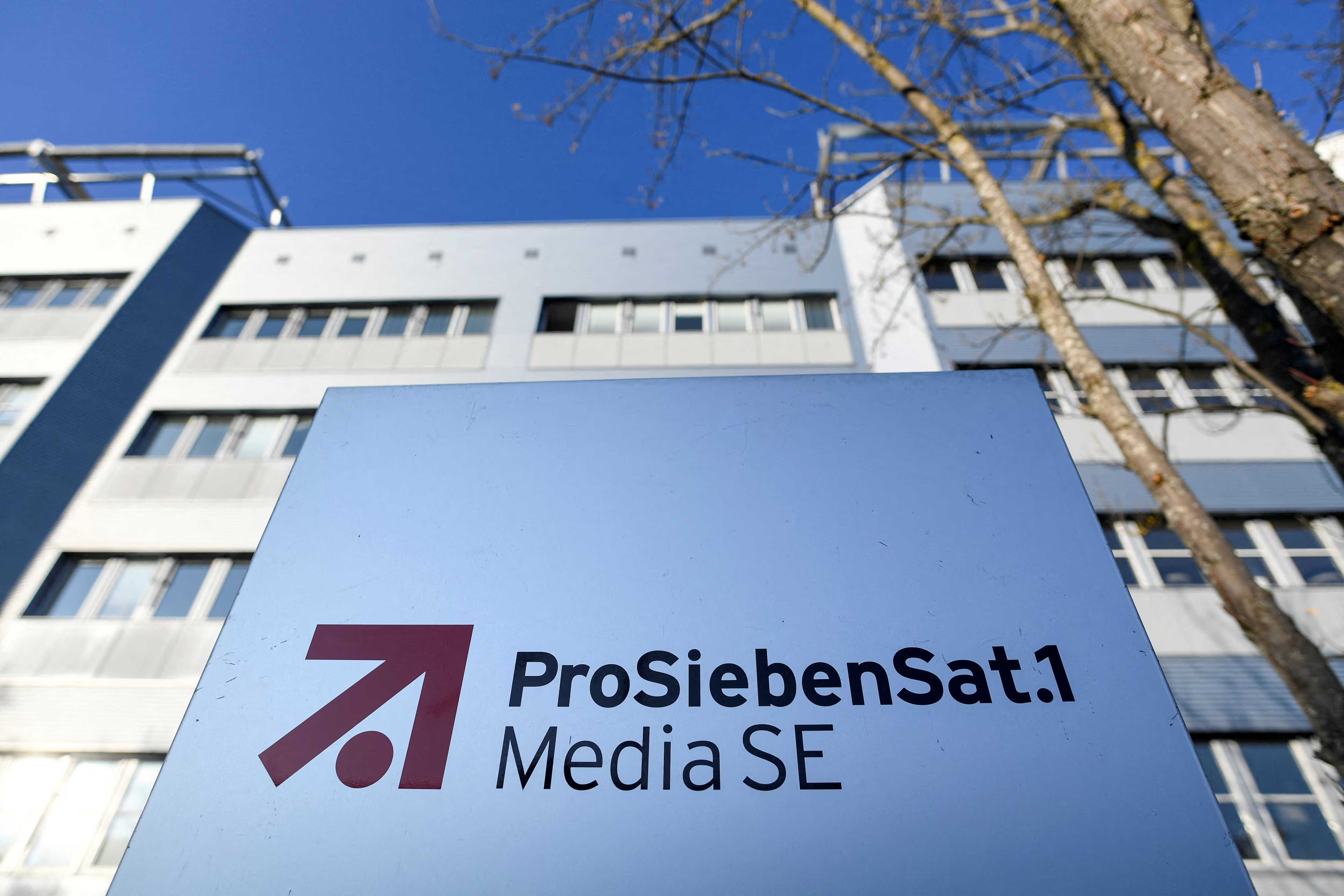
ProSiebenSat.1 Media SE is a major force in German-speaking media. It operates several prominent television channels and plays a significant role in shaping public opinion in Germany, Austria, and Switzerland.
MFE already holds a significant stake in the company, and its strategy has long been to build a pan-European media powerhouse to compete with global streaming giants like Netflix, Disney+, and Amazon Prime Video. But Germany’s political leadership is concerned that such ambitions — especially when driven by a single powerful family — could lead to political or commercial influence over editorial decisions.
Germany’s Concerns: Media Pluralism at Risk?
The key issue isn’t just economic — it’s about media pluralism and the ability of news outlets to report freely without interference from owners with political or national interests.
Minister Roth emphasized that while Germany is open to foreign investment, it is vital to protect freedom of the press and prevent any erosion of editorial independence.
“Media must not become tools of power or influence,” she said. “In democratic societies, they play a fundamental role. Any potential acquisition must guarantee the continuation of independent journalism.”
The EU’s Mixed Signals on Media Consolidation
While media consolidation has become common in Europe, particularly as traditional broadcasters try to survive in the digital age, it has also raised red flags about market dominance and editorial control.
In MFE’s case, the Berlusconi family’s long history in both politics and media has made their growing influence a sensitive topic in many European capitals.
The European Commission has previously emphasized that member states have the right to safeguard media diversity and independence, even when cross-border takeovers are involved. This gives Berlin some room to maneuver if it decides to set stricter conditions or potentially intervene more directly.
What Does MFE Say?
MediaForEurope has stated that its investment in ProSieben is strategic, aimed at creating a competitive European media network rather than undermining local operations. The company has denied any intention of interfering with editorial decisions or centralizing content control.
In previous interviews, Pier Silvio Berlusconi has said the goal is to cooperate, not control, and to build partnerships across borders to strengthen Europe’s media landscape.
Still, many observers remain skeptical, pointing to the elder Berlusconi’s legacy of using media to advance political and business interests during his years in power in Italy.
A Broader Debate About National Media Sovereignty
Germany’s invitation to Berlusconi comes as part of a broader European conversation about media sovereignty — the idea that countries must maintain control over their information ecosystems, especially in the age of misinformation, foreign interference, and geopolitical tension.
Recent debates over TikTok, Russian disinformation campaigns, and American tech giants dominating advertising revenue have made local media resilience a key concern for many governments.
By stepping into the ProSieben debate, Germany is sending a message: media is not just a business — it’s a pillar of democracy.
What Happens Next?
It remains unclear whether Pier Silvio Berlusconi will accept the meeting, and what influence — if any — Germany’s culture ministry might have over the outcome of the takeover.
While Roth’s role is mostly advisory, her public position may shape political sentiment and even spark action by media regulators or the federal government.
Industry analysts suggest that even if the deal goes ahead, MFE may be forced to make public commitments to safeguard editorial independence and maintain the current structure of ProSieben’s news operations.
A Defining Moment for German Media Policy?
This is more than just a business negotiation — it could become a defining moment in Germany’s approach to media ownership and foreign influence. The meeting between Berlusconi and Roth, if it happens, may set the tone for how Europe handles similar acquisitions in the future.
For now, all eyes are on whether one of Europe’s most powerful media families can strike the right balance between business expansion and democratic values — and whether Germany is willing to draw a firm line to defend the latter.