
A Showdown in Berlin: Neo-Nazi March Halted by Counter-Protests
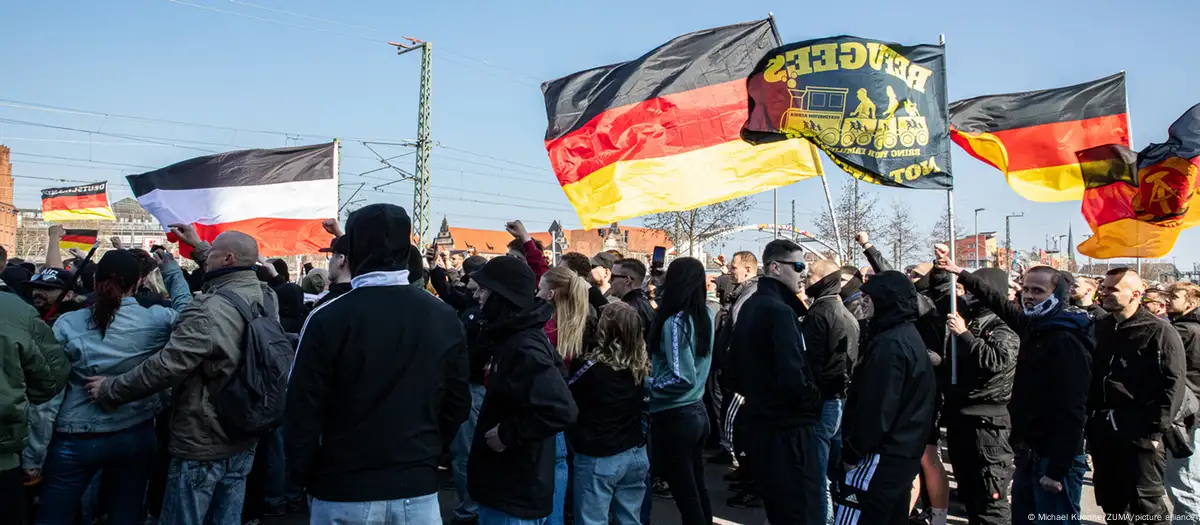
In a dramatic clash of ideologies, a neo-Nazi march in Berlin’s Friedrichshain district was disrupted and eventually ended prematurely on Saturday after counter-protests blocked the way. The far-right demonstration, which was intended to push through the vibrant district, met fierce resistance from protesters who were determined to stop the rally in its tracks.
Despite their efforts, the right-wing extremists didn’t get far. They barely made it past their starting point at Ostkreuz station before being stopped by the overwhelming presence of opposition protests.
The Neo-Nazi March: A Small, Controversial Group
The neo-Nazi group that attempted to march through Berlin’s Friedrichshain district was relatively small, but the potential for violence and hate speech was large. The demonstration was part of a broader push by far-right groups to continue spreading their extremist views, particularly in larger cities like Berlin, which has seen increasing tension between far-right and left-wing activists in recent years.
The group’s goal was to march through one of Berlin’s most diverse and progressive neighborhoods—a symbolic act for many who oppose the far-right. However, they didn’t get the chance to make a significant statement as their progress was stunted by the resistance of those who stood against them.
Counter-Protests: A Unified Stand Against Hate
The demonstration was not without opposition. Almost immediately, counter-protests began in the Friedrichshain district, where many residents and activists gathered to ensure that the neo-Nazi march could not continue. These counter-protests grew in size and intensity, forcing the leaders of the march to call it off.
The sheer number of people who took to the streets in Berlin to block the far-right rally showcased the city’s commitment to tolerance, diversity, and anti-racism. The counter-demonstrators made it clear that hate speech and far-right ideologies would not be allowed to flourish in Berlin.
Berlin has long been a city known for its progressive politics, and its residents have a history of standing up to far-right extremism. On this day, that spirit was more evident than ever.
Police Involvement: A Measured Response
As the neo-Nazi march stalled, police were forced to step in to manage the situation. While tensions were high, police managed the situation with a measured response, ensuring that both the far-right demonstrators and the counter-protesters had their voices heard—albeit in vastly different ways.
According to police reports on X (formerly known as Twitter), the neo-Nazi march ended after only four hours when the group’s leader decided to call it off. This came after it became clear that the demonstration had no way of progressing through the streets of Friedrichshain due to the powerful opposition from counter-protests.
What’s Next for Berlin’s Battle Against Far-Right Extremism?
This event may be over, but the battle against far-right extremism in Germany and across Europe is far from finished. Neo-Nazi groups have been attempting to gain traction, especially in the wake of rising populist movements. Berlin, however, remains a stronghold for anti-fascist groups, and the city’s residents continue to stand united against hate speech and violence.
In light of the successful blockade, many activists see this as a moment to reflect on the power of collective action and the importance of defending the values of tolerance and diversity. Counter-protests in Berlin, which often attract a broad range of people from different backgrounds, serve as a reminder of the strength of solidarity in the face of hate.
A City Divided: The Tension Between Far-Right and Left-Wing Activism
Although Berlin has long been a hub for progressive movements, it remains a city that faces ongoing tensions between far-right extremists and left-wing activists. These two opposing forces often clash on the streets, with the far-right pushing for nationalistic and exclusionary policies, while left-wing groups advocate for more inclusive and equal societies.
The neo-Nazi march on Saturday was just one example of the deep ideological divides that continue to challenge German society. In recent years, far-right political movements have gained traction across Europe, threatening to undo the progress made in many areas of human rights and equality.
This march was not just about one group’s attempt to spread hate. It was part of a larger ideological battle that continues to shape political discourse in Germany and beyond. Friedrichshain, known for its bohemian culture and diverse community, has long been a symbol of resistance against the forces of fascism.
Berlin’s Legacy: Standing Strong Against Hate
Saturday’s events are a reminder that while far-right extremists may try to spread their hatred, Berlin is a city that refuses to be intimidated. The solidarity displayed by counter-protesters underscores Berlin’s long-standing legacy as a city that fights back against fascism and works toward a more inclusive and open society.
The demonstration’s premature end sends a clear message: Berlin will not tolerate the spread of neo-Nazi ideology in its streets. The march might have been short-lived, but the fight against extremism will continue in the coming years.
Looking Forward: The Struggle Against Far-Right Hate
While Saturday’s protest ended without incident, the larger struggle against far-right hate in Germany is far from over. The far-right will continue to try and make their voices heard, but as the events in Friedrichshain showed, Berlin will remain a city united against such views. The counter-protests were a testament to the power of community and solidarity in the face of intolerance.
As Germany moves forward, the people of Berlin will continue to play a vital role in ensuring that hate speech and far-right ideologies do not take root in their streets. With every protest, rally, and act of resistance, they are sending a clear message: Hate has no home here.