
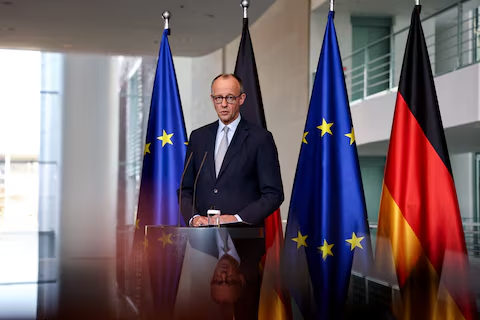

U.S. President Donald Trump welcomed German Chancellor Friedrich Merz to the White House on Tuesday for high-stakes talks on a range of sensitive international issues. The discussions come amid escalating tensions in the Middle East, trade friction, and shifting global alliances.
Focus on Middle East Security
At the top of the agenda were recent U.S.-Israeli strikes on Iran, which have heightened regional instability. Chancellor Merz emphasized Germany’s commitment to diplomatic solutions and the importance of Europe having a say in future developments.
While Germany has maintained that it will not engage militarily in the conflict, Merz’s talks with Trump are viewed as a critical step in ensuring Europe’s voice is considered in strategic discussions. Both leaders are expected to explore ways to coordinate on security concerns while minimizing broader risks to global stability.
Trade and Tariff Discussions
In addition to security, the meeting addressed trade tensions. President Trump has recently floated new tariff threats targeting key European goods, which could have wide-reaching implications for Germany’s export-driven economy.
Merz’s visit underscores Germany’s efforts to protect its economic interests while maintaining strong transatlantic ties. Trade discussions are expected to cover everything from industrial goods to technology exports, reflecting the deep interconnection between U.S. and German markets.
China and Global Diplomacy
Merz’s recent visit to China also came up in talks, highlighting Europe’s need to balance relations between major global powers. With geopolitical tensions rising, the Chancellor’s dual focus on Asia and the Middle East signals Germany’s intention to navigate a complex international landscape carefully.
The White House meeting provides a platform for coordinating policies on multiple fronts, including security, trade, and strategic alliances, at a time when global stability is under pressure.
Challenges for Europe
Germany faces a delicate balancing act:
- Supporting alliances like the U.S. and Israel without becoming entangled militarily in the Middle East
- Responding to potential U.S. tariffs while protecting domestic industries
- Maintaining credibility in global diplomacy after engaging with both China and the U.S.
Merz’s discussions with Trump are seen as crucial for ensuring that Europe is not sidelined in decisions affecting regional and global security.
Key Takeaways
The meeting between Trump and Merz highlights:
- Rising global tensions in the Middle East and trade sectors
- Europe’s push for diplomatic influence amid U.S.-led military actions
- The need for careful coordination on international policy, economics, and strategic alliances
As talks conclude, world leaders will be watching closely to see how the U.S.-Germany partnership shapes responses to Iran, global trade, and broader geopolitical challenges.

