
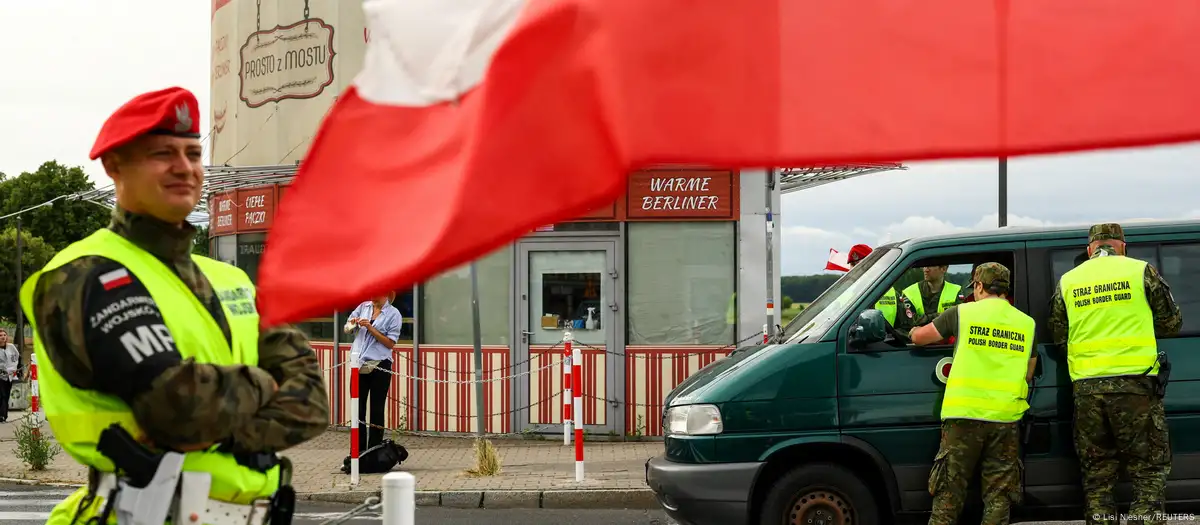

Poland Tightens Borders While Germany Plans New Migrant Processing Terminal
Tensions around migration in Europe are heating up again. Poland has announced it will extend border checks with Germany and Lithuania, a move originally set to end in August. The decision comes amid ongoing concerns over irregular migration, people smuggling, and pressure from EU states to enforce stricter border policies.
Meanwhile, back in Germany, authorities are reportedly planning a “repatriation terminal” at the country’s second-largest airport—another signal that deportation and migration enforcement are high on the political agenda.
Why Is Poland Extending Border Controls?
Originally Temporary – Now Extended
Poland introduced border checks with Germany and Lithuania to stop the flow of irregular migrants, particularly those being transported by smuggling networks. These controls were initially set to expire in August, but Warsaw now says they will remain in place for the foreseeable future.
Security and Migration Concerns
Officials argue that Europe’s external border isn’t secure enough, and that EU nations need to be better prepared to prevent illegal crossings and trafficking operations. The extended border checks are part of a broader push for stronger national enforcement as the Schengen area faces strain from both east and south.
Germany’s Next Move: A “Repatriation Terminal” for Migrants
At the same time, Germany is reportedly planning to open a dedicated repatriation terminal at its second-largest airport, believed to be Munich or Frankfurt.
What Is a Repatriation Terminal?
It would serve as a centralized processing hub for migrant deportations, aimed at speeding up removals of people whose asylum claims have been denied or who are in Germany without legal permission.
The terminal would likely include:
- Holding areas for migrants awaiting deportation
- Administrative offices for border police and immigration officials
- Legal processing and security coordination units
The plan is part of Germany’s broader effort to streamline and toughen its migration policy as deportation numbers continue to rise.
Growing Political and Public Pressure
Both moves reflect a growing European hardening on migration. With elections looming in several EU states and rising support for right-wing parties, governments are taking tougher stances on border control and deportation.
In Germany, migration remains a politically charged issue, especially in the lead-up to state elections. Polls show that many voters are frustrated with what they see as a slow and inconsistent immigration system.
What This Means for the Region
- Freedom of movement is being tested. While Schengen rules allow for open borders, countries are increasingly using emergency powers to reintroduce checks.
- More deportations are likely. Germany’s move to build dedicated infrastructure signals a commitment to higher removal rates.
- Migrants face more barriers. Those seeking asylum or better living conditions in Europe may find it harder to cross borders or avoid detention.
Final Thought: Europe’s Open Borders Under Pressure
The decisions by Poland and Germany show a clear regional trend toward stricter migration enforcement. While border-free travel is still a foundational EU principle, security concerns and political realities are reshaping how that freedom works in practice.
As migration remains a hot-button issue, countries like Germany and Poland are preparing to manage movement more tightly than ever before—and that could redefine Europe’s approach to borders in the years ahead.

