
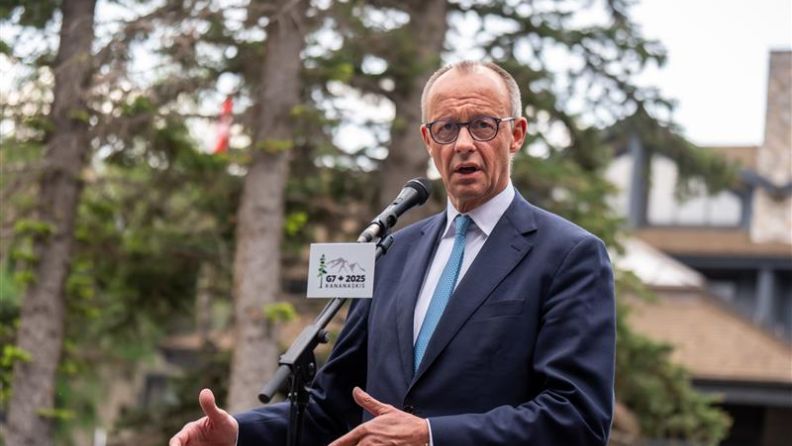

German Chancellor Friedrich Merz Praises Outcomes of G7 Talks in Canada
Federal Chancellor Friedrich Merz has given a positive assessment of the recent G7 summit held in Kananaskis, Canada, describing the two-day meeting as “far more successful than I initially expected.” Despite some notable differences among member states, Merz highlighted the progress made on a range of pressing global issues and expressed cautious optimism about future cooperation.
The G7, comprising seven of the world’s most advanced economies — Canada, France, Germany, Italy, Japan, the United Kingdom, and the United States — met against a backdrop of multiple international crises. From the escalating conflict in the Middle East to growing economic uncertainties, leaders faced complex challenges requiring urgent and coordinated responses.
Consensus on Key Global Topics
One of the most notable achievements Merz pointed to was the consensus reached on several joint declarations covering seven critical issues. Among these, the G7 leaders agreed on a unified position regarding the ongoing war between Israel and Iran, a conflict that has heightened tensions across the Middle East and threatens broader instability.
In addition to the Middle East crisis, the G7 issued joint statements addressing:
- Critical raw materials: Recognizing the strategic importance of securing supply chains for essential minerals and metals, particularly amid rising global demand and geopolitical uncertainties.
- Migration: Pledging to collaborate on managing migration flows responsibly while addressing root causes.
- Artificial intelligence (AI): Agreeing on the need for ethical guidelines and international cooperation to harness AI’s benefits while mitigating risks.
Merz underscored that these agreements demonstrate that the G7 still holds considerable diplomatic weight when its members align on common goals.
Differing Views on Contentious Issues
Despite these successes, the summit revealed persistent divisions among member countries on some of the most contentious global challenges. Notably, there was no unified position on the war in Ukraine, a conflict that continues to define Europe’s security landscape and dominate international relations.
Similarly, differences emerged regarding climate action and development aid, where competing priorities and national interests prevented a comprehensive agreement.
In a departure from tradition, the G7 leaders collectively decided not to issue a comprehensive final communiqué. This decision was widely interpreted as reflecting the complexities and disagreements that made consensus difficult on certain critical matters.
Merz’s Views on the Middle East Conflict and Iran
Chancellor Merz was particularly forthright about the summit’s stance on the conflict between Israel and Iran. Following recent Israeli strikes on Iranian nuclear facilities, he expressed hope for the end of the Tehran regime, describing it as “a regime of terror, both domestically and externally.”
Merz’s comments align with a hardening approach within parts of the Western alliance toward Iran, reflecting concern over its nuclear ambitions and regional activities. The G7’s collective statement on this issue signals a strong show of unity in condemning Iran’s actions and supporting Israel’s right to self-defense.
Sanctions Pressure on Russia
Another key area where Merz expressed optimism was regarding the ongoing sanctions regime targeting Russia. The European Union has recently adopted its 18th package of sanctions aimed at exerting economic pressure on Moscow over its war in Ukraine.
Merz welcomed the expectation that the United States would also intensify pressure through further sanctions, underscoring the importance of a united Western front in holding Russia accountable. This coordinated effort reflects the G7’s broader commitment to upholding international law and deterring aggression.
Economic and Technological Cooperation
Beyond geopolitical issues, the summit also addressed critical economic and technological challenges. The emphasis on critical raw materials reflects global concerns about supply chain vulnerabilities, especially for industries like electric vehicles, renewable energy, and electronics.
In the realm of technology, the G7’s focus on artificial intelligence highlights the urgency of setting international standards. With AI’s rapid advancement presenting both opportunities and ethical dilemmas, the G7’s commitment to cooperation on AI governance aims to prevent misuse and ensure equitable benefits.
Migration and Humanitarian Issues
Migration remains a complex and emotive topic for G7 nations, many of which are destinations for asylum seekers and economic migrants. The leaders’ joint statement on migration emphasized cooperation on humanitarian assistance, border management, and tackling root causes such as conflict and poverty.
While not achieving full consensus on specific policies, the summit reaffirmed the G7’s intention to approach migration as a shared responsibility requiring coordinated responses.
The Absence of a Final Communiqué: What It Means
The decision to forego a comprehensive final communiqué was unusual and indicative of the underlying tensions within the group. Traditionally, G7 summits culminate in a detailed statement outlining collective commitments and priorities.
This year, the absence of such a document reflects the complexity of the international environment and the differing perspectives of member states. Analysts suggest that while agreement was possible on certain issues, the summit’s inability to produce a broad consensus on all fronts reveals cracks in the Western alliance and the limits of the G7’s influence in some domains.
Looking Ahead: The Future of G7 Cooperation
Despite the challenges and visible divisions, Chancellor Merz’s positive assessment signals confidence that the G7 remains a vital forum for addressing global challenges. The agreements on several key topics demonstrate that collaboration is possible, even amid geopolitical uncertainty.
Merz’s hope that the US will escalate sanctions on Russia and the collective stance on Iran suggest that the G7 will continue to play a critical role in shaping responses to ongoing crises.
However, the divisions on Ukraine, climate, and development aid highlight areas where further diplomacy and compromise will be necessary.
The G7 summit in Canada was a complex balancing act between cooperation and contention. Federal Chancellor Friedrich Merz’s remarks capture this duality — celebrating the progress made while acknowledging the limits of consensus in a fractured global landscape.
As the world confronts overlapping crises, from war and migration to technological disruption and economic uncertainty, the G7’s ability to find common ground will be crucial. While not all challenges were resolved at this summit, the agreements reached and the spirit of dialogue offer a hopeful foundation for future cooperation.
For Merz and other leaders, the summit’s success lies not only in the declarations made but in the continued commitment to engage, negotiate, and confront the world’s toughest issues together.

