
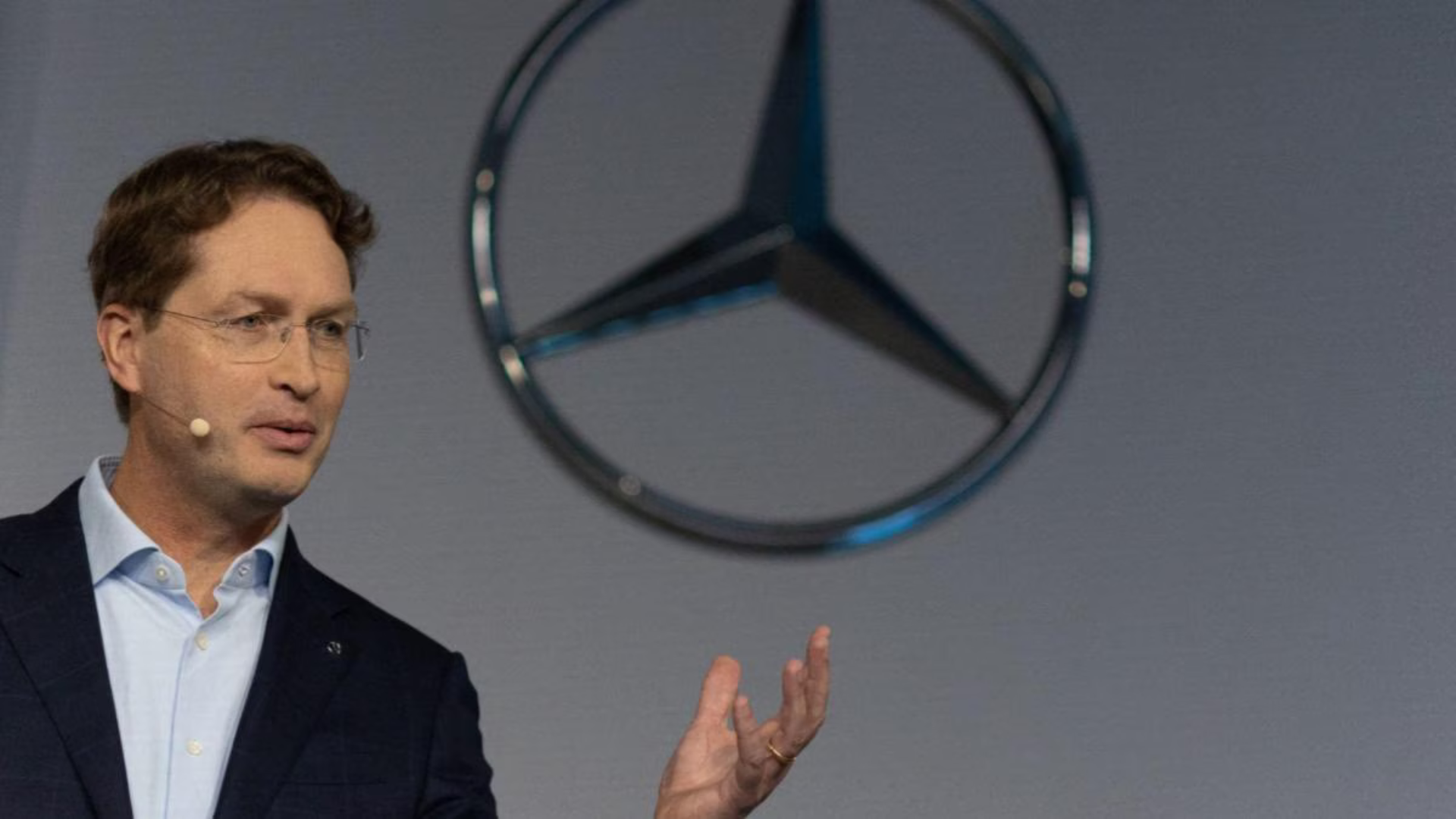

Mercedes-Benz chief executive Ola Källenius said the German carmaker will continue with a luxury-first strategy, even as global economic prospects stay unstable and automobile markets around the world point at weakening demand. Speaking during a recent leadership briefing, Källenius underscored that Mercedes-Benz is going to stay firm in its commitment to higher-margin premium and luxury vehicles rather than volume-driven growth, positioning the brand for resiliency going into an adverse macroeconomic wind.
The global automotive industry currently faces a confusing mix of headwinds: inflationary pressures, higher interest rates, fluctuating consumer confidence, and uneven EV adoption across regions. If some automakers move to address such issues through discounts and mass-market affordability, Mercedes-Benz is trying to move in the opposite direction-doubling down on its identity as a luxury and technology leader.
Källenius emphasized that this strategic shift towards luxury by the firm over the last few years has already begun to pay dividends. Mercedes-Benz has steadily scaled down its exposure in lower-margin entry-level segments, and it has been expanding its high-end portfolio, which includes Mercedes-AMG, Mercedes-Maybach, and the G-Class. These models continue to see strong demand from high-net-worth customers, a population not very sensitive to economic cycles.
“Luxury customers cherish exclusivity, craftsmanship, and state-of-the-art technology,” Källenius said, adding that such customers also prove resistant to economic slowdowns. This resilience, he continued, enables Mercedes-Benz to defend profitability and brand equity when competitors are suffering from margin erosion.
Another very important leg to this luxury-first strategy is technological differentiation. The carmaker has continued to make huge investments in advanced software, digital interfaces, and driver assistance systems. Its proprietary operating system, MB.OS, will roll out across its future models and will seamlessly integrate infotainment, vehicle functions, and AI-driven features. Källenius said that with time, software will lie at the heart of what modern luxury means in this space.
In turn, electrification also remains another core focus, the CEO conceded that EV adoption is going at an uneven pace in different regions of the world. Mercedes-Benz is maintaining flexibility in its powertrain strategy, depending on the regional demand and infrastructure readiness; hence, the company offers all-electric, hybrid, and highly efficient combustion engines. Importantly, the plan is to make sure electric models meet the same benchmarks of luxury as traditional ones, rather than competing purely on price or range.
Cost discipline is part of the equation, too. While reaffirming investments in innovation and premium products, Källenius stressed that Mercedes-Benz was keeping a lid on operational expenses. The group has been optimising its production footprint, improving supply chain efficiency, and leveraging modular vehicle architectures to balance flexibility with cost control.
The performance is particularly good on the Chinese and US markets, the two most important single markets for Mercedes-Benz luxury cars. In China, despite generally weak economic indicators, there is a still strong demand for premium sedans and SUVs, while in the US, there is a clear affinity among premium buyers for larger luxury models and performance variants. Europe remains price-sensitive for the time being; it is a strategic home market nonetheless, with a high degree of relevance for brand heritage.
To industry analysts, the approach at Mercedes-Benz represents a calculated bet on long-term brand strength versus short-term volume gains. By resisting the temptation to chase mass-market sales during a downturn, the company is trying to preserve pricing power and stay planted at the top end of the automotive spectrum.
“Luxury is not about cycles; it’s about consistency,” he made plain. As global markets make their way through an uncertain period, Källenius made it clear that Mercedes-Benz would stay the course. That reinforces the company’s belief that a clear strategic identity is its strongest asset in challenging times. In fact, Mercedes-Benz seems to emerge from the global slowdown not just intact, with a focus on premium innovation, disciplined growth, and brand exclusivity, but strenghtened as a benchmark for modern automotive luxury.

