
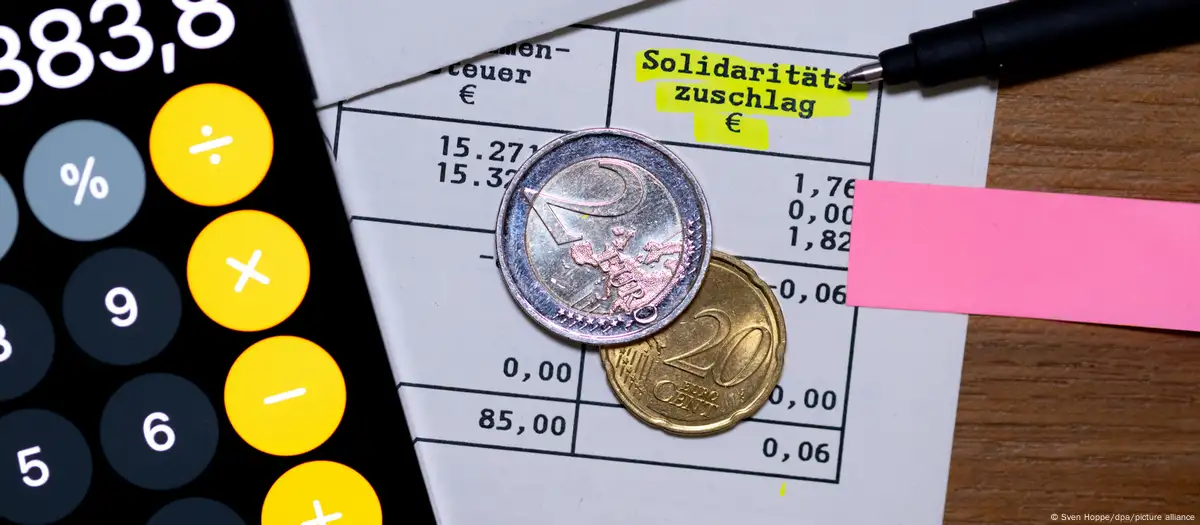
Germany’s Top Court Keeps Reunification Tax Alive – Is It Time to End the “Solidarity” Levy?

Germany’s Reunification Tax Survives Legal Challenge
Germany’s highest court has ruled that the solidarity tax, introduced after the reunification of East and West Germany in 1990, remains necessary. The tax, which continues to affect a small percentage of high earners, businesses, and investors, was challenged by members of the pro-market Free Democratic Party (FDP), who argued it violated the constitution. However, the court’s decision confirms that the tax is still needed to cover the ongoing costs of reunification, despite some claims that its purpose has ended.
But with only 10% of the highest-income earners still paying this tax, the question remains: should Germany continue to enforce this levy long after its original purpose has been met?
What Is the Solidarity Tax?
First introduced in 1990, Germany’s solidarity tax was designed to help fund the costs associated with reunification. Following the fall of the Berlin Wall, East Germany was integrated into the more economically developed West Germany. This created significant financial and infrastructure challenges. The solidarity tax was one of the key funding tools used to support this monumental task.
The tax has been levied on higher earners—just 10% of the top-income group—as well as businesses and investors. Over time, however, most Germans (about 90%) have been exempt from paying the tax as it has slowly decreased in scope.
What’s the Current Status of the Solidarity Tax?
While the solidarity tax has become less widespread, a small group of the wealthiest individuals and businesses are still subject to the tax. The original law behind the levy expired in 2019, leading to questions about whether it was still relevant. Despite the legal challenge, Germany’s top court ruled in favor of continuing the tax, citing the ongoing financial need resulting from the costs of reunification.
The Legal Challenge: Why Was the Tax Questioned?
In 2019, the Solidarity Pact II—an agreement designed to phase out the tax—expired, leading to legal challenges. Six members of the Free Democratic Party (FDP), which is known for its pro-market stance, questioned the tax’s legitimacy. They argued that since the initial purpose of the solidarity tax was to address the immediate costs of reunification, it should no longer apply now that the economic integration is largely complete.
The FDP’s Argument
The FDP claimed that continuing the tax violated Germany’s constitution, specifically the principle of equal treatment. They pointed out that about 90% of taxpayers were exempt from the levy in recent years. They argued that imposing a tax on just 10% of the population, primarily high earners and businesses, was unfair, particularly when most people no longer contributed.
The Court’s Ruling: Why the Tax Stays in Place
Despite the challenges, the German Constitutional Court in Karlsruhe ruled to uphold the solidarity tax. The judge who oversaw the case emphasized that while the original purpose of the tax was to help cover the costs of reunification, there were still ongoing financial needs resulting from this historical process.
The Court’s Key Argument: The Need for Continued Financing
According to the court, Germany’s reunification is a long-term project that still requires financial resources. While much of the immediate economic integration between East and West Germany is complete, the legacy of reunification continues to create costs—especially in terms of infrastructure, public services, and economic development in the former East Germany.
The court also clarified that while the tax remains in effect, it should only last as long as the financial need for it exists. Once the costs of reunification have been fully addressed, the tax would no longer be necessary and could become unconstitutional.
What Does This Mean for German Taxpayers?
For most people in Germany, the solidarity tax isn’t something they have to worry about anymore. Around 90% of taxpayers have been exempt for years, and the burden primarily falls on the wealthiest individuals and businesses. But for those who do still pay, the tax represents a continued contribution to the cost of reunification.
A Small Group Still Pays: Who Is Affected?
The people and businesses still subject to the solidarity tax are high earners and investors, a group that makes up just 10% of the population. These individuals have been paying the tax on top of regular income taxes and other contributions. While the tax amount has decreased over the years, its continuation remains a point of contention.
Despite the court’s ruling, it’s clear that many citizens feel it’s time for the tax to end. The question now is: When will Germany decide it has fulfilled its reunification financial obligations?
Is It Time to End the Solidarity Tax?
With the ruling upholding the solidarity tax, there’s a growing debate in Germany about whether it’s time to phase it out completely. Many argue that the reunification process is largely finished, and Germany should no longer ask its citizens to continue funding a task that is essentially complete.
Calls for Reconsideration: Is the Tax Still Relevant?
Some politicians and economists believe that the solidarity tax is no longer necessary and that the government should start winding it down. They argue that Germany is now one of the strongest economies in the world and that the financial burden of reunification has been addressed. Others suggest that there may be more effective ways to fund any remaining costs, such as through investments in the former East Germany’s infrastructure.
The government, however, remains firm on the idea that while much of the reunification process is complete, the long-term needs of the former East still require financial support.
What’s Next for Germany’s Solidarity Tax?
The court’s decision has left the door open for the tax to remain, but it also set clear limits on its duration. Once the ongoing costs of reunification have been fully met, the solidarity tax will need to be reconsidered. For now, the tax remains in place, but it’s clear that the debate over its future is far from over.
Public Opinion: Will the Solidarity Tax Be Ended Soon?
Many in Germany are beginning to question whether the solidarity tax has outlived its usefulness. As the country continues to move forward and the economic disparities between East and West shrink, the justification for this additional tax becomes increasingly difficult to argue.
While some argue that the solidarity tax still serves a purpose, others believe it’s time for the government to focus on other ways to support economic growth and balance the needs of the entire country.
A Complex Legacy of Reunification
Germany’s solidarity tax is a reminder of the country’s complex reunification journey. It’s a symbol of the financial and political efforts required to bring together two very different economies and societies after decades of separation. However, as time passes and the costs of reunification decrease, questions about the tax’s relevance will continue to surface.
For now, the solidarity tax remains in place, but it is clear that the debate surrounding its future is far from settled. The court’s ruling may have temporarily settled the issue, but as Germany moves further away from reunification, the need for this financial contribution will likely continue to be questioned.

