
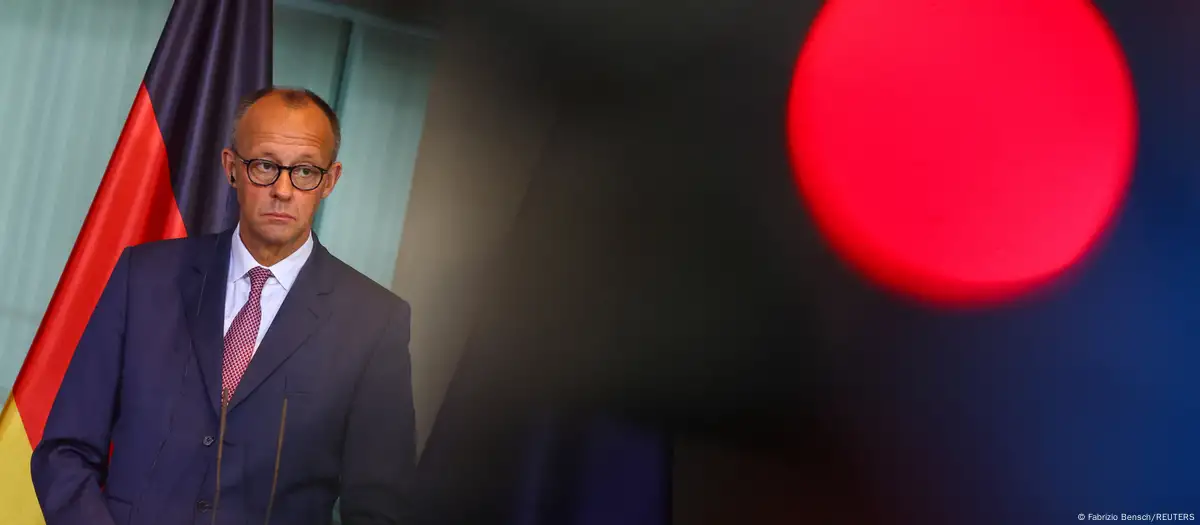
Germany’s Chancellor Slams Israel’s Gaza Actions — Why Israel’s Silence Speaks Volumes

A Rare Rebuke That’s Making Waves
In a rare and sharp diplomatic moment, German Chancellor Friedrich Merz has publicly condemned Israel’s military conduct in Gaza, calling it “beyond comprehension.” Coming from the leader of one of Israel’s closest European allies, the criticism has triggered significant international attention — and a surprisingly muted response from the Israeli government.
This silence is not going unnoticed. Experts suggest that Israel’s slow and careful reaction may signal that the criticism hit harder than expected, landing in the middle of a global outcry over the humanitarian crisis in Gaza.
What Did Chancellor Merz Say?
Speaking after a high-level security briefing, Friedrich Merz criticized the scale and nature of Israel’s ongoing military operations in Gaza. He stopped short of calling for a halt to the operations but made clear that Germany, while historically supportive of Israel, could not turn a blind eye to the mounting civilian toll.
“What is happening in Gaza is beyond comprehension,” Merz stated. “Israel has the right to defend itself, but that right is not limitless. Civilian lives must be protected, and international law must be respected.”
This public statement marked one of the strongest critiques by a German chancellor in recent memory and signaled a new tone in the EU’s handling of the Israel-Gaza conflict.
Israel’s Measured Silence
Unlike past instances where Israeli officials quickly hit back at criticism — particularly from Western allies — the response to Merz has been slow and carefully worded.
So far, Israel has refrained from directly confronting the chancellor’s remarks. A statement from the Israeli Foreign Ministry reiterated Israel’s commitment to international law and emphasized the “extreme complexities” of operating in densely populated areas where militant groups operate among civilians.
This lack of a fiery rebuttal is unusual and, according to several diplomatic observers, may suggest that the Israeli leadership is aware that its Gaza operations are reaching a point of diminishing international patience.
The History of Germany-Israel Relations: A Complicated Bond
Germany and Israel share a uniquely close relationship, born out of the horrors of the Holocaust and shaped by decades of political, military, and economic cooperation. Germany has often been one of Israel’s most steadfast allies in Europe — both diplomatically and militarily.
For decades, German leaders have defended Israel’s right to security, often even shielding it from tougher EU-wide criticism. That’s what makes Merz’s comments so remarkable: they represent a potential turning point in how Germany balances its historical responsibility with current geopolitical realities.
Analysts suggest that Merz’s criticism may be his way of resetting that balance — signaling that unwavering support does not mean unconditional approval of all actions.
Why Now? Timing and Pressure
Chancellor Merz’s remarks come at a time when international pressure on Israel is intensifying. Months into Israel’s campaign in Gaza, civilian casualties have soared, with UN agencies and human rights groups reporting extensive damage to infrastructure, hospitals, and schools.
At the same time, footage of humanitarian convoys being targeted and entire neighborhoods reduced to rubble has dominated headlines worldwide.
Merz is likely responding not just to these developments, but also to growing domestic and European criticism. In Germany, public opinion is shifting. While support for Israel’s right to self-defense remains high, many Germans are increasingly disturbed by the humanitarian consequences in Gaza.
This political pressure at home, combined with mounting global concern, has likely pushed Merz to adopt a more critical tone.
What Experts Are Saying
Political analysts and foreign policy experts interpret Israel’s slow response as strategic.
Dr. Lea Hoffmann, a Berlin-based Middle East analyst, noted:
“Israel is very aware of how symbolic German criticism is. When someone like Chancellor Merz speaks out, it’s not easy to dismiss. Silence, in this case, may be Israel’s way of absorbing the blow while recalibrating its diplomatic messaging.”
Others argue that Israel may be taking the criticism seriously behind closed doors, using back-channel diplomacy to avoid a full-blown public dispute while continuing to defend its military objectives.
The Broader European Context
Merz is not alone in voicing concern. Across Europe, leaders have grown more vocal about Israel’s conduct. France, Spain, and Ireland have all issued statements condemning excessive use of force in Gaza, and some EU nations are calling for a formal investigation into possible violations of international law.
Germany’s move adds considerable weight to this growing chorus. Unlike other European nations, Germany’s voice carries historical and moral authority on issues related to Israel, making Merz’s comments a potential catalyst for a wider shift in European policy.
Humanitarian Crisis in Gaza: The Heart of the Debate
The Israeli government continues to argue that its military operations in Gaza are necessary to root out Hamas and restore security following the group’s deadly October 2023 attacks on southern Israel. However, critics say the scale of destruction goes far beyond military necessity.
UN officials estimate that over 30,000 Palestinians have been killed since the conflict began, with the majority believed to be civilians. Gaza’s infrastructure is collapsing under the pressure of near-constant bombardment and blockade.
This humanitarian disaster is central to Merz’s criticism. As the leader of one of Europe’s most powerful democracies, Merz is aligning his country’s foreign policy with broader principles of human rights — even if it means publicly challenging a close ally.
What Happens Next?
The diplomatic fallout from Merz’s remarks remains to be seen. For now, Israel is keeping its official response low-key, likely to avoid further straining relations with Berlin. However, continued criticism — especially if echoed by other German officials or EU leaders — could lead to policy changes.
Germany could increase pressure on Israel to allow more humanitarian aid into Gaza or demand greater transparency in military operations. In a more extreme scenario, it could delay or reconsider future arms sales or defense cooperation deals — though such moves remain speculative.
A New Phase in Israel-Germany Relations?
Chancellor Merz’s unusually harsh words may represent a turning point in how Europe — and particularly Germany — approaches the Israel-Gaza conflict. While Israel still commands significant sympathy and support, especially in the West, that support is increasingly conditional on adherence to international norms and the minimization of civilian harm.
Israel’s delayed and careful response to Merz’s criticism suggests it is aware of the stakes. It may not be a rupture in the relationship, but it is certainly a recalibration — one that could shape the future of European-Israeli diplomacy as the war in Gaza continues to unfold.

