
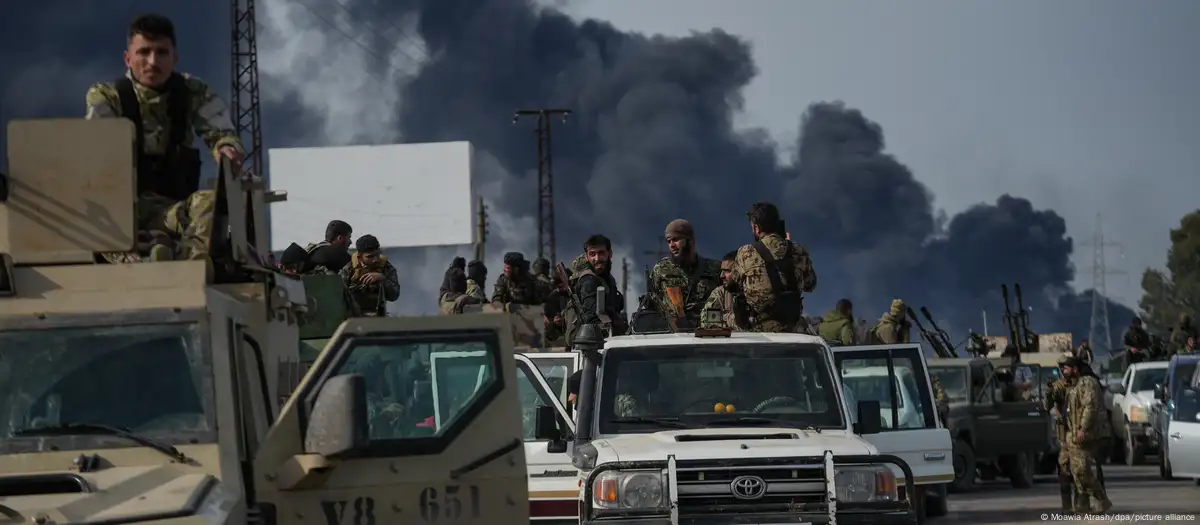
Germany Urges Syria to End Deadly Violence as More Than 200 People Are Killed in Fierce Clashes

Syria is once again in the grip of violence, with over 200 lives lost in just two days of intense fighting between different factions. Germany has called for all sides to stop the bloodshed and work towards peaceful solutions. But what sparked the deadly clashes, and why is the world so concerned? Here’s a closer look at the situation unfolding in Syria.
The Violence in Syria: What Happened?
In recent days, fighting broke out along Syria’s western coast, a region long known for its strong support for Bashar al-Assad, the ousted leader. According to the Syrian Observatory for Human Rights (SOHR), fighters backing Syria’s new government launched attacks on villages in the coastal area, killing civilians in retaliation for attacks against government forces.
The violence has quickly escalated, with both sides suffering heavy losses. It’s not just military forces involved: civilians have become collateral damage in this ongoing conflict, with more than 200 people killed in just 48 hours.
What Sparked the Conflict?
The conflict reignited after a series of surprise attacks and ambushes on government security forces, allegedly carried out by Assad’s loyalist fighters. These attacks, targeting transitional government forces along Syria’s western coast, set off a deadly chain of events.
The revenge attacks that followed from government-backed fighters were swift and brutal, with villages in the coastal region suffering the most. At least 140 of the victims were reportedly civilians caught in the violence, while the rest were soldiers or fighters loyal to either side.
Germany’s Response: Calls for Peace
Germany is deeply concerned about the escalating violence and its devastating impact on Syria’s already fragile situation. On Friday, the German Foreign Ministry issued a strong statement calling on all parties to avoid a “spiral of violence” and work towards a peaceful resolution.
“We are shocked by the numerous victims in the western regions of Syria,” the ministry said in its statement. “We call on all sides to seek peaceful solutions, national unity, inclusive political dialogue, and transitional justice — to overcome the spiral of violence and hatred.”
Germany has been a vocal critic of the ongoing bloodshed in Syria, and during a visit to Damascus in January, German Foreign Minister Annalena Baerbock offered to support the Syrian government — but only if it met certain conditions, such as ensuring the protection of minorities and working towards peace.
The Toll of the Fighting
As the conflict continues, the toll on the Syrian population is devastating. The war monitor, SOHR, reports that over 200 people have been killed in the latest clashes. This includes around 140 civilians, many of whom were killed in retaliation attacks in villages.
The fighting also claimed the lives of at least 50 members of Syria’s government forces and 45 fighters loyal to the ousted Bashar al-Assad. These tragic losses only add to the mounting human cost of Syria’s ongoing civil war, which has raged for more than a decade.
Why Is the World Concerned?
Syria’s civil war has already left a deep scar on the country and its people. Over the years, various factions have fought for control, and the violence has caused massive suffering. The recent flare-up of violence raises new concerns about the stability of the region, the protection of civilians, and the future of peace in Syria.
Germany’s call for a peaceful solution is just one example of how the international community is urging an end to the fighting. The fear is that if the violence continues unchecked, it could further destabilize the region, cause more loss of life, and derail any hopes for long-term peace.
The situation is also significant because it highlights the deep divisions within Syria itself. There are factions loyal to the former leader, Bashar al-Assad, while others are backing the new government. These divisions, along with external influences, complicate any efforts to achieve a lasting peace.
What’s Next for Syria?
The conflict in Syria is far from over, and the road to peace remains long and uncertain. For now, the international community, including Germany, is calling for an end to the violence. However, achieving peace will require more than just statements; it will take concerted efforts from all parties involved.
Germany has stressed the importance of national unity, political dialogue, and transitional justice — all critical steps towards rebuilding a fractured nation. Whether these calls will be heard and acted upon remains to be seen.
A Critical Moment for Syria’s Future
The violence in Syria, with more than 200 people killed in just two days, serves as a stark reminder of the ongoing instability that continues to plague the country. As the death toll rises, the world watches closely, hoping that all sides can find a way to end the bloodshed and begin the difficult work of reconciliation and peace.
Germany’s call for peace is a critical moment in the ongoing conflict, highlighting the need for a unified approach to stop the cycle of violence. The coming days and weeks will likely determine whether Syria can find its way to stability or if the war will continue to drag the country further into chaos.

