
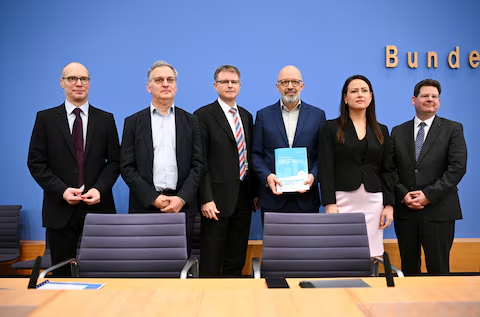

German Growth Outlook Worsens
Germany’s leading economic institutes have downgraded the country’s economic growth projections for 2026 and 2027 as the Iran conflict drives up oil and gas prices, fueling inflation across Europe.
Growth for 2026 is now forecast at around 0.6 percent, down from earlier projections of 1.3 percent. Next year’s growth outlook has also been cut to roughly 0.9 percent from 1.4 percent. At the same time, inflation projections have been raised sharply, with average price increases expected to hit nearly 2.8 percent in 2026 and 2.9 percent in 2027.
Energy Shock Drives the Revision
Iran War Pushes Up Costs
The primary driver of the weaker forecasts is the spike in energy prices caused by geopolitical tensions in the Middle East.
- Rising oil and gas prices are increasing costs for households and businesses
- Higher energy bills are reducing consumer purchasing power
- Businesses, particularly energy-intensive industries, are seeing profits squeezed
The energy crisis is expected to shave tens of billions of euros from Germany’s national income over the next two years.
Inflation Pressures Mount
Consumers Feeling the Pinch
Inflation has been pushed higher due to surging fuel and gas costs. Households are already facing rising petrol, heating, and electricity bills.
The inflation spike is expected to extend beyond energy, affecting a wide range of goods and services, putting additional strain on consumers.
Impact on Households and Businesses
Slower Spending and Lower Confidence
The combination of slower growth and higher inflation means real incomes are under pressure.
- Household spending is expected to slow as people adjust to higher living costs
- Businesses face reduced competitiveness and profits due to rising energy costs
- Economic uncertainty is weighing on confidence in both manufacturing and service sectors
Structural Challenges Amplified
Germany was already facing economic headwinds, including slow industrial growth and an ageing workforce. The energy price shock has worsened these structural challenges, raising concerns about the economy’s long-term resilience.
Without reforms to boost productivity and investment, Germany may struggle to regain stronger growth even after the immediate geopolitical pressures ease.
Expert Warnings
Economists emphasize that the spike in energy prices is central to the downgraded forecasts. Government measures provide some relief, but higher costs for households and businesses continue to slow economic activity. Policymakers may face tough decisions balancing short-term support with long-term economic stability.
Final Thoughts
Germany’s downgraded growth forecasts and rising inflation show how global conflicts can directly impact major economies. With households and businesses under pressure, the government will need to act strategically to navigate the challenges ahead and stabilize the economy.

