
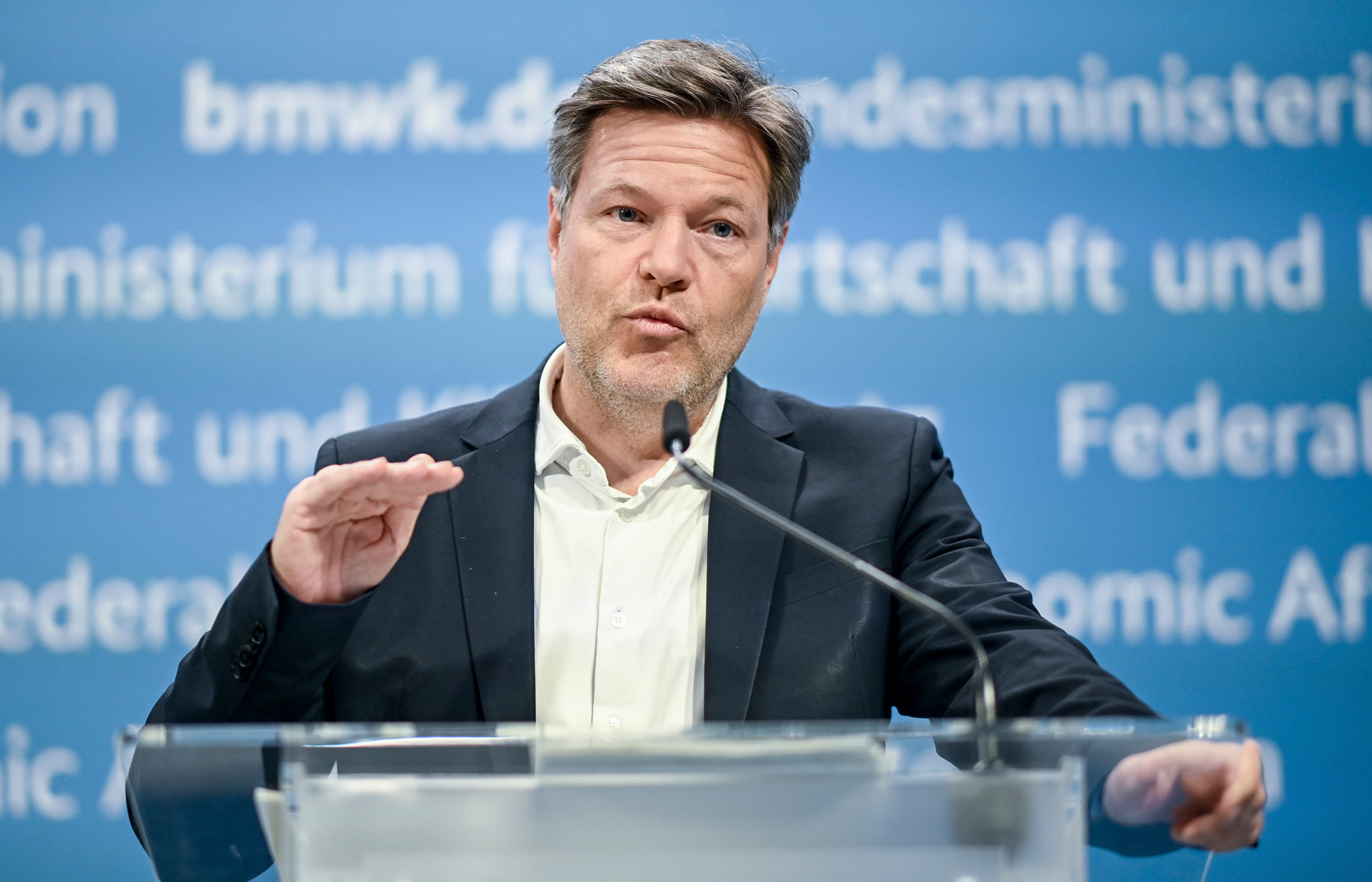

Germany is set to begin a new round of carbon contracts for difference (CFDs) worth 6 billion euros ($7.01 billion) next week, Economy Minister Katherina Reiche announced on Friday. The move is part of Germany’s broader strategy to accelerate decarbonisation and promote investment in clean energy technologies.
What Are Carbon CFDs?
Carbon CFDs are a policy tool designed to stabilise the revenues of low-carbon energy projects. Under these contracts, the government guarantees a fixed price for carbon allowances or emissions reductions, insulating investors from market fluctuations. This encourages investment in renewable energy and other climate-friendly initiatives by reducing financial risk.
The upcoming tender round represents one of Germany’s largest allocations in the carbon CFD program and underscores the country’s commitment to achieving its climate targets under the EU Green Deal and the Paris Agreement.
Minister Reiche’s Announcement
Speaking to reporters, Reiche highlighted the significance of the program for Germany’s energy transition.
“Next week, Germany will open a major round of tenders for carbon contracts for difference worth 6 billion euros. These contracts will support sustainable investments and help the country reach its ambitious climate goals,” she said.
The minister emphasised that the program aims to attract both domestic and international investors to fund renewable energy projects, energy efficiency upgrades, and other emissions-reduction initiatives.
How the Tenders Work
Under the CFD system, successful bidders will be guaranteed a fixed revenue stream for their projects. This stabilisation mechanism makes it easier for renewable energy companies to secure financing, plan long-term projects, and manage operational risks.
Projects eligible for the carbon CFD program typically include:
- Renewable energy installations such as wind, solar, and hydroelectric projects
- Energy storage solutions and grid stabilisation technologies
- Low-carbon industrial processes, including green hydrogen and carbon capture projects
By providing certainty in a volatile carbon market, CFDs incentivise private sector investment and help Germany maintain momentum in reducing greenhouse gas emissions.
Germany’s Climate Ambitions
Germany has committed to ambitious climate targets, including reducing greenhouse gas emissions by 65% by 2030 compared to 1990 levels, and achieving carbon neutrality by 2045. The carbon CFD program is central to these efforts, particularly in enabling large-scale deployment of renewable energy and supporting innovative technologies like hydrogen and green steel production.
The upcoming tenders are also expected to stimulate the green economy, creating jobs in construction, manufacturing, and technology sectors while strengthening Germany’s position as a leader in sustainable energy solutions.
Market Impact
The announcement of the 6 billion euro tender is likely to attract significant attention from energy companies and investors across Europe. Analysts expect strong competition, as firms seek to secure government-backed contracts that reduce financial risk and provide long-term revenue stability.
Industry experts suggest that the new CFDs could also influence carbon markets across the EU, potentially lowering costs for carbon-intensive industries by providing more affordable emissions reduction options and accelerating the transition to cleaner energy sources.
International Significance
Germany’s large-scale CFD program is being watched closely by other EU member states and countries worldwide. Its success could serve as a model for carbon pricing and market-based climate policies, demonstrating how government-backed financial instruments can drive emissions reductions while supporting industrial growth.
The program aligns with EU-wide efforts to implement a robust carbon pricing system under the EU Emissions Trading System (ETS) and complements national policies aimed at fostering innovation in green technologies.
Challenges Ahead
While the program has strong potential, experts caution that implementation will need careful oversight. Ensuring transparency in the tendering process, selecting viable projects, and monitoring performance will be critical to achieving expected emissions reductions.
Additionally, Germany must ensure that the program complements other climate policies without creating unintended market distortions or over-subsidising certain technologies.
Looking Ahead
With the tender launch imminent, Germany’s carbon CFD program represents a key step toward achieving a low-carbon economy while encouraging private sector participation. Investors and project developers will be closely monitoring the process, which could set the tone for future carbon reduction initiatives across Europe.
Minister Reiche’s announcement signals a decisive commitment to climate action, economic growth, and technological innovation. By providing stable financial incentives, Germany is positioning itself to meet its ambitious climate targets and lead the transition to a sustainable energy future.

