

Germany, France, and the United Kingdom are expected to start the process of reimposing UN sanctions on Iran this Thursday, according to European officials. The move comes in response to Iran’s expansion of its nuclear program, which goes beyond the limits set by the 2015 Joint Comprehensive Plan of Action (JCPOA).
The so-called snapback mechanism, included in the original deal, allows sanctions to be reinstated if Iran fails to meet its obligations. The process takes 30 days, giving Tehran a final window to engage in diplomatic negotiations and allow international inspections.
What Is the ‘Snapback’ Sanctions Mechanism?
The snapback is a powerful tool designed to ensure compliance with nuclear agreements. If a country violates the terms of the JCPOA, participating nations can trigger the automatic reimposition of sanctions.
This mechanism was built into the 2015 agreement to prevent Iran from advancing its nuclear program unchecked. However, after the United States withdrew from the deal in 2018, Iran began expanding its nuclear activities, claiming they were for peaceful purposes.
Iran’s Response and Warnings
Iran has strongly warned of “harsh consequences” if sanctions are reinstated. Iranian officials argue that their nuclear activities are within sovereign rights and accuse the West of interfering with their energy program.
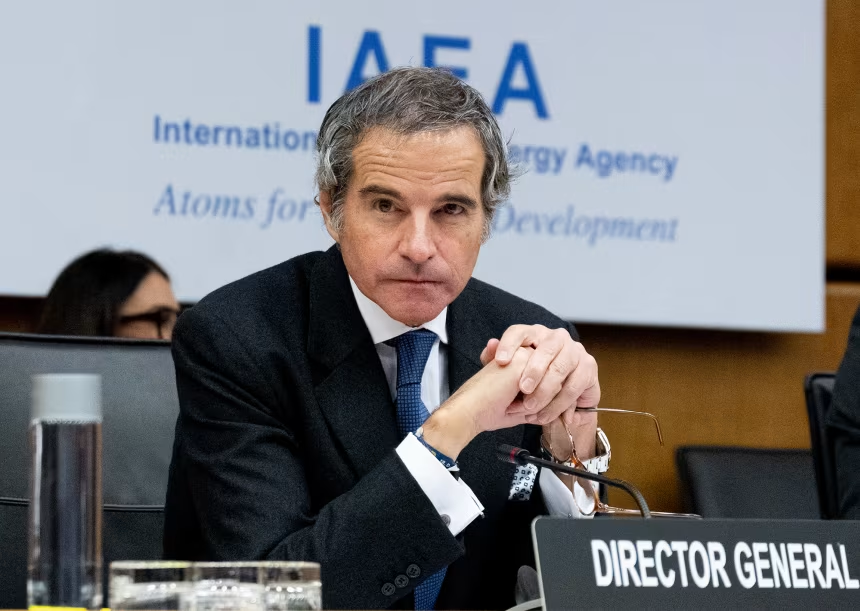
Despite these threats, diplomats from Germany, France, and the UK hope that Iran will take this opportunity to return to the negotiating table and cooperate with the International Atomic Energy Agency (IAEA).
Why Now? The October Deadline
The window to trigger the snapback sanctions expires in October, making this decision time-sensitive. Diplomatic talks in recent days have not produced significant breakthroughs, raising concerns that Iran will not alter its course.
IAEA chief Rafael Grossi warned that returning to the original JCPOA would be “almost impossible” given the scale of Iran’s nuclear expansion.
US Involvement and Strategic Pressure
US Secretary of State Marco Rubio described the snapback provision as “a very powerful piece of leverage on the Iranian regime.” The United States, while not officially part of the process, has been closely coordinating with European partners to maintain pressure on Tehran.
The goal is to prevent further escalation while encouraging Iran to abide by international inspection regimes and nuclear agreements.
What’s at Stake? Security, Energy, and Diplomacy
The sanctions and diplomatic efforts surrounding Iran’s nuclear program are critical not only for Middle East stability but also for global energy markets and security.
If sanctions are reinstated, Tehran could face severe economic pressure, potentially limiting its access to international financial systems and energy exports.
The decisions made in the coming weeks will have far-reaching implications, influencing not only Iran’s nuclear ambitions but also relations between Western powers and the broader Middle East.
Final Thoughts
With the snapback sanctions process set to begin this week, Germany, France, and the UK are making a bold move to hold Iran accountable for its nuclear activities. The final 30-day window offers Tehran a chance to re-engage in diplomacy or face renewed sanctions.
As the world watches closely, this effort could reshape negotiations, energy security, and geopolitical alliances in the months ahead. Whether Iran chooses cooperation or confrontation will determine the next chapter in one of the world’s most challenging nuclear disputes.

