
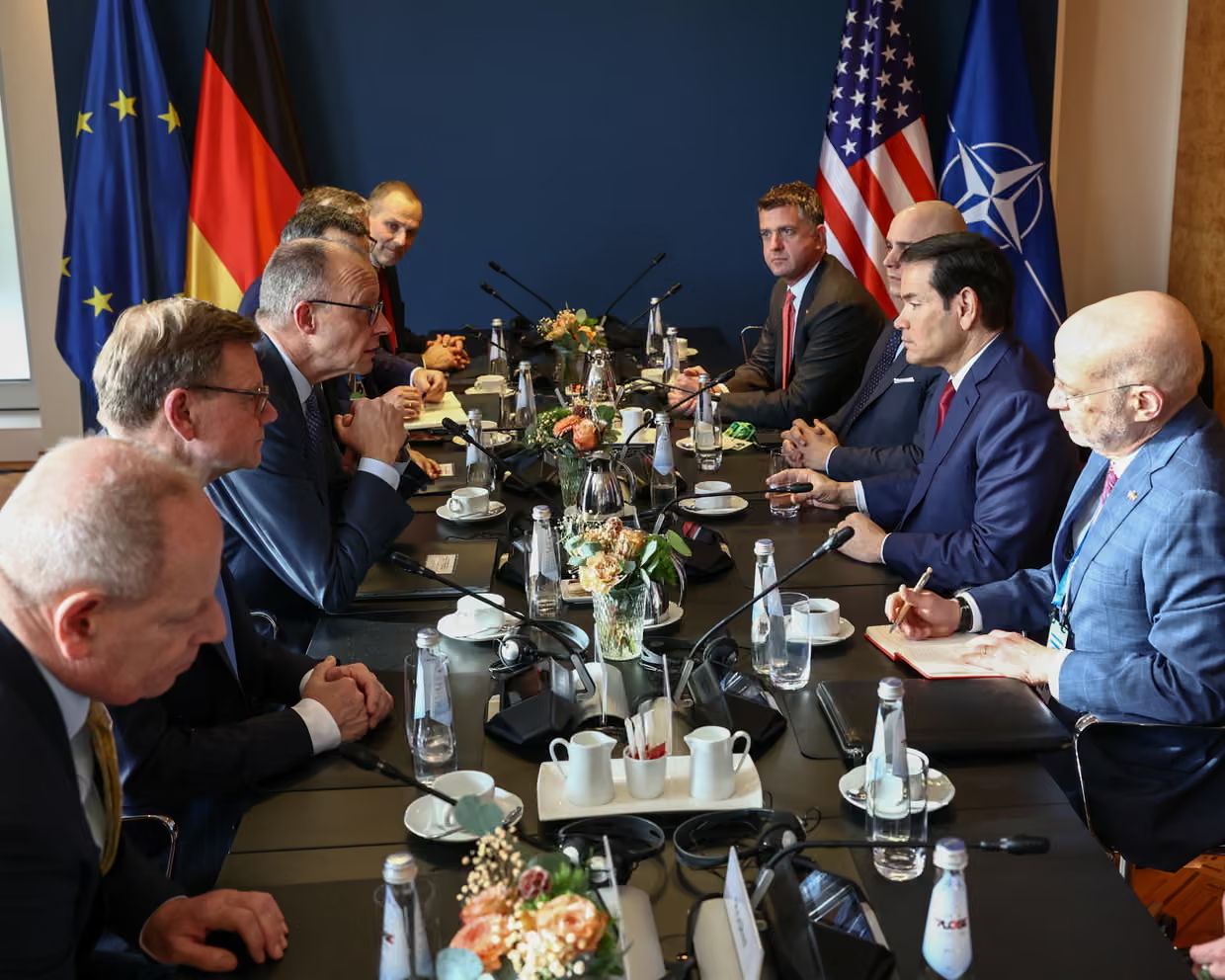
Germany Calls on France to Increase Defence Spending Amid Growing Security Concerns

Germany has publicly called on France to boost its defence spending, amid concerns over Europe’s long-term security and doubts over the United States’ commitment to the continent’s defence.
Johann Wadephul, Germany’s foreign minister, emphasized that stronger European military capabilities are essential to ensure the continent can defend itself independently if necessary. The call comes as the transatlantic relationship between Europe and the United States faces increasing strains, raising questions about NATO’s reliability in safeguarding European security.
The Context: Rising Security Concerns in Europe
Europe’s security environment has been increasingly volatile over the past decade. Several factors have heightened the urgency for European countries to strengthen their defence posture:
- Russia’s Aggression: The ongoing conflict in Ukraine and Russia’s unpredictable military actions have underscored the continent’s vulnerability.
- US Strategic Reassessment: The United States, Europe’s long-time security guarantor, has signalled shifting priorities towards the Indo-Pacific region, prompting concerns about reduced commitment to European defence.
- Terrorism and Hybrid Threats: Europe continues to face non-traditional threats, including cyberattacks, terrorism, and disinformation campaigns, which require a modernized defence infrastructure.
In this context, Germany’s appeal to France reflects a broader European debate about self-sufficiency in defence and reducing reliance on external allies.
Germany’s Perspective: European Self-Reliance
Wadephul highlighted that Europe cannot solely depend on external actors to ensure its security, arguing that adequate defence spending by leading European powers is critical.
- Germany itself has been gradually increasing its defence budget, investing in modern equipment, advanced technology, and troop readiness.
- However, Germany views France as a key partner that must match or exceed its commitment to create a balanced and capable European defence framework.
- Wadephul stressed that without enhanced spending, Europe risks facing security gaps in times of crisis.
This call signals Germany’s desire to see a more unified European defence policy, with leading powers contributing proportionally to collective security.
France’s Defence Spending History
Historically, France has been one of Europe’s primary military powers, maintaining significant capabilities in nuclear deterrence, conventional forces, and overseas deployments.
- France’s defence budget has fluctuated over the years, occasionally falling below NATO-recommended spending targets of 2% of GDP.
- Recent economic pressures and domestic priorities have slowed defence spending growth, despite France’s strategic commitments in Africa, Europe, and the Middle East.
- Germany’s pressure indicates that Europe’s security environment may require France to increase spending faster than originally planned to ensure readiness for potential crises.
Implications for NATO and European Security
The German appeal comes amid growing discussions about Europe’s role within NATO and its capacity to defend itself independently. Key points include:
- Shared Responsibility: Leading European powers must share the burden of defence equally to prevent over-reliance on the US.
- Strengthened NATO: Increased European spending enhances NATO’s overall capabilities, ensuring the alliance remains credible in deterrence and defence.
- Strategic Autonomy: By boosting defence spending, France and Germany can lead efforts to establish a more autonomous European defence identity, reducing vulnerabilities if the US shifts focus elsewhere.
Germany’s push for French commitment reflects a strategic calculation that Europe must be proactive in securing its own interests rather than assuming guaranteed protection from allies.
Challenges Facing France
Despite Germany’s call, France faces multiple challenges in ramping up defence spending:
- Economic Constraints: Budgetary pressures, inflation, and domestic priorities can limit the available resources for defence.
- Political Debate: Expanding military spending is often politically contentious in France, where public opinion may prioritize social programs over military expansion.
- Strategic Coordination: Increasing spending is not just about the amount of money but also ensuring efficient allocation across nuclear, conventional, and technological capabilities.
These challenges highlight that while the German appeal is strategic, implementing it requires careful domestic planning and political consensus in France.
European Strategic Autonomy: A Shared Goal
Germany and France share an interest in ensuring Europe can defend itself, particularly in light of global uncertainty. Strategic autonomy involves:
- Developing independent military capabilities in air, land, sea, and cyber domains.
- Investing in advanced technologies such as drones, artificial intelligence, and missile defence systems.
- Strengthening coordination between European militaries to allow rapid deployment in crisis scenarios.
A cooperative approach between France and Germany is seen as the backbone for achieving European self-reliance in defence.
Moving Forward: What to Expect
The German call may set the stage for several developments:
- France could increase defence spending in the coming years, potentially aligning with Germany’s growth trajectory.
- European discussions may focus on joint procurement programs, coordinated defence planning, and shared research and development in military technologies.
- NATO may welcome stronger European contributions, reinforcing the transatlantic alliance while also preparing for scenarios where Europe must act independently.
If France responds positively, Germany and France could emerge as co-leaders in shaping a more resilient and autonomous European defence posture.
Germany’s appeal to France highlights the evolving landscape of European security, where reliance on external powers is no longer guaranteed. Johann Wadephul’s message underscores the urgency for Europe’s leading nations to increase defence spending and take responsibility for collective safety.
With tensions rising globally and NATO’s role under scrutiny, France’s response will be critical in determining whether Europe can achieve meaningful self-reliance in defence while maintaining its strategic partnerships.

