
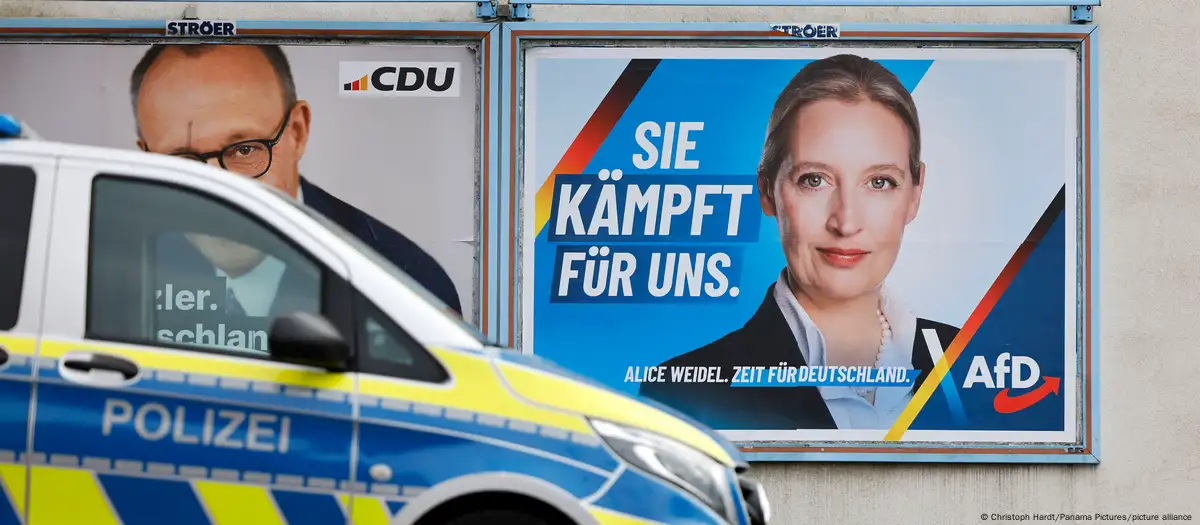

In a significant development in German politics, the Federal Police Commissioner has declared that membership in the far-right Alternative for Germany (AfD) party is incompatible with serving in the federal police force. This statement comes amid growing concerns over the AfD’s increasing influence and its recent classification as a right-wing extremist organization by Germany’s domestic intelligence agency.
The AfD’s Rise and Controversial Ideology
Founded in 2013, the AfD initially gained prominence by opposing the eurozone bailouts. However, its stance shifted dramatically in 2015 when it became a vocal critic of Chancellor Angela Merkel’s refugee policy. The party’s rhetoric has since evolved to include anti-immigrant, anti-Muslim, and anti-minority sentiments, leading to its classification as a right-wing extremist group by the Federal Office for the Protection of the Constitution in May 2025 .
The AfD’s platform promotes an ethnocentric view of German identity, which the intelligence agency argues undermines democratic values and human dignity. The agency’s report highlighted the party’s continuous agitation against refugees and migrants, particularly those from Muslim-majority countries, as evidence of its extremist tendencies .
Federal Police Commissioner’s Statement
The Federal Police Commissioner, in a recent address, emphasized that the core values of the AfD are fundamentally at odds with the principles upheld by the federal police. The commissioner stated that the AfD’s ideology, which includes elements of xenophobia and nationalism, poses a threat to the democratic order and the rule of law that the police are sworn to protect.
This declaration aligns with previous statements from other law enforcement officials and political leaders who have expressed concern over the AfD’s growing influence. The commissioner noted that while individuals are free to hold personal political beliefs, membership in a party that promotes extremist ideologies is incompatible with the duties and responsibilities of a federal police officer.
Implications for Law Enforcement and Civil Service
The Federal Police Commissioner’s statement raises important questions about the intersection of personal political beliefs and professional responsibilities. In Germany, civil servants, including police officers, are expected to uphold the constitution and demonstrate political neutrality in their official capacities. The AfD’s classification as a right-wing extremist group complicates this expectation, as it suggests that membership in the party may conflict with the constitutional obligations of civil servants.
This issue is not unique to Germany. Across Europe, there has been ongoing debate about the extent to which public servants should be allowed to engage in political activities, particularly when those activities are associated with extremist or anti-democratic ideologies. The German government’s decision to classify the AfD as an extremist group reflects a broader trend of scrutinizing political movements that challenge democratic norms.
AfD’s Response and Legal Challenges
The AfD has vehemently rejected the classification, filing a lawsuit against the Federal Office for the Protection of the Constitution. Party leaders argue that the decision is politically motivated and infringes upon their right to free expression and association. They contend that the classification is an attempt to suppress opposition and undermine their growing support among voters .
The party’s legal challenge underscores the contentious nature of the debate. While the AfD maintains that it is a legitimate political entity, its critics argue that its rhetoric and actions cross the line into extremism. The outcome of the lawsuit could have significant implications for the AfD’s future activities and its standing within the German political landscape.
Broader Political Context
The controversy surrounding the AfD’s classification as an extremist group occurs against the backdrop of a shifting political landscape in Germany. The party’s increasing popularity, particularly in eastern Germany, has prompted concerns among mainstream political parties about its potential impact on national politics.
In response to the AfD’s rise, some political leaders have called for stronger measures to counteract its influence. However, others caution against overreaching, emphasizing the importance of protecting democratic freedoms and avoiding actions that could be perceived as authoritarian.
The debate over the AfD’s place in German politics reflects broader tensions within European democracies about the rise of populist and nationalist movements. As these movements continue to gain traction, governments face the challenging task of balancing the protection of democratic values with the preservation of political pluralism.
The Federal Police Commissioner’s statement that AfD membership is incompatible with service in the federal police highlights the deepening divide in Germany over the party’s place in the political system. While the AfD continues to assert its legitimacy and challenge its classification as an extremist group, its critics argue that its ideology poses a threat to the democratic order.
As the legal proceedings unfold and political debates continue, the outcome will likely have lasting implications for the AfD’s role in German politics and the broader European context. The situation underscores the ongoing struggle to define the boundaries of acceptable political discourse and the challenges democracies face in confronting extremist ideologies.

