
Deutsche Bahn Appoints Evelyn Palla as First Female CEO: A Historic Shift for Germany’s Rail Giant

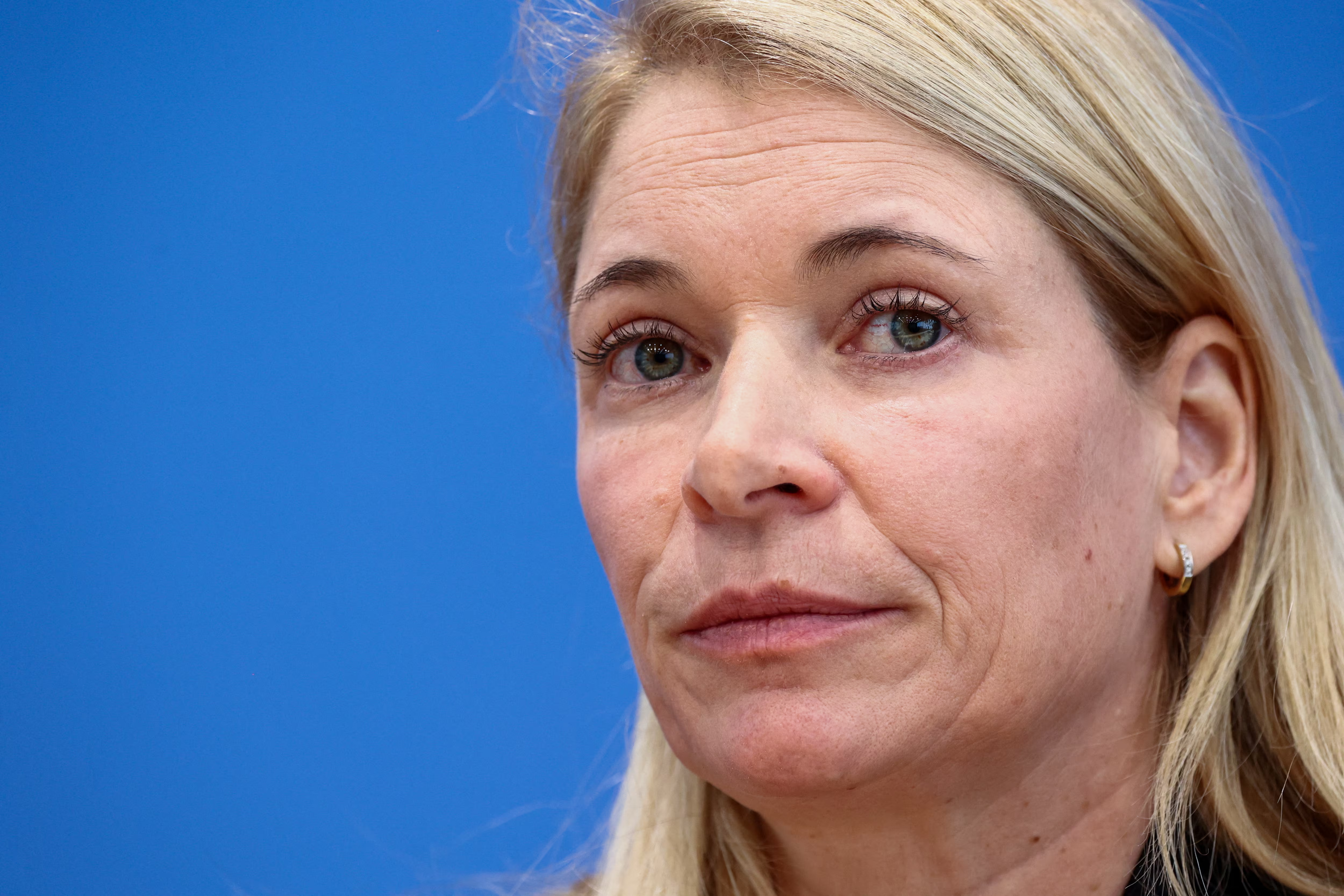
In a milestone for Germany’s transportation sector, Evelyn Palla has become the first female CEO appointed to head Deutsche Bahn, the state-owned rail operator in charge of the backbone of Germany’s public transport and freight networks. Her appointment is not just a significant moment for the company but a big point in Germany’s push for modernization, sustainability, and greater gender representation in senior leadership.
Palla takes over at a very critical time. Deutsche Bahn has for some time received widespread criticism due to delays, bottlenecks in infrastructure, outdated technologies, and inefficiencies in operations. Despite having one of the biggest rail networks in Europe, DB is suffering from performance reliability, customer satisfaction, and increasing operational costs. The German government, the sole shareholder of DB, has voiced an expectation for far-reaching structural reforms, increased punctuality rates, and marked improvement in the financial health of the company. Evelyn Palla now has the task of leading this major change.
Before taking up the top job at DB, Palla headed DB Regio, the group’s commuter and regional train subsidiary. During her tenure, DB Regio saw significant enhancements in customer service and operational streamlining. She is highly regarded for her management qualities, the ability to handle operational challenges of the highest complexity, and her emphasis on innovation. Having accumulated more than ten years of leadership experience in positions in both the mobility and public-transport sectors, Palla combines valuable insider knowledge of how Deutsche Bahn works-something that will prove advantageous in developing workable, long-term solutions.
One of the central challenges waiting for Palla is the infrastructure crisis that just continues to worsen. Germany’s rail network is marked by aging tracks, insufficient maintenance, and congestion in key corridors. These factors have contributed to delays becoming nearly synonymous with the DB brand in recent years. Fully aware of this, Palla has pledged to accelerate large-scale modernization projects, which will include upgrading high-traffic routes, improving signaling systems, and ramping up investment in digital rail operations. The government has already pledged billions to infrastructure funding, and it’s up to Palla to ensure strategic deployment of these resources.
Next on the agenda is something very important: customer satisfaction. Recent surveys have reflected decreasing trust among passengers, who blame unreliable timetables, last-minute cancellations, and poor amenities on board. Palla wants to implement a more customer-oriented approach by increasing punctuality, cleanliness, and real-time travel information, as well as enhancing the digital ecosystem for company tickets. She also talked about gaining back public trust, saying that what Deutsche Bahn is or is not will hugely affect the lives of millions using the service daily.
The core of Palla’s vision is sustainability-a mainstay of the German government’s long-term mobility strategy. Rail is seen as one of the cleanest modes of mass transport, with Deutsche Bahn committed to going climate-neutral by 2040. Palla has pledged to further expand electric and hydrogen-powered trains, cut carbon emissions in freight transport, and raise energy efficiency across operations. In Europe’s path to greener mobility, the ability of Palla to weave in sustainability with operational excellence will be crucial.
Her appointment is not without symbolic value either. As the first woman at the helm of Deutsche Bahn, Palla represents a new chapter for diversity in one of Germany’s most traditionally male-dominated industries. Her rise sends out an encouraging signal toward gender parity in executive leadership across the transportation and infrastructure sectors. According to many analysts and experts in the industry, her appointment heralds a step forward toward inclusivity and modern leadership in German corporates.
Still, Palla has enormous challenges to contend with: high debt levels at Deutsche Bahn, low-cost competition from airlines and buses, and the rising impacts of climate change on rail infrastructure. Long-lasting disruptions, strikes, and capacity shortages have caused even more complications in the company’s path. Turning the organization around will take bold decision-making, effective partnerships with government authorities, and a will to drive reforms through internal resistances.
Yet despite such hurdles, Palla’s strategic clarity, proven leadership, and strong track record operationally have created cause for optimism. Her appointment signals a fresh resolve to tackle long-standing issues with fresh thinking and a results-oriented approach. As she takes over what may be one of Germany’s most challenging executive roles, the nation will watch with interest to see if her leadership finally puts Deutsche Bahn on track. The tenure of Evelyn Palla comes with high expectations—and with the opportunity to reshape the future of rail in Germany. If she is successful, she may change not only the performance of Deutsche Bahn but also leave her mark on the European landscape of mobility.

