
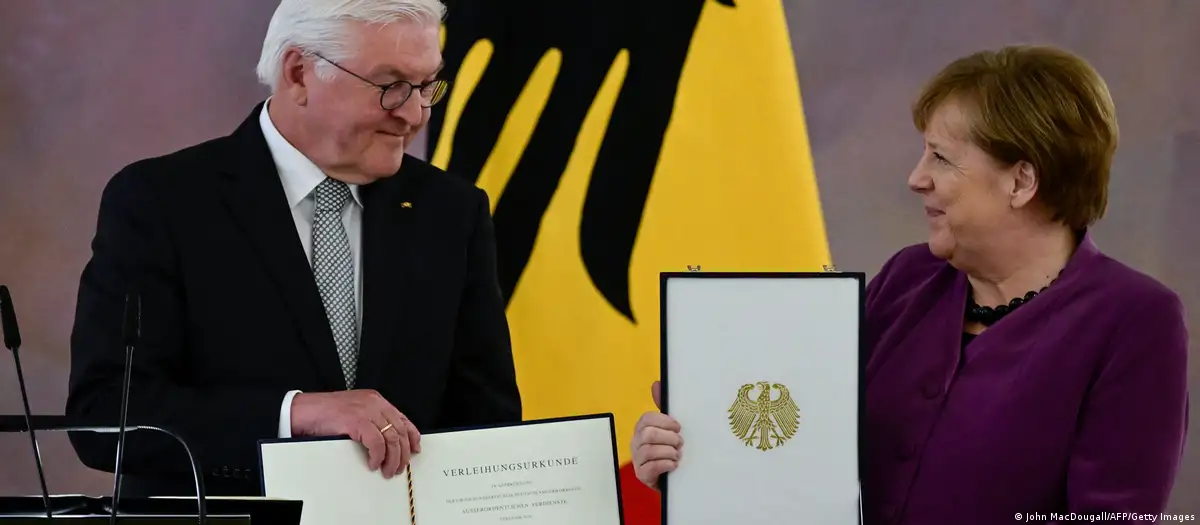

Germany is gearing up for a historic decision: who will succeed President Frank-Walter Steinmeier when his second term ends next year? For the first time in modern history, a woman could potentially hold the nation’s top office, as all twelve previous presidents since World War II have been men.
The discussion made headlines when former Chancellor Angela Merkel’s name was floated as a candidate, though she quickly dismissed the idea as “absurd.”
Why the Debate Matters
Germany’s presidency is largely ceremonial but symbolically significant, representing the unity of the nation and acting as a moral compass in times of political uncertainty.
The center-left Social Democratic Party (SPD) and the environmentalist Green Party are campaigning for a female successor, reflecting a broader push for gender equality in German politics.
Having a woman in the role would mark a historic shift and highlight Germany’s ongoing commitment to representation at the highest levels of government.
Merkel as a Candidate?
The Green Party’s suggestion to nominate Angela Merkel reignited speculation, thanks to her long tenure as Chancellor from 2005 to 2021. Merkel remains highly popular and widely respected across Europe, making her a headline-grabbing option.
However, several factors make Merkel’s candidacy unlikely:
- She immediately rejected the speculation.
- Merkel has a long-standing rivalry with current Chancellor Friedrich Merz, who would play a decisive role in the election process.
- Political observers doubt that her nomination could navigate existing party dynamics successfully.
Chancellor Merz’s Role
Chancellor Merz told public TV Phoenix that he would propose a candidate in September. He emphasized that the person should “represent the country in its entirety,” without specifying gender.
Merz’s decision will heavily influence the election outcome, especially since the Federal Convention — the body that elects the president — is composed of members from both federal and state levels, including the Bundestag and representatives from state parliaments.
Timing and Political Context
The composition of the Federal Convention depends on the results of state elections. Germany will hold its last of five state elections this year in September, after which it will become clearer which party coalitions will shape the presidential vote.
This timing means that political negotiations and strategic nominations will likely intensify immediately following the state election results.
What Electing a Woman Would Mean
A female president would symbolize progress in a country where top offices have long been dominated by men. It would also reflect the growing influence of the SPD and Greens in shaping Germany’s political landscape.
Even though the presidency is largely ceremonial, the role carries significant moral and diplomatic weight, both domestically and internationally.
Final Take
While speculation about Angela Merkel grabbed headlines, the reality is that Germany’s next president is still undecided. Chancellor Merz will propose a candidate, the Federal Convention will vote, and state election results will influence the political balance.
The discussion about gender representation signals a broader cultural shift in Germany, and whether the country will finally elect its first female president remains an open and closely watched question.

